
Robert Karp Photojournalist
Rio de Janeiro
×
Story of the Year: Jair Bolsonaro’s Beachfront Battleground: Copacabana in 2025
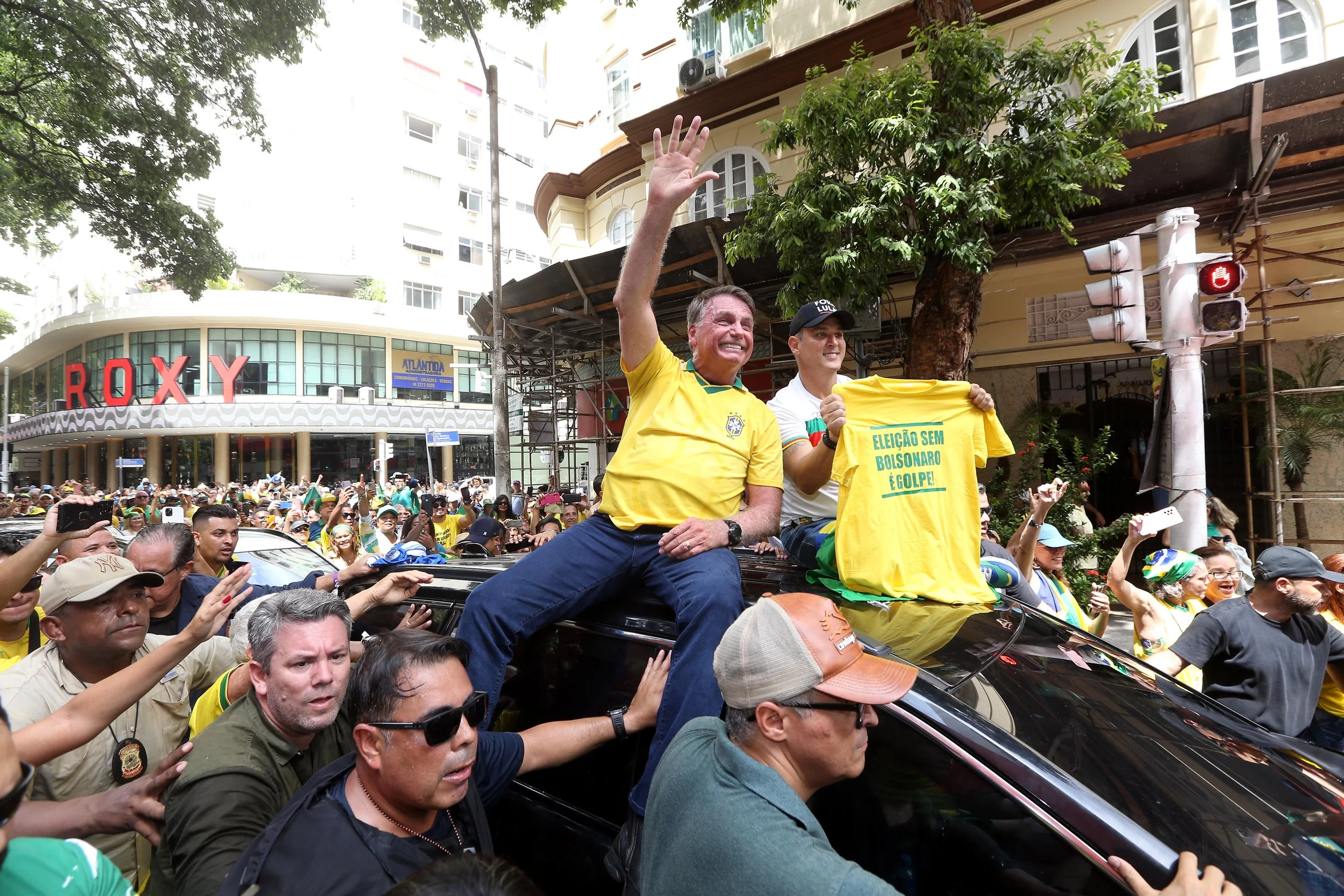
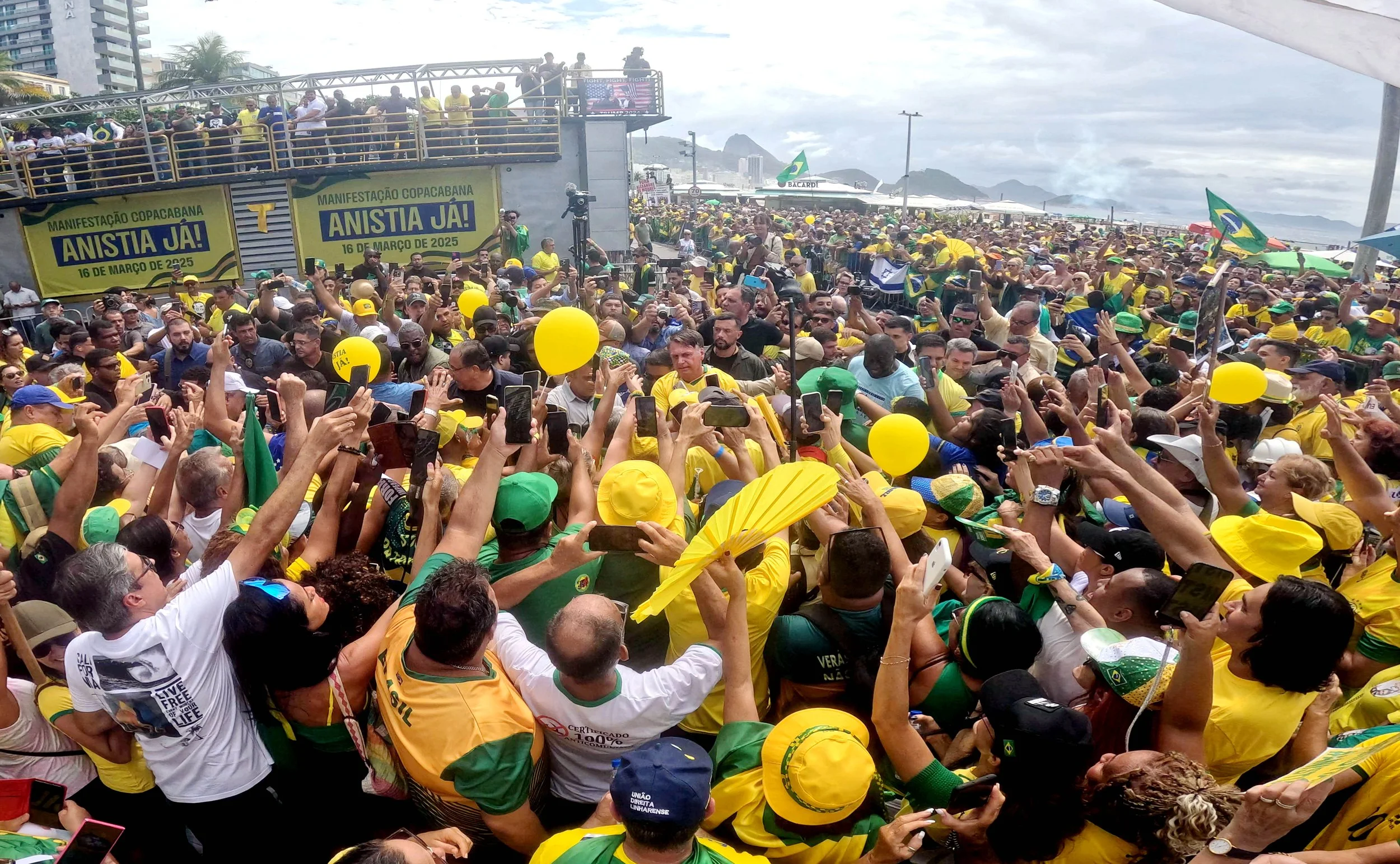
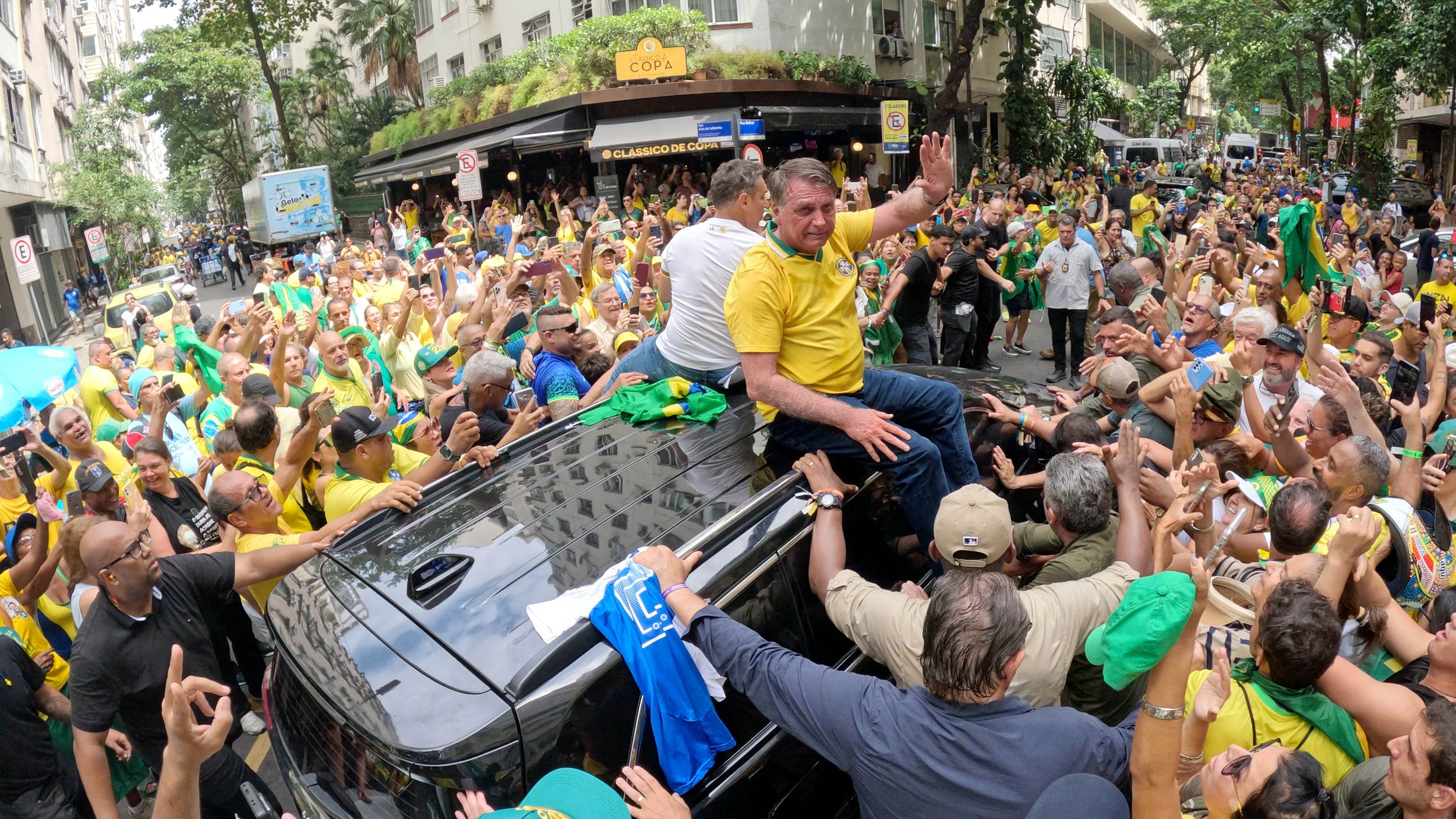
March 16, 2025—Former President Jair Bolsonaro, alongside the leader of the opposition in Brazil’s Chamber of Deputies, Lieutenant Colonel Luciano Lorenzini Zucco, waves to thousands of supporters in Copacabana
Former Brazilian President Jair Bolsonaro faces trial before the Supreme Federal Court on charges of plotting to overturn the 2022 election, leading an alleged criminal organization to subvert democracy, and inciting the January 8, 2023 riots that stormed Brazil’s government buildings. Prosecutors say the plot included plans for military intervention and even targeted assassinations of political rivals.
In 2025, Brazil’s most famous beach doubled as a political stage, where the golden sands of Copacabana became a recurring backdrop for Jair Bolsonaro’s fight for survival. Three times this year, the former president marched down to the shore—not for leisure, but to rally a movement that refuses to fade, even as the Supreme Court closes in on him.
The year began with Bolsonaro under mounting legal fire. In February, federal prosecutors indicted him for allegedly masterminding a coup plot after his 2022 election loss. By March, the Supreme Court had accepted the charges, setting the stage for a historic trial that could define Brazil’s democratic resilience.
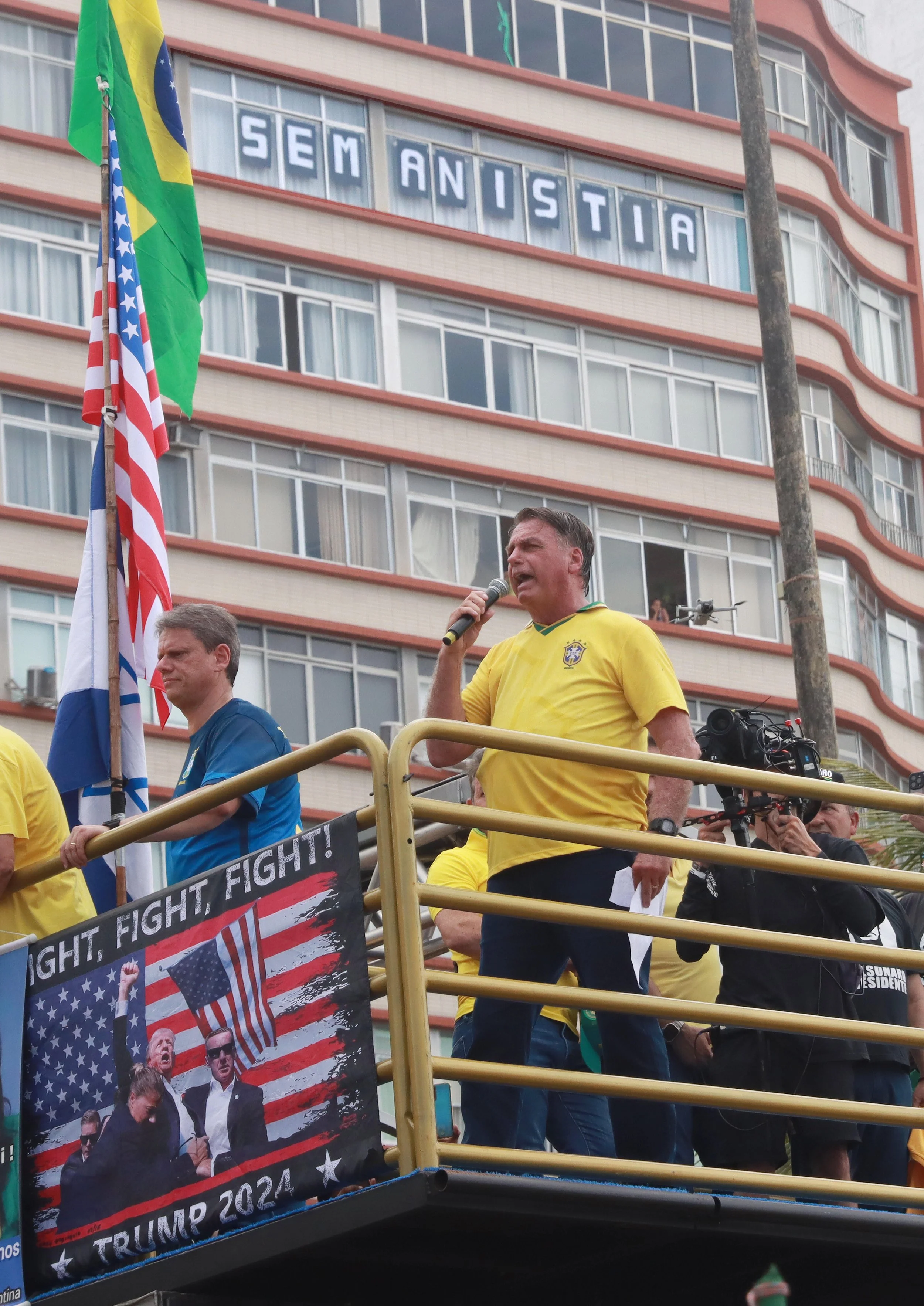
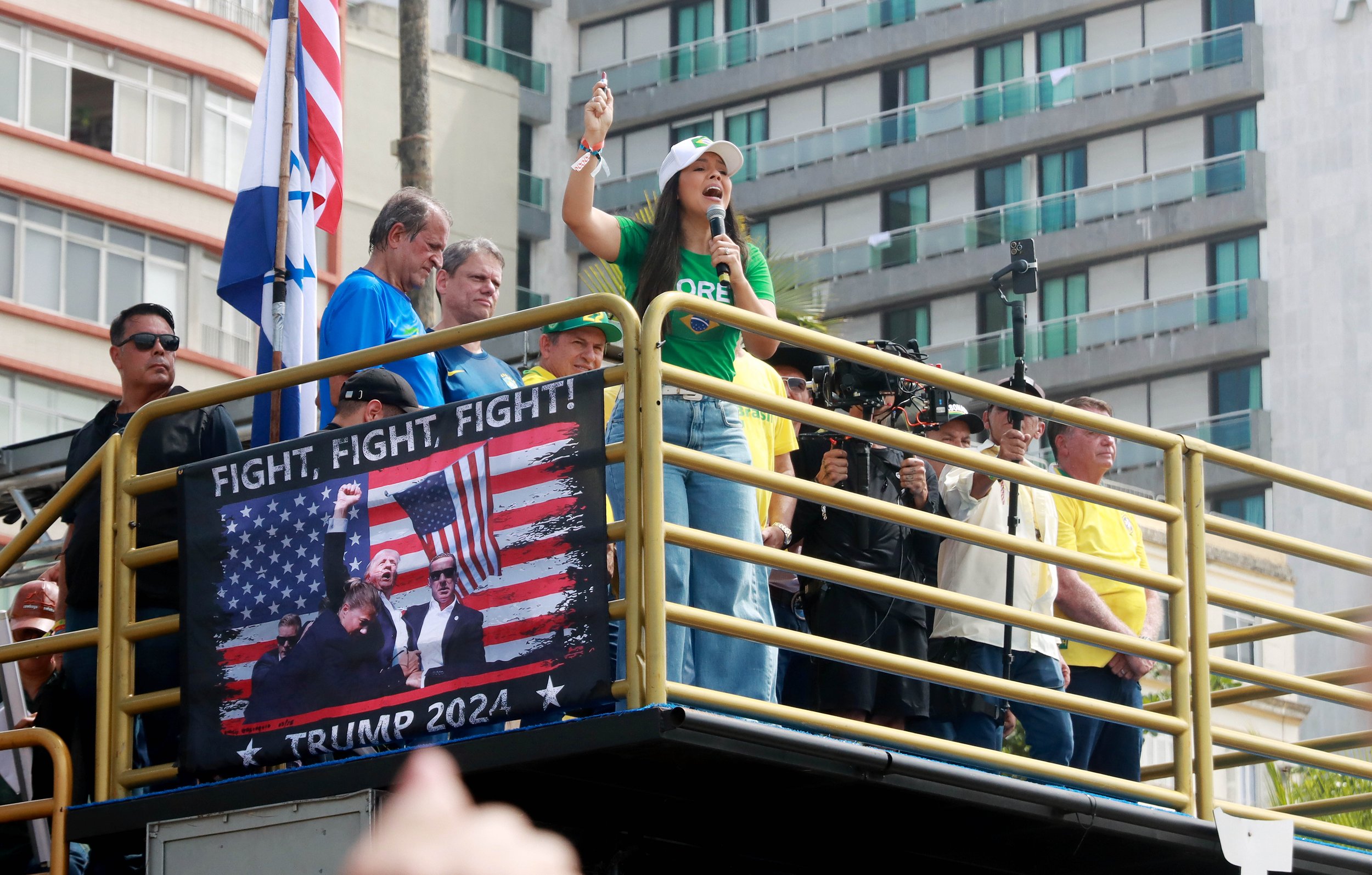
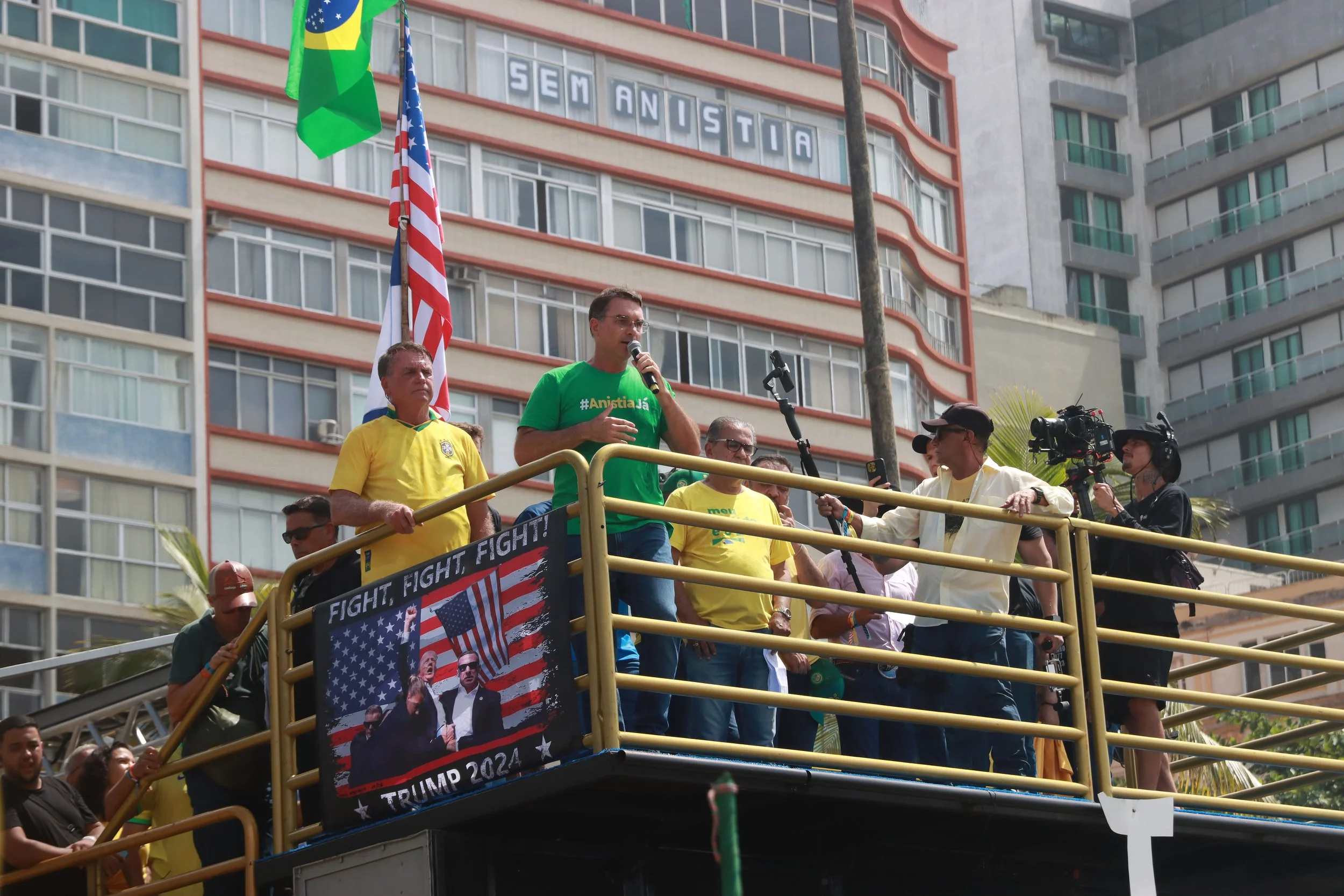
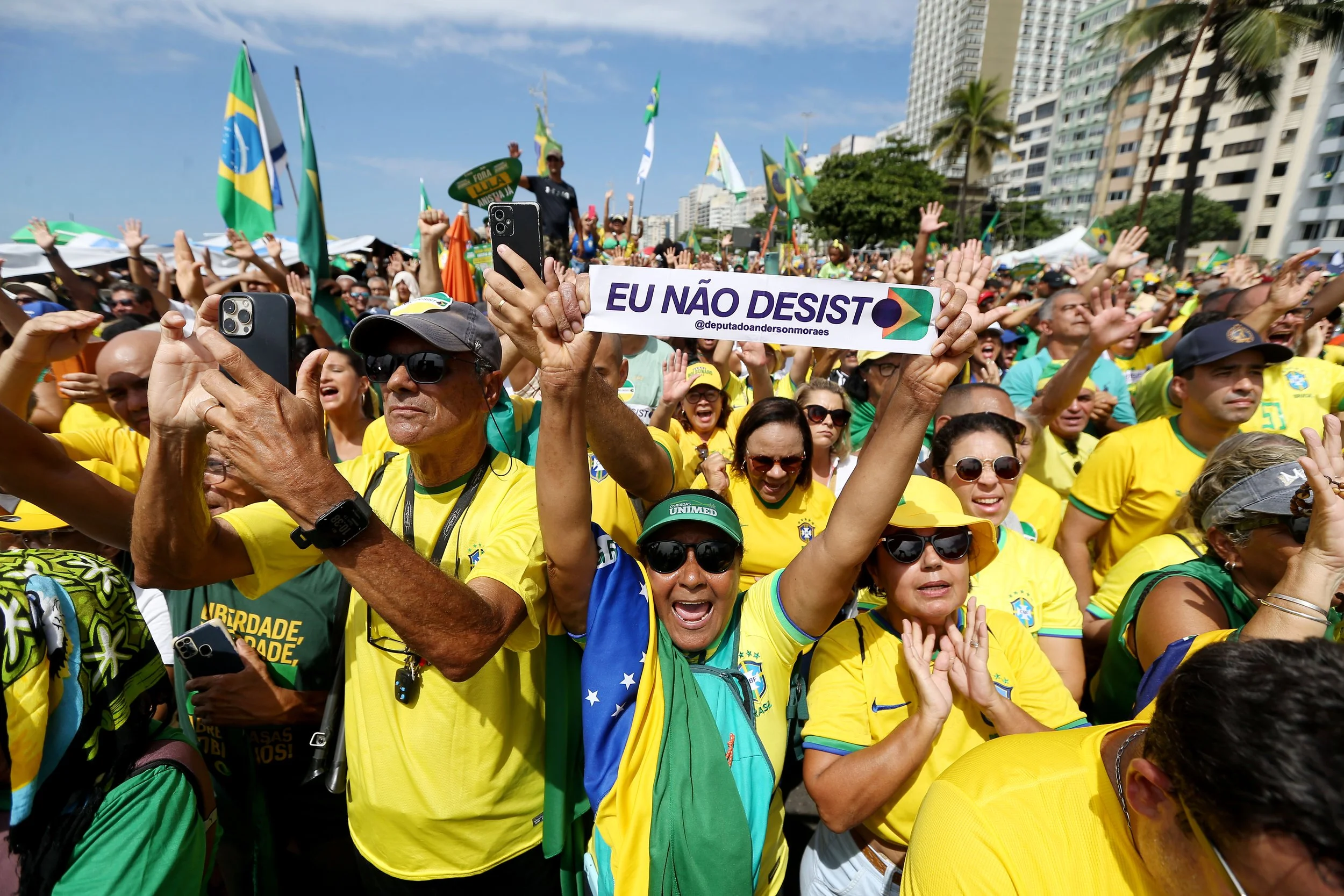
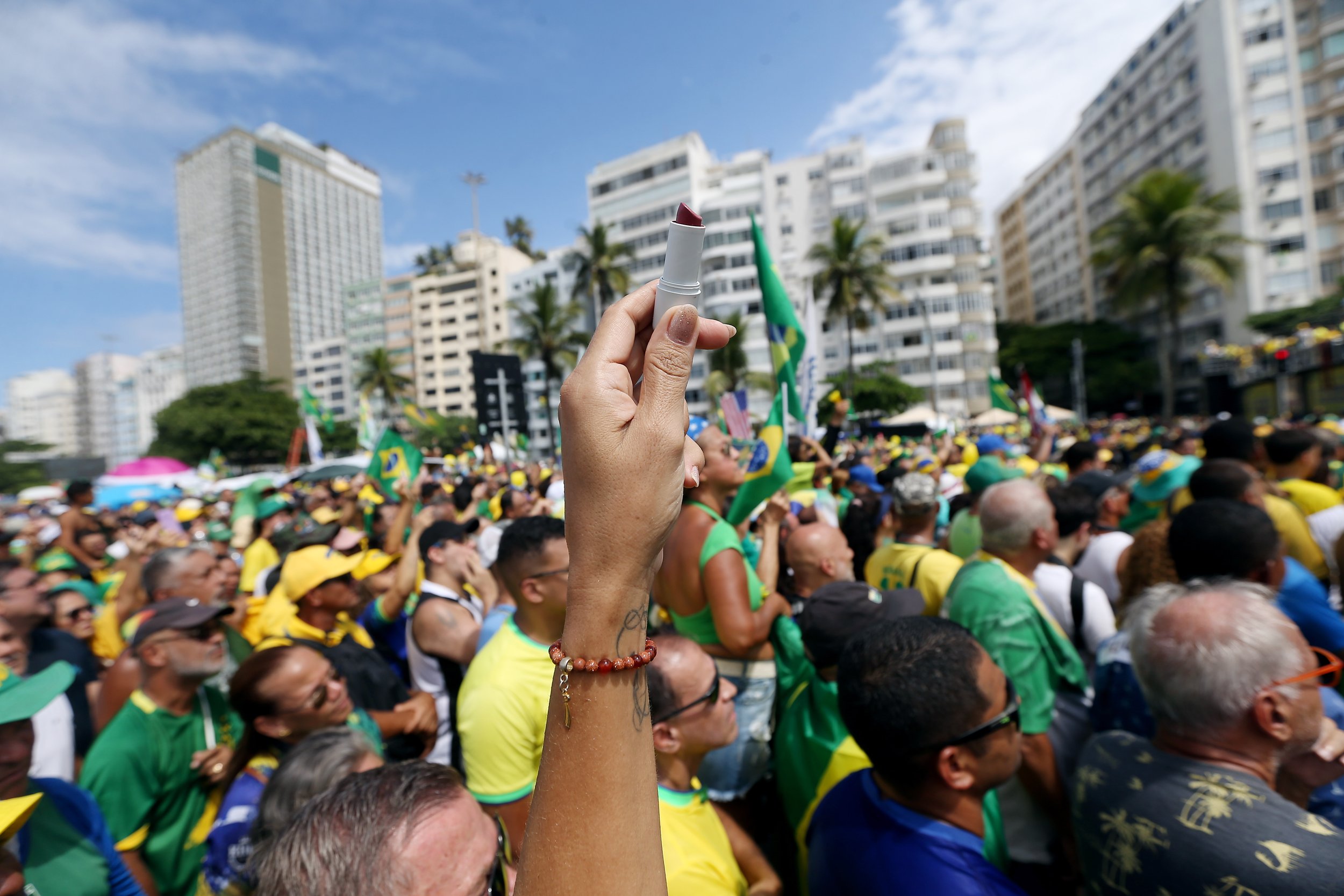
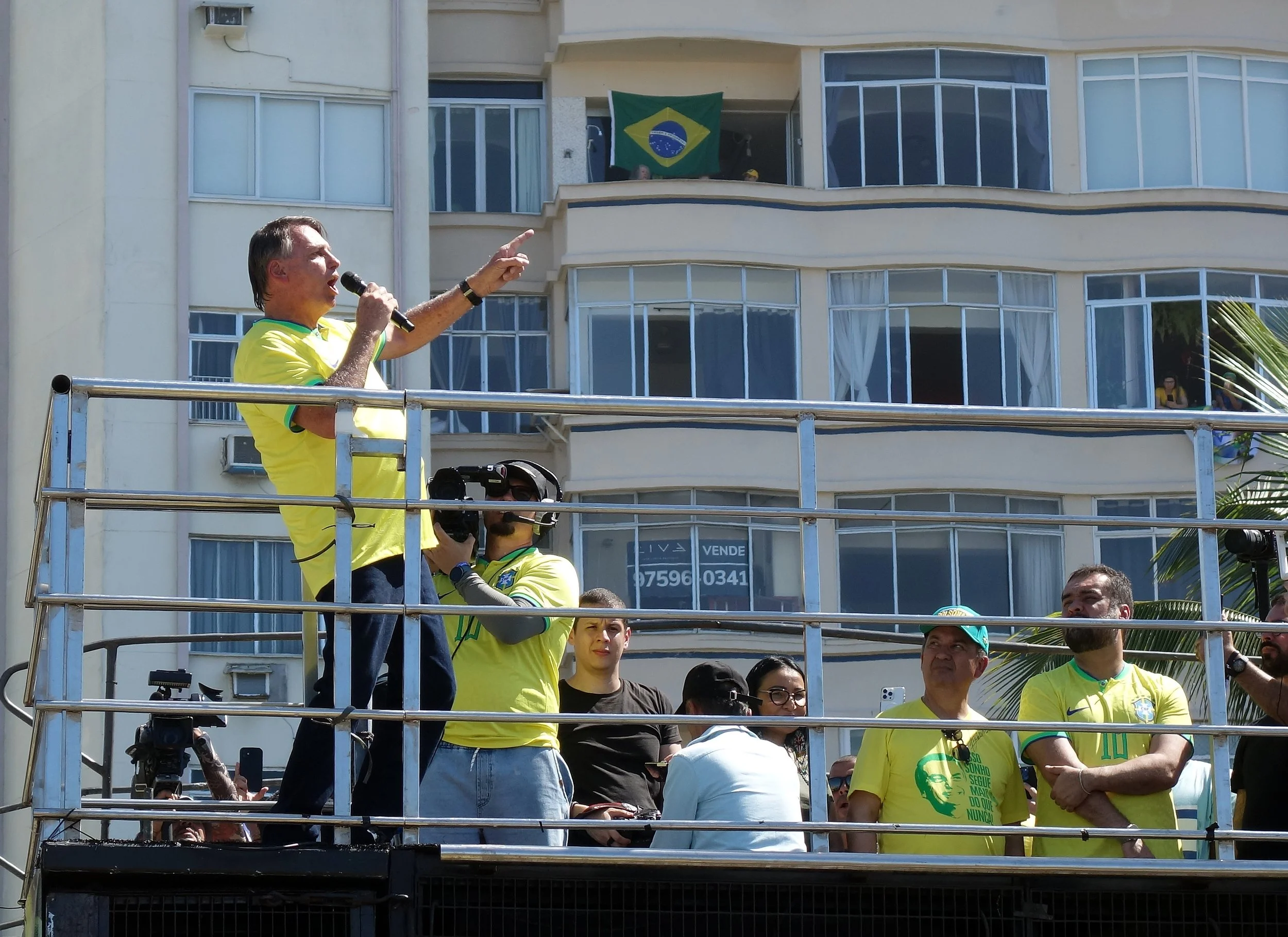
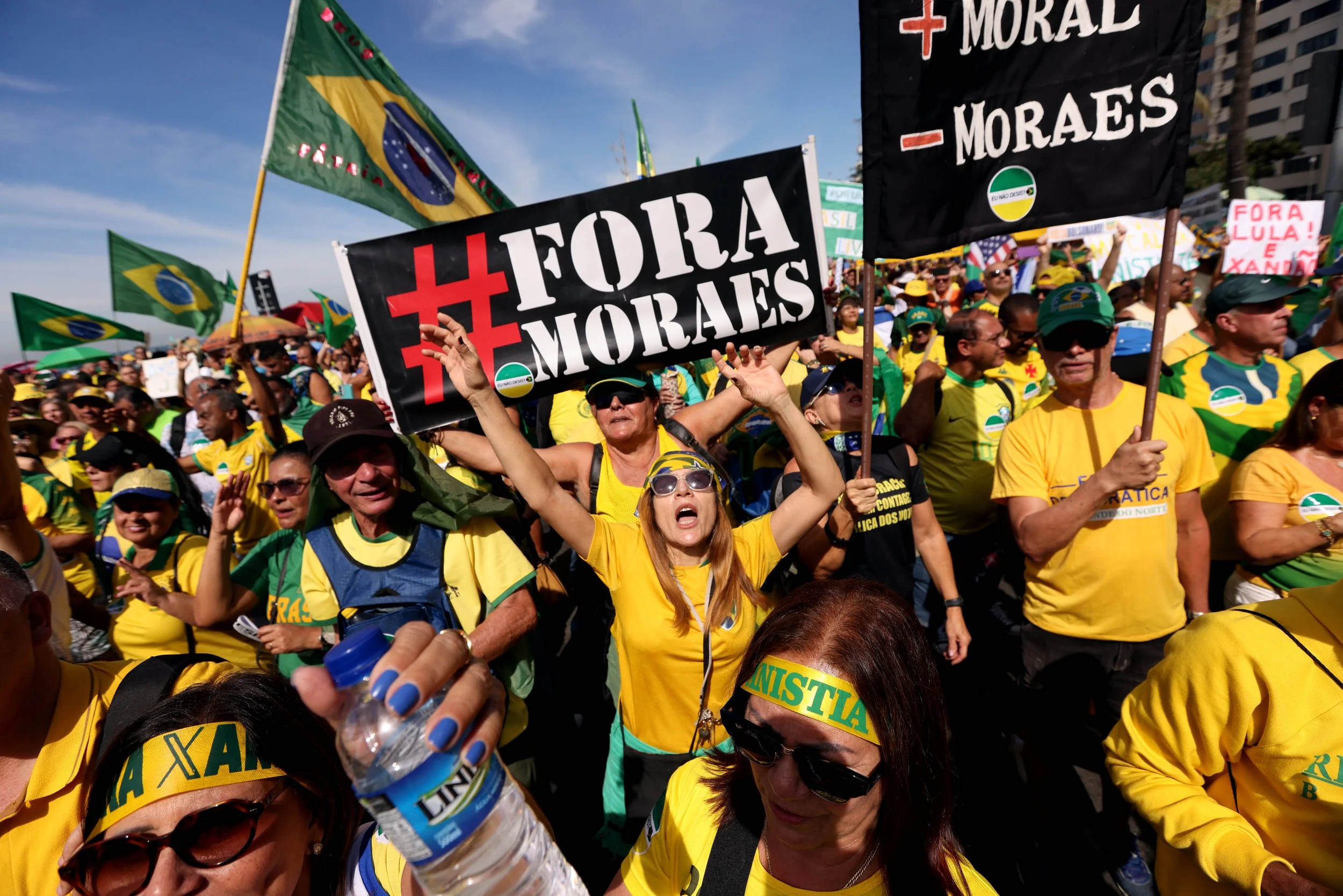
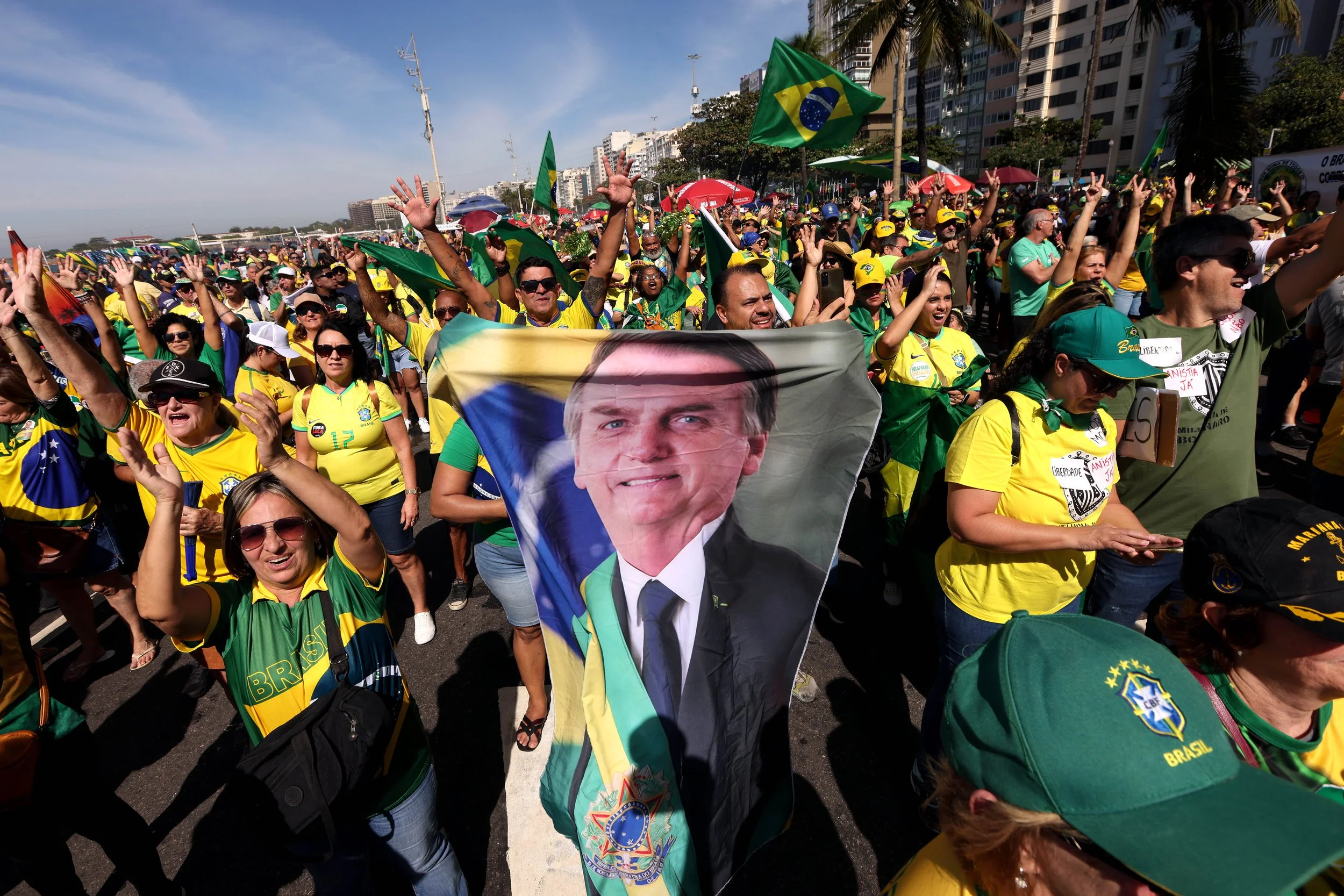
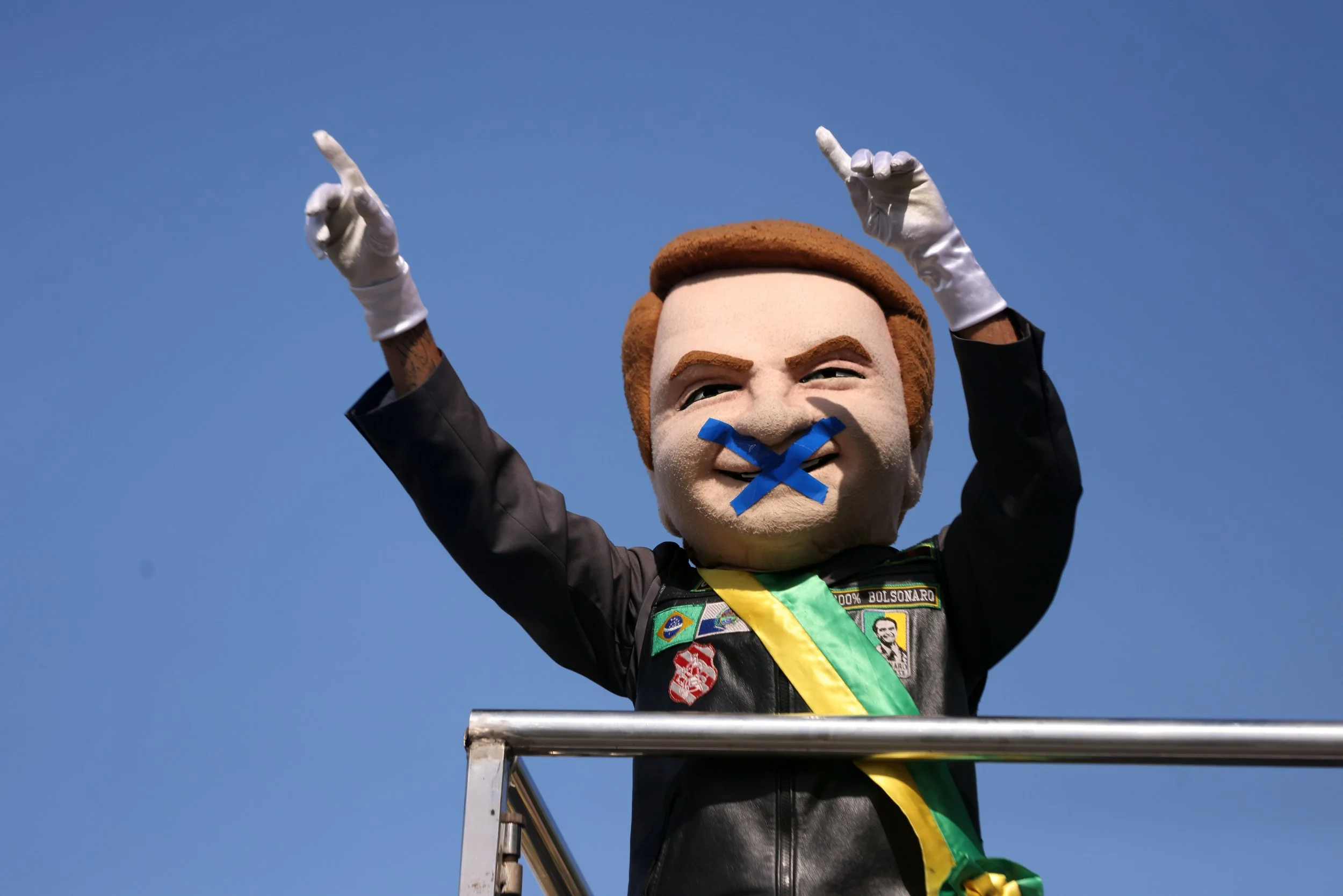
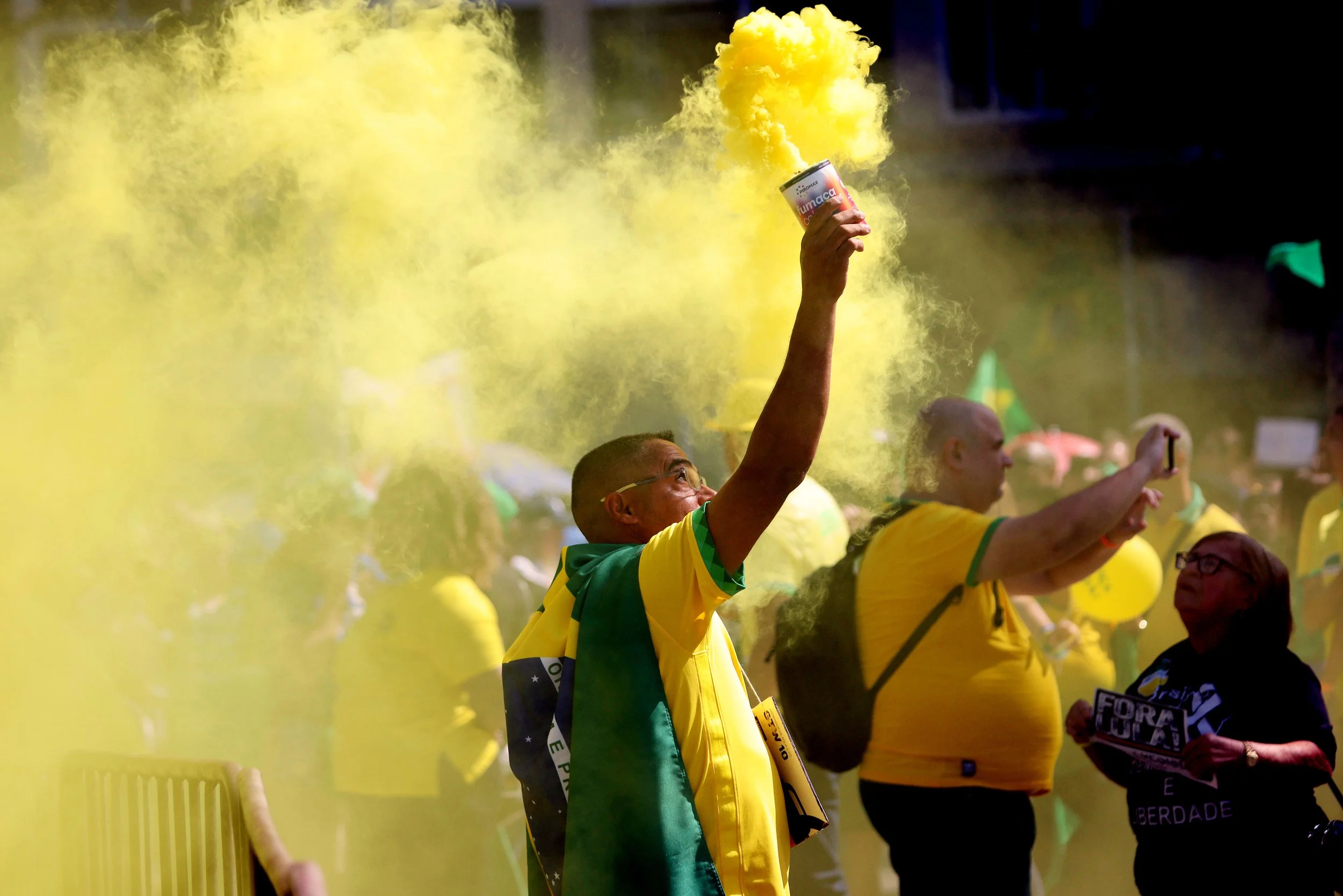
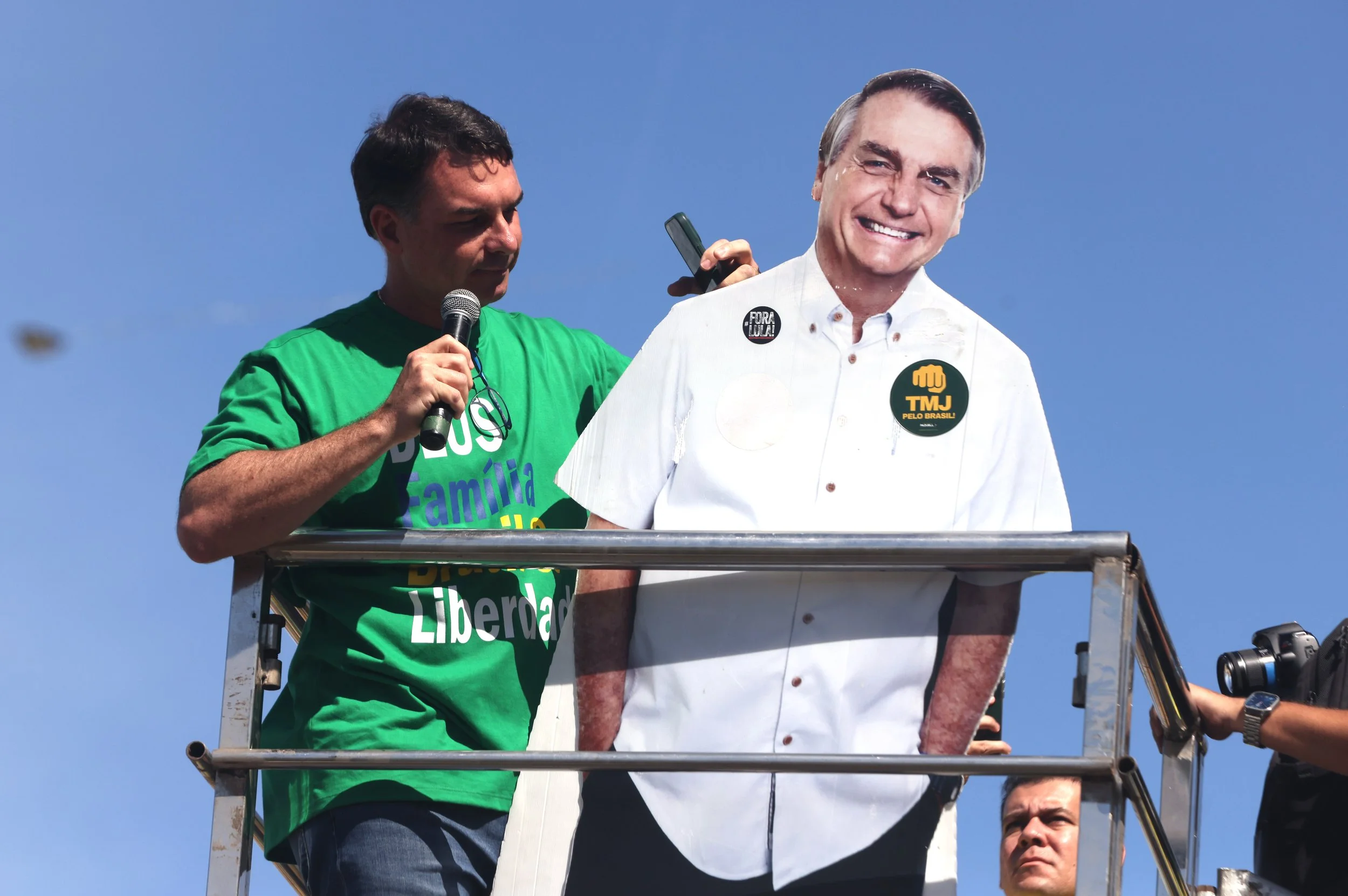
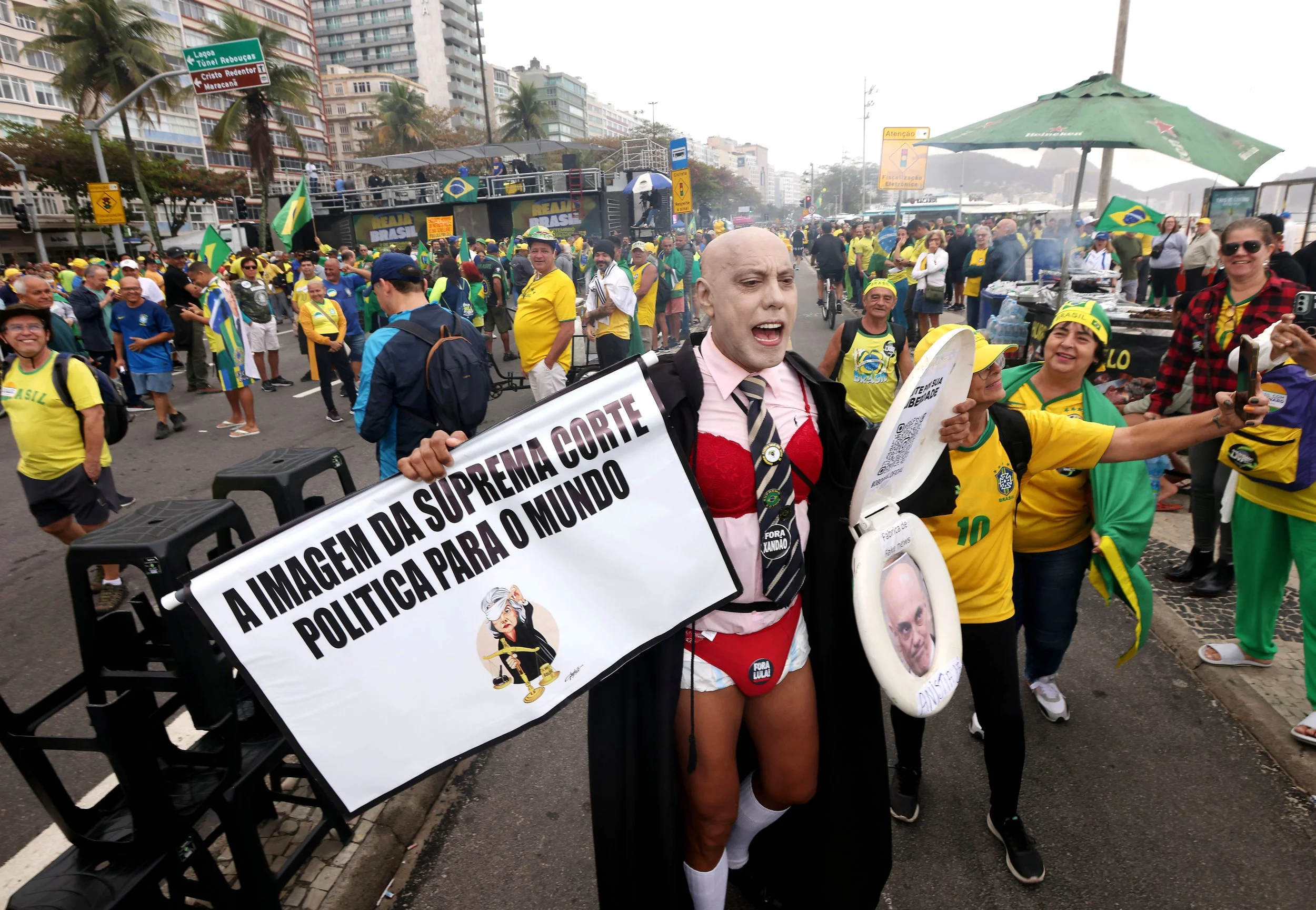
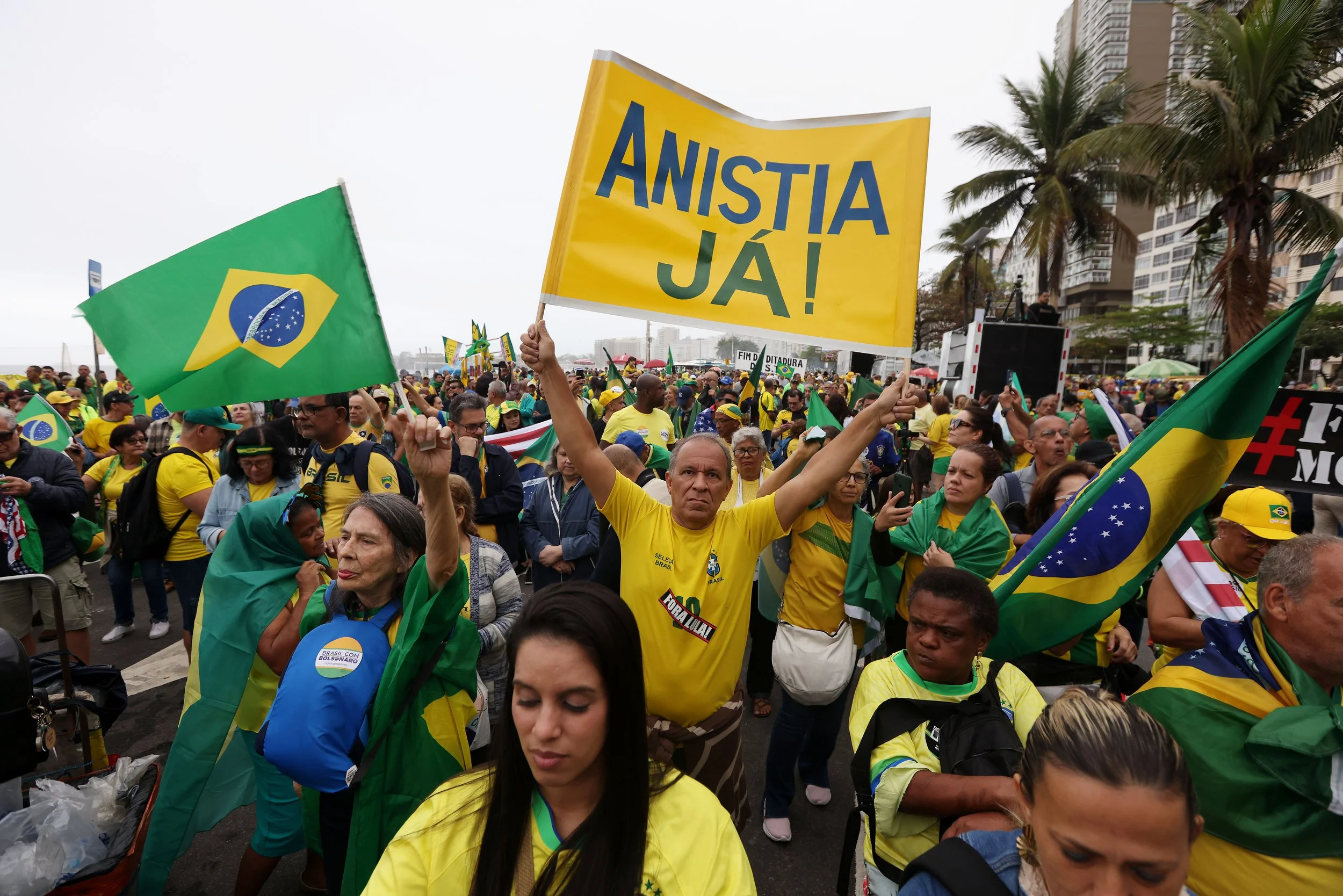
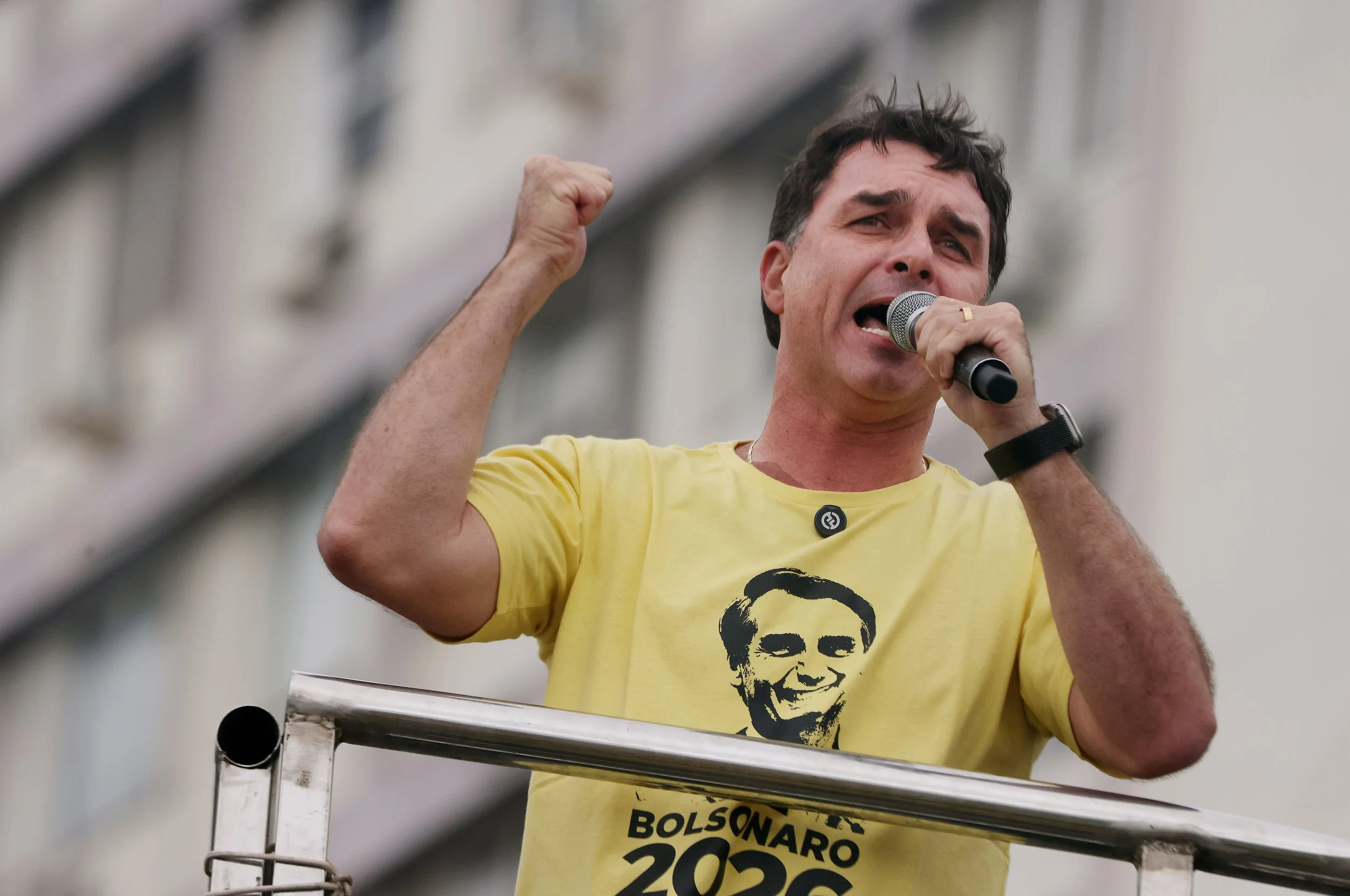
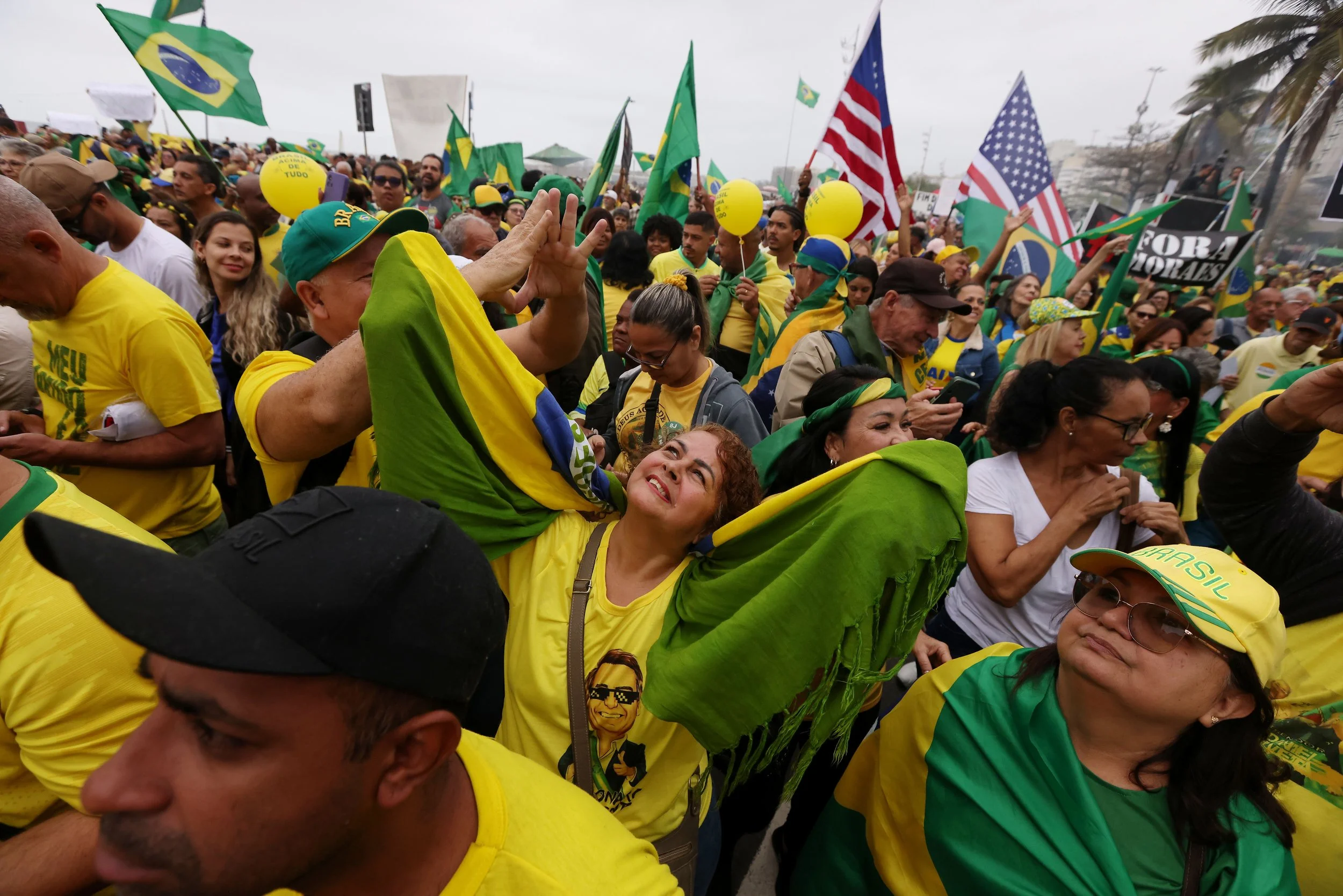
Rather than retreat to quiet legal strategy, Bolsonaro leaned into public spectacle. March 16 saw his first major 2025 appearance in Copacabana — tens of thousands dressed in yellow and green filled Avenida Atlântica, waving Brazilian flags under the blazing sun. From a trio elétrico, Bolsonaro pleaded for amnesty for those convicted over the January 8 storming of government buildings, painting them as patriots unjustly punished. His speech was defiant, daring the courts to come for him, too.
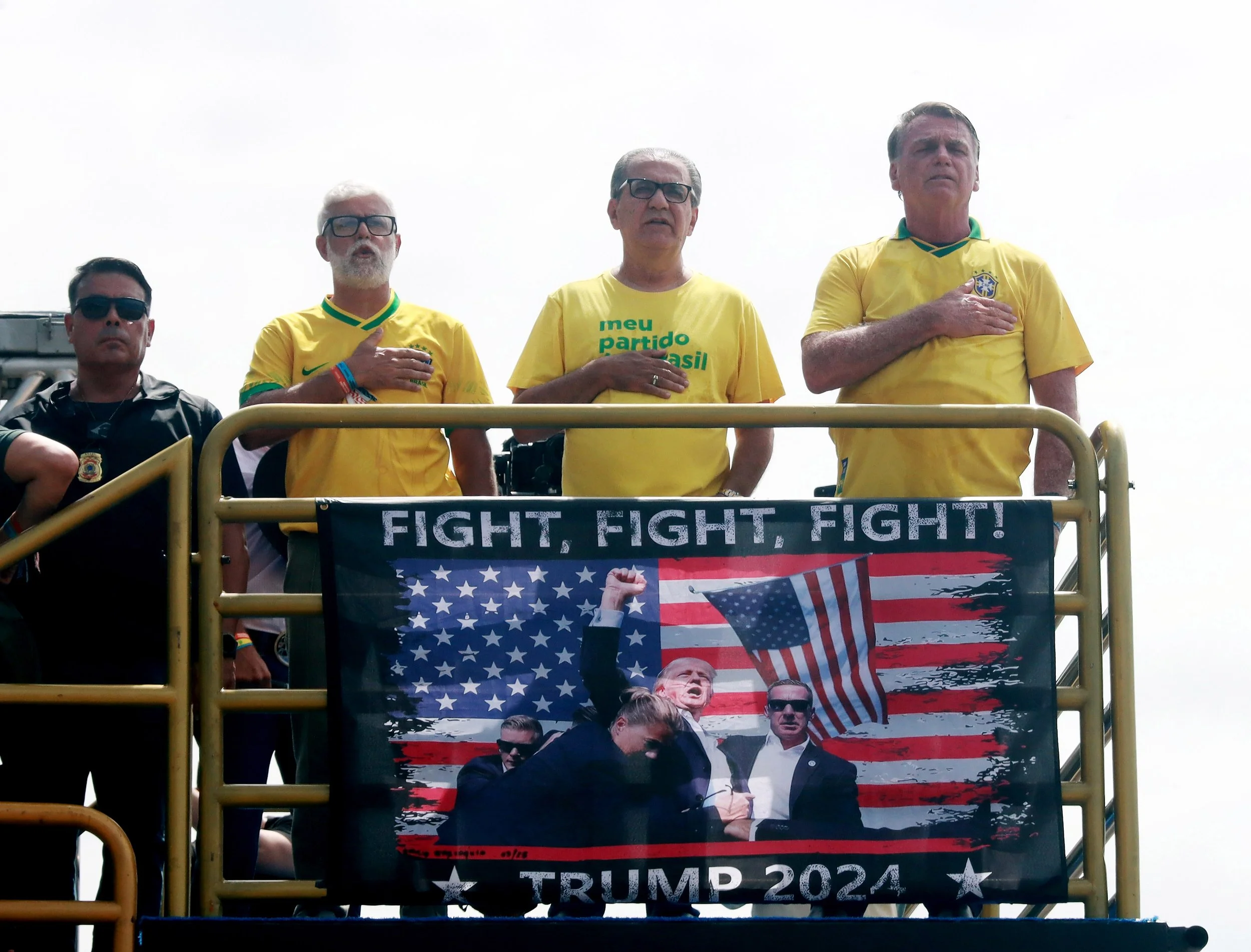
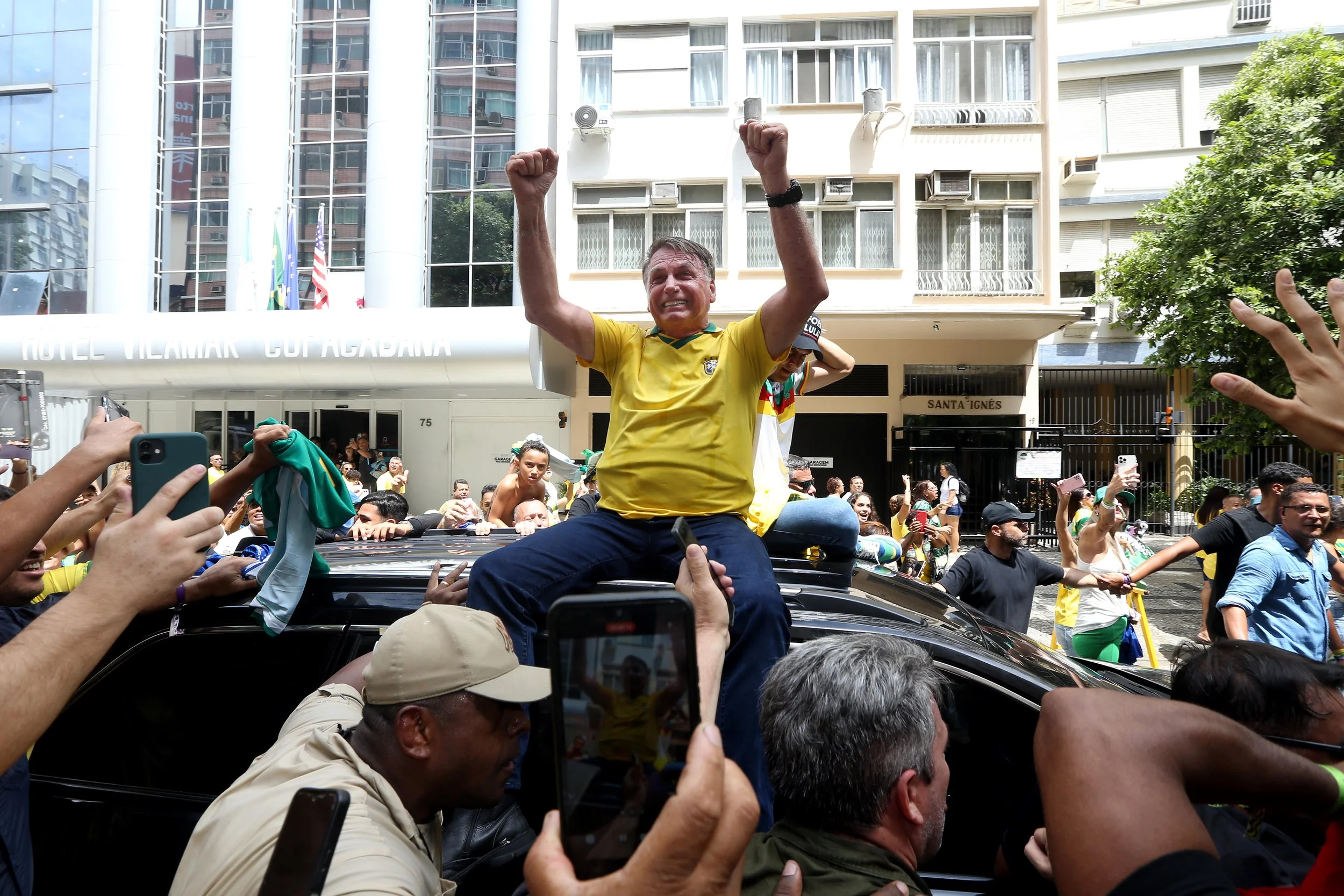
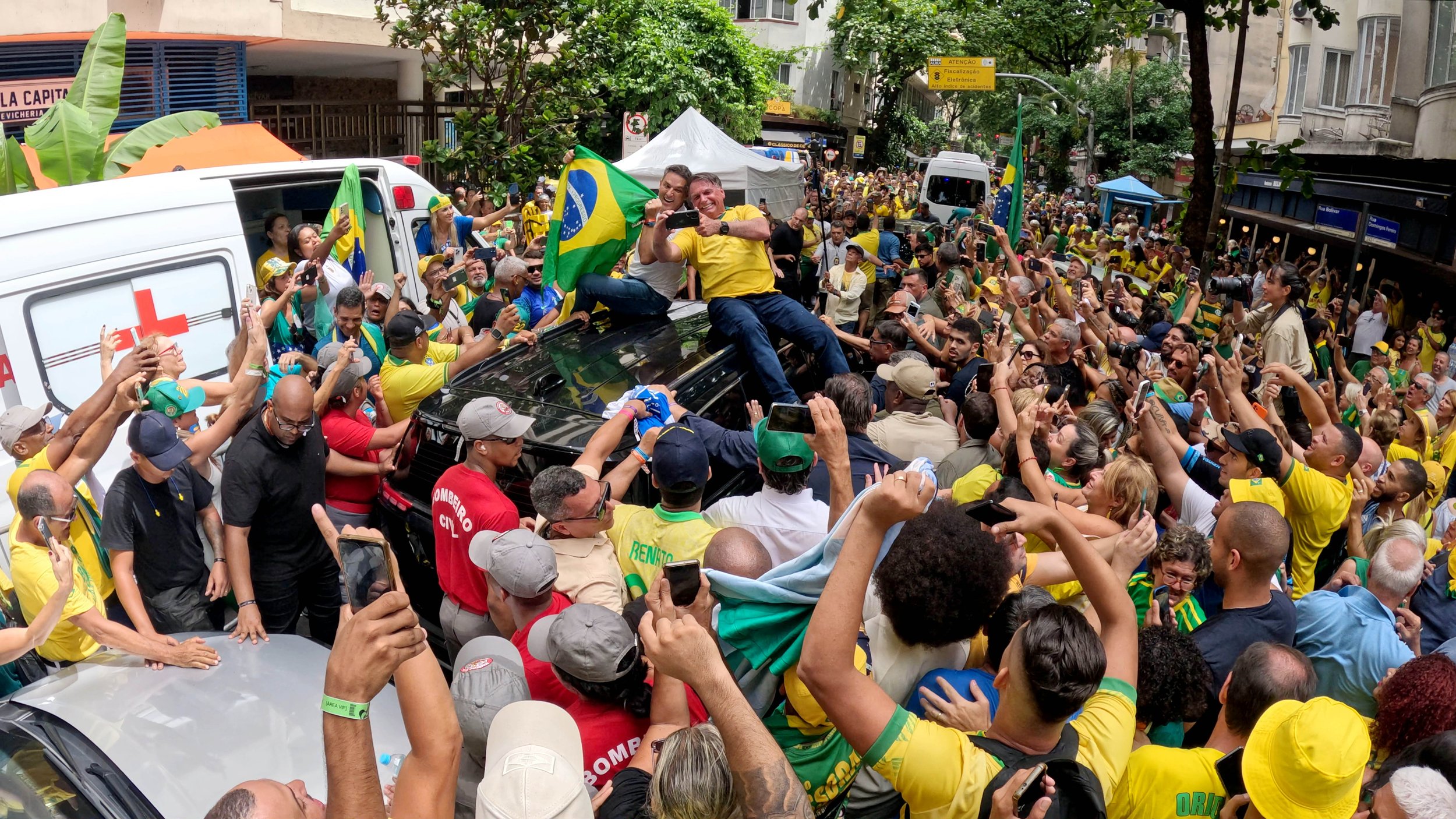
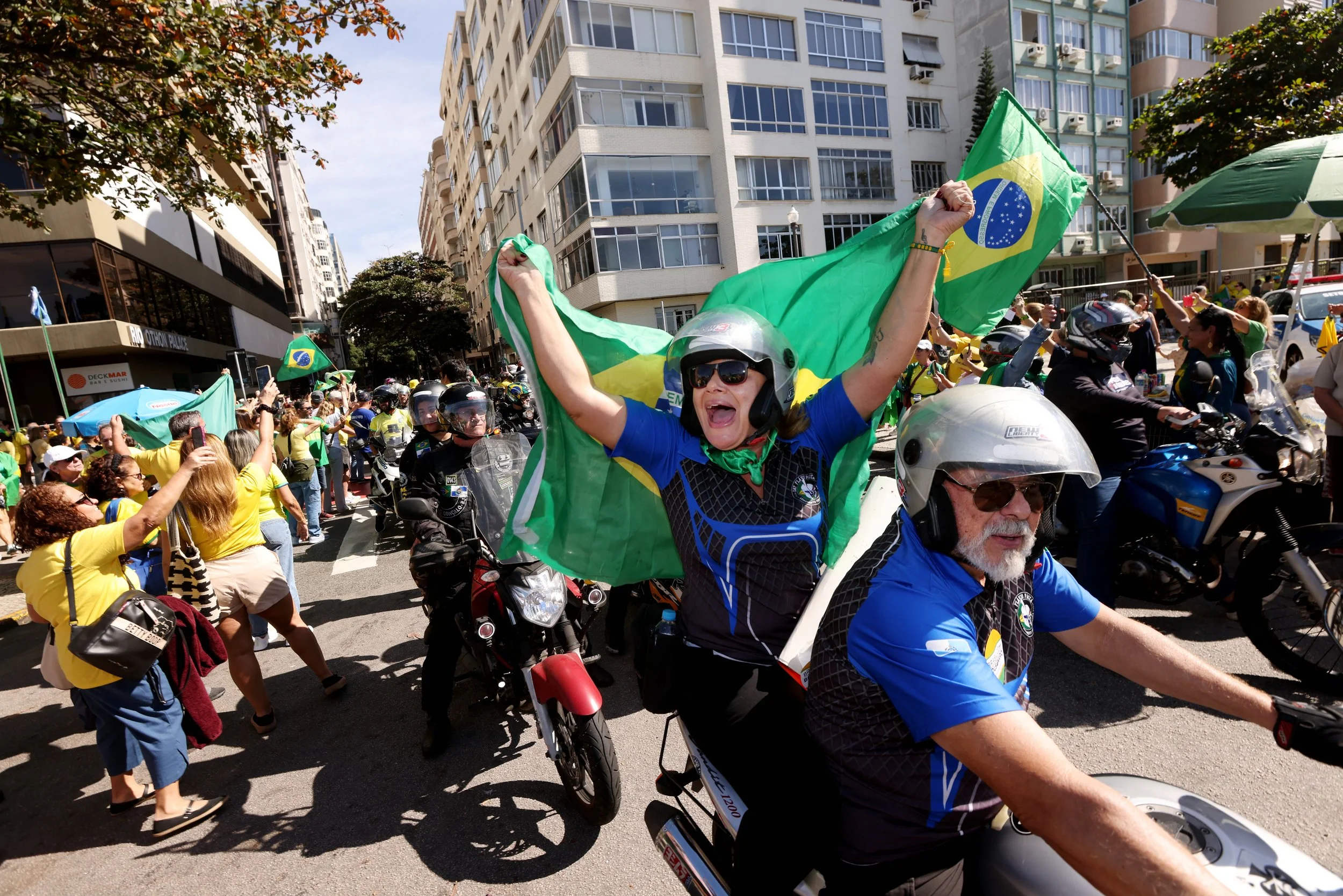
A second rally followed months later, again in Copacabana. This time, the tone was sharper. With testimony in his trial underway, Bolsonaro used the beachfront pulpit to insist that the charges against him were politically motivated. Supporters sang the national anthem, prayed aloud, and vowed to defend him “to the last wave.” After the rally, Bolsonaro left the crowd and rode a motorcade from the beach all the way to Lagoa, where he hopped back into his car.
March 16, 2025—Former President Jair Bolsonaro speaks to tens of thousands of supporters gathered on the sands of Copacabana Beach in Rio de Janeiro for a protest aimed at pressuring the National Congress to approve a controversial bill granting amnesty to those jailed for their involvement in the January 8, 2023, attacks in Brazilia. A handmade sign saying, ‘NO AMNESTY’ is hung from an apartment building behind him.
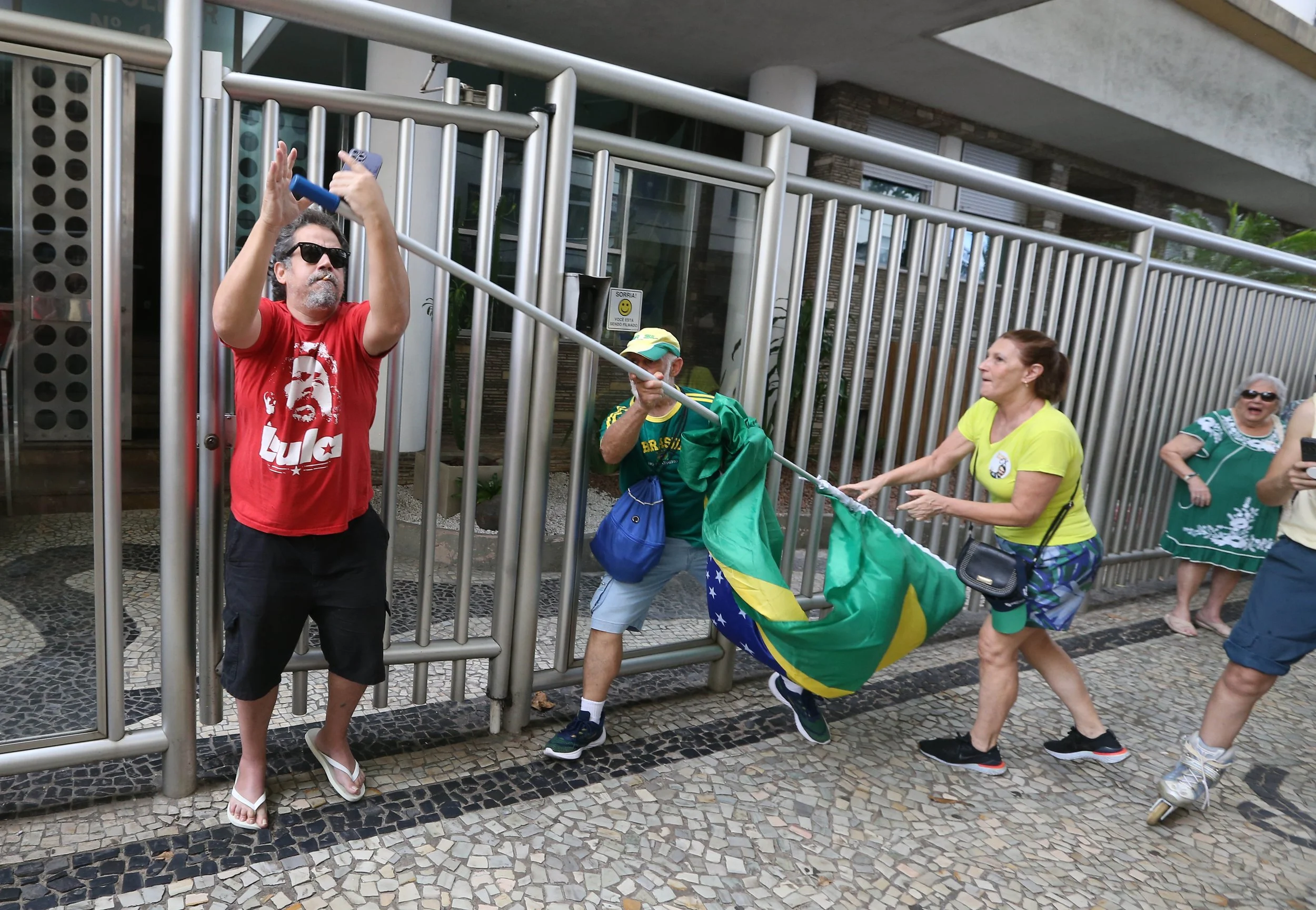
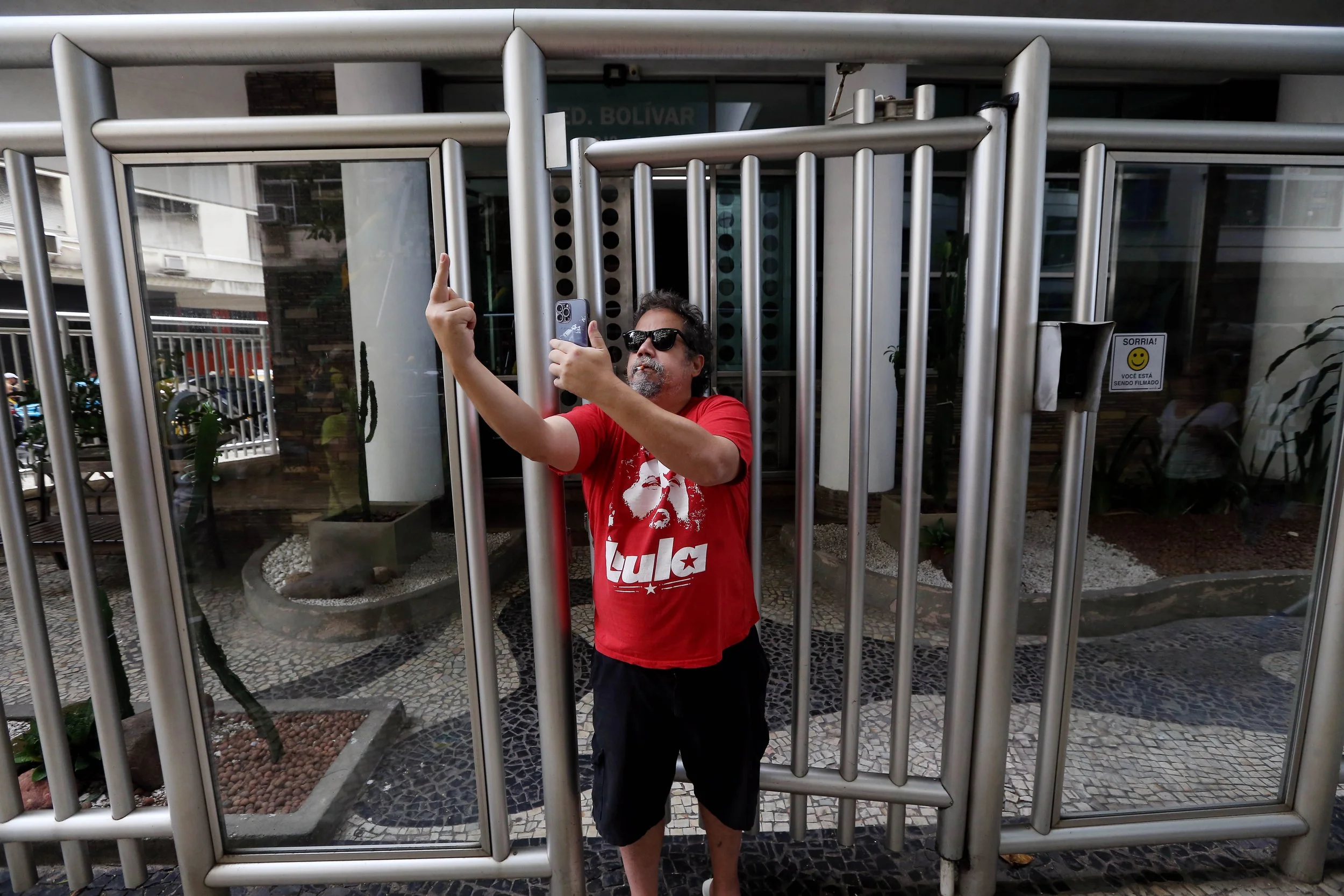
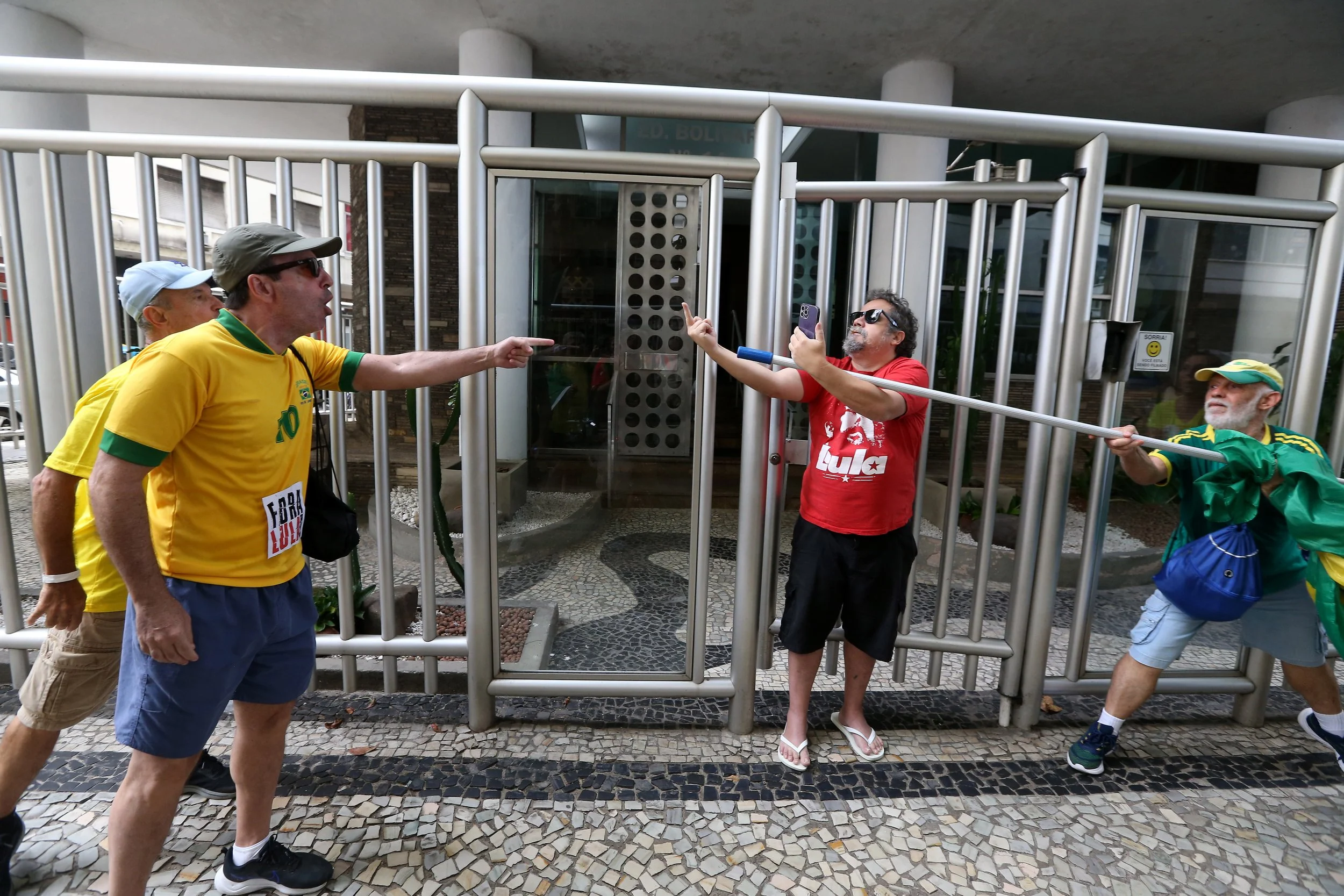
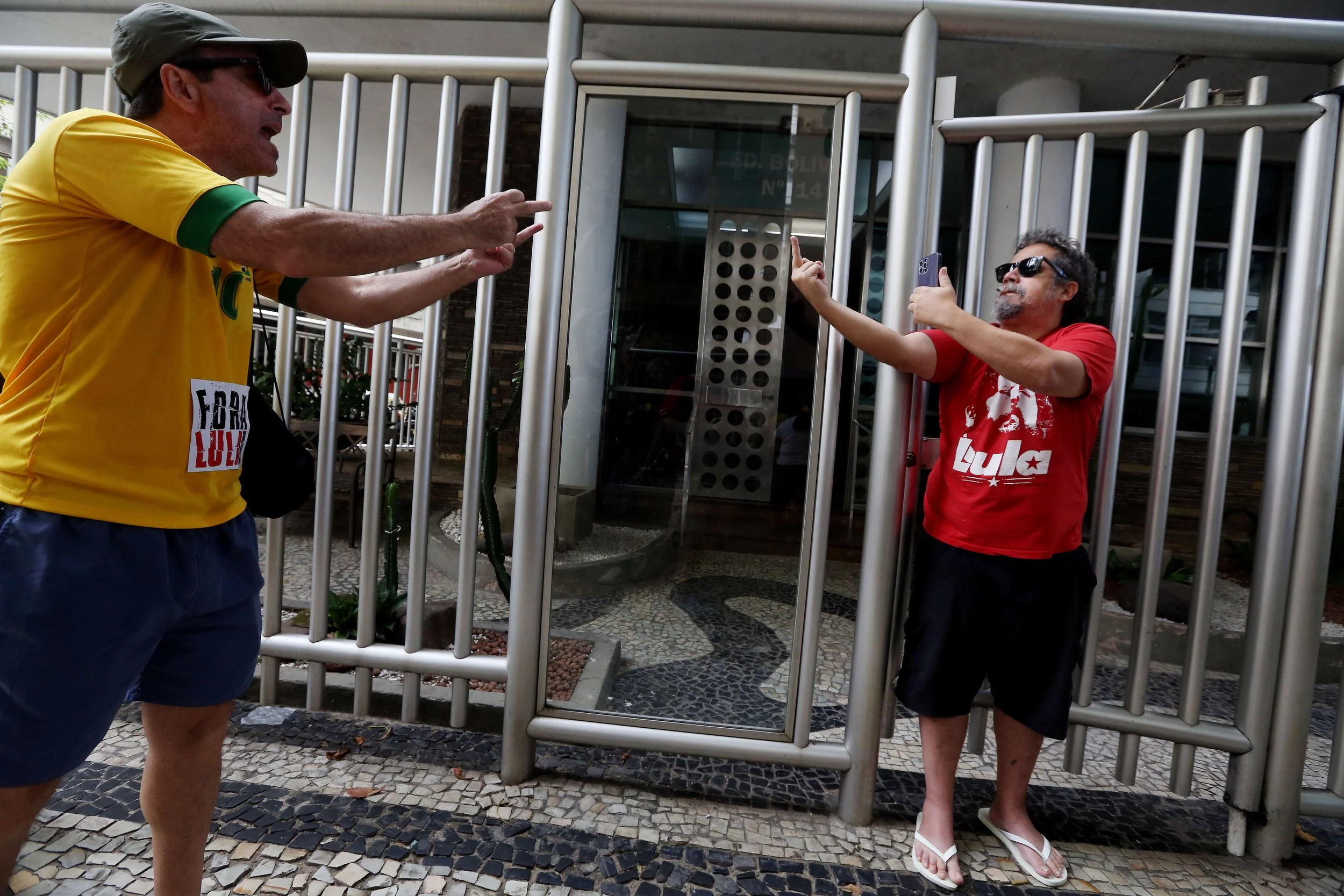
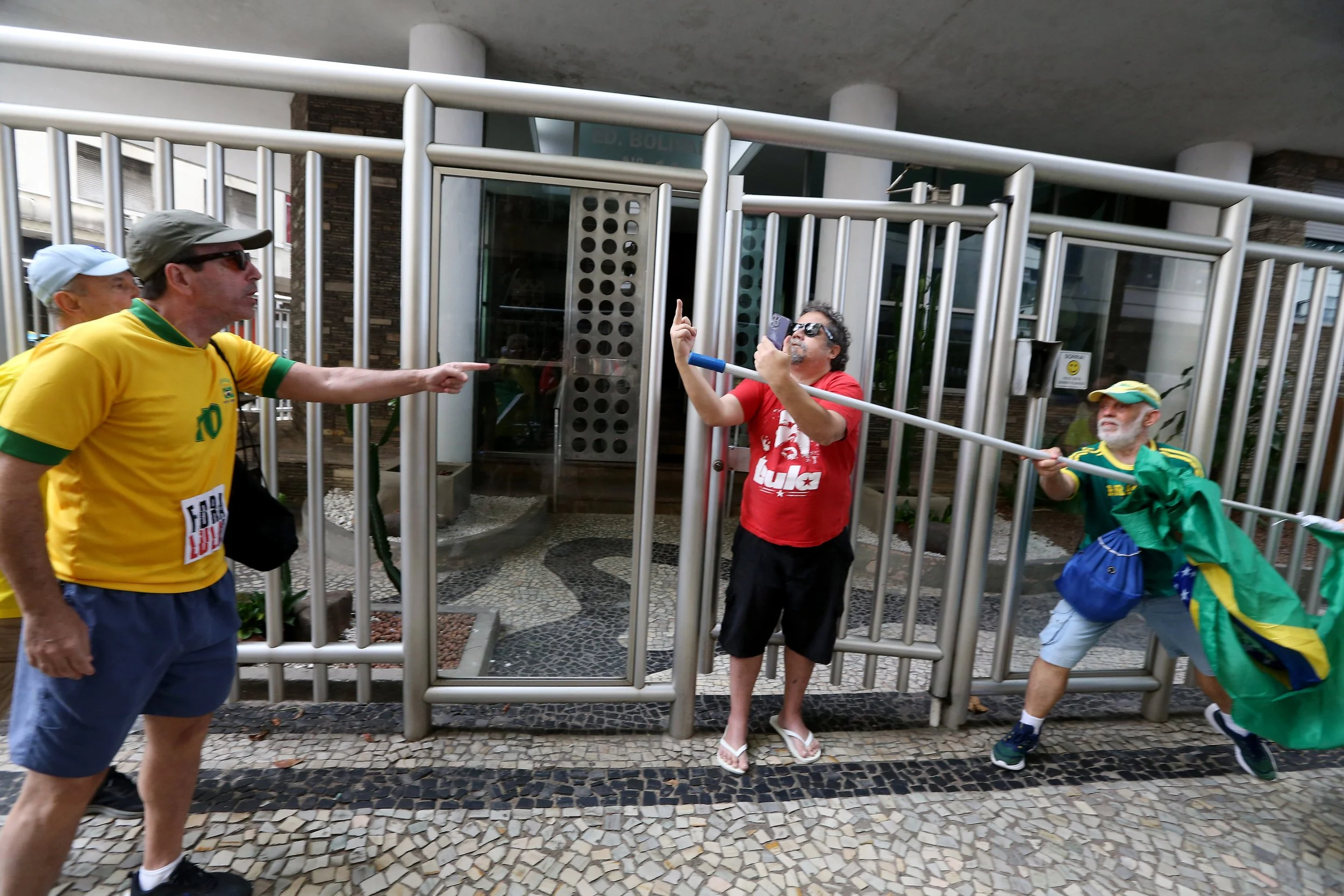
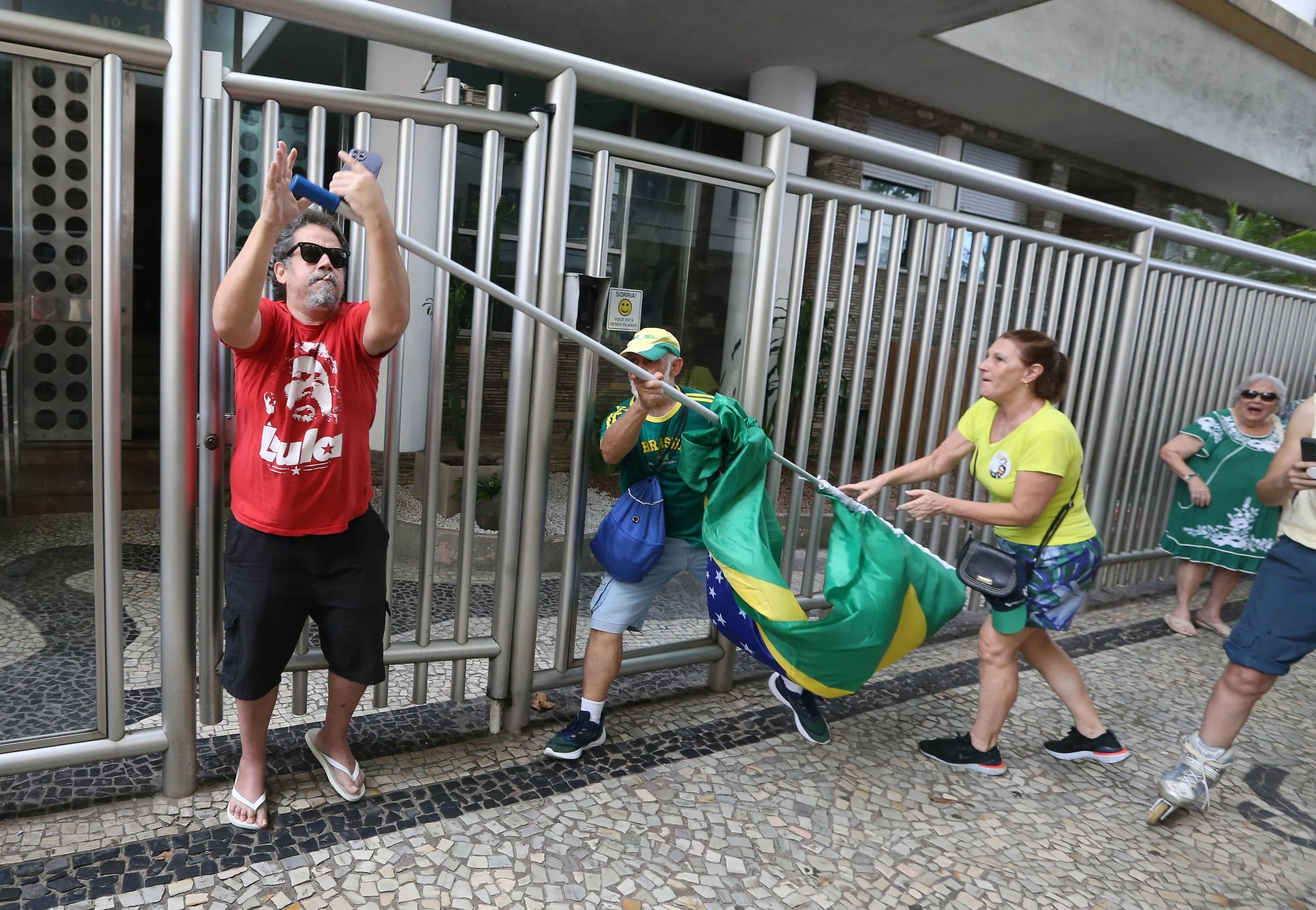
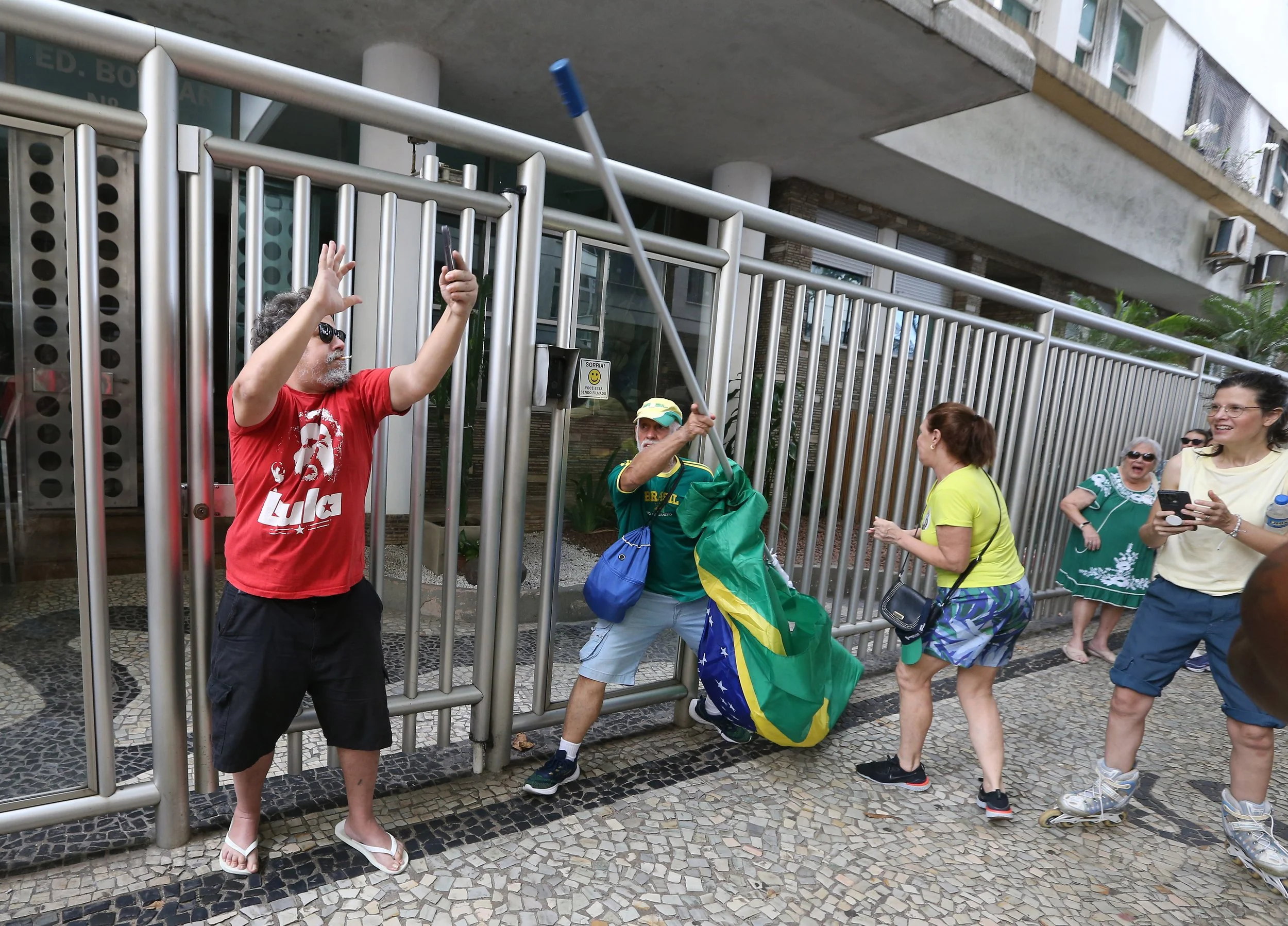
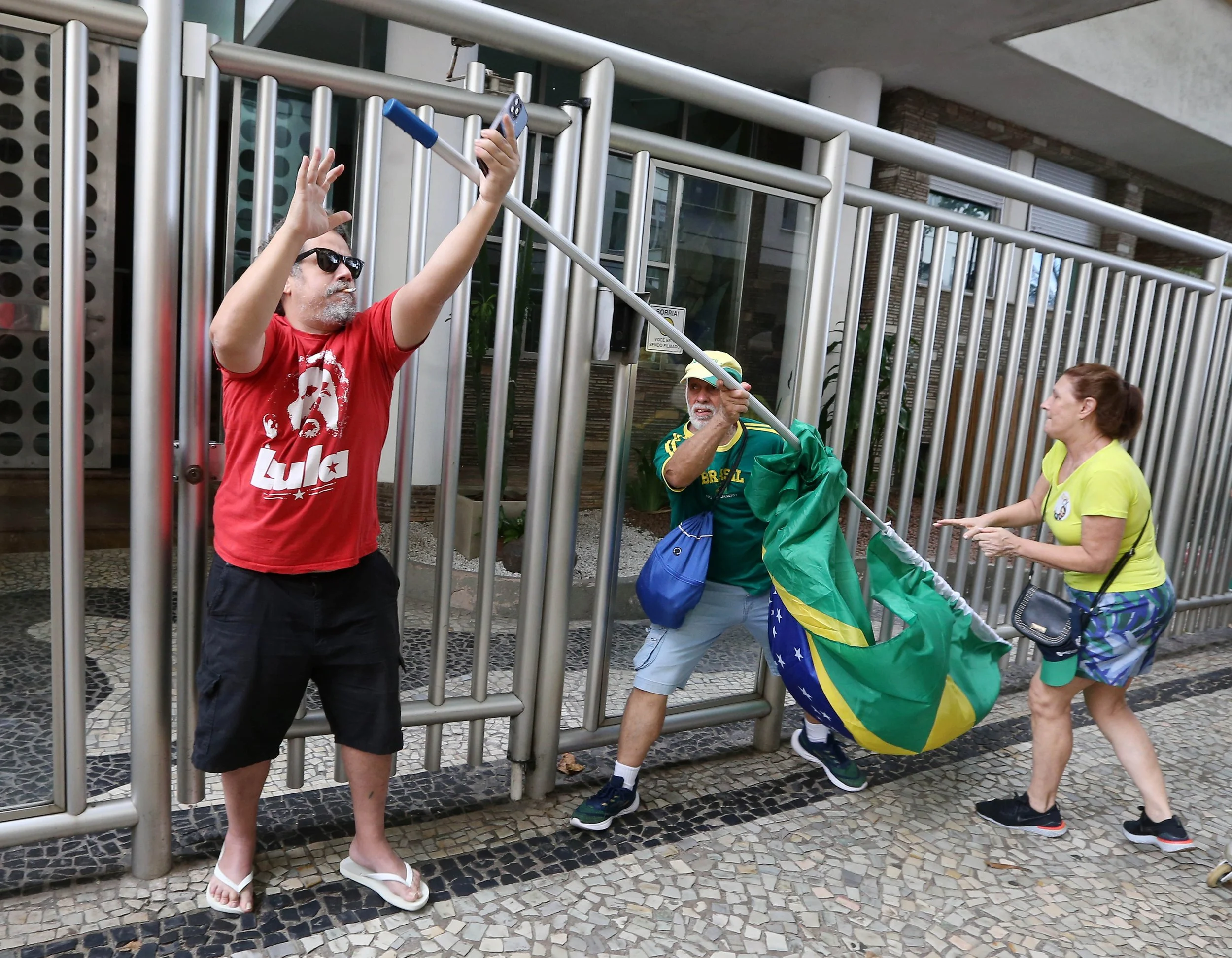
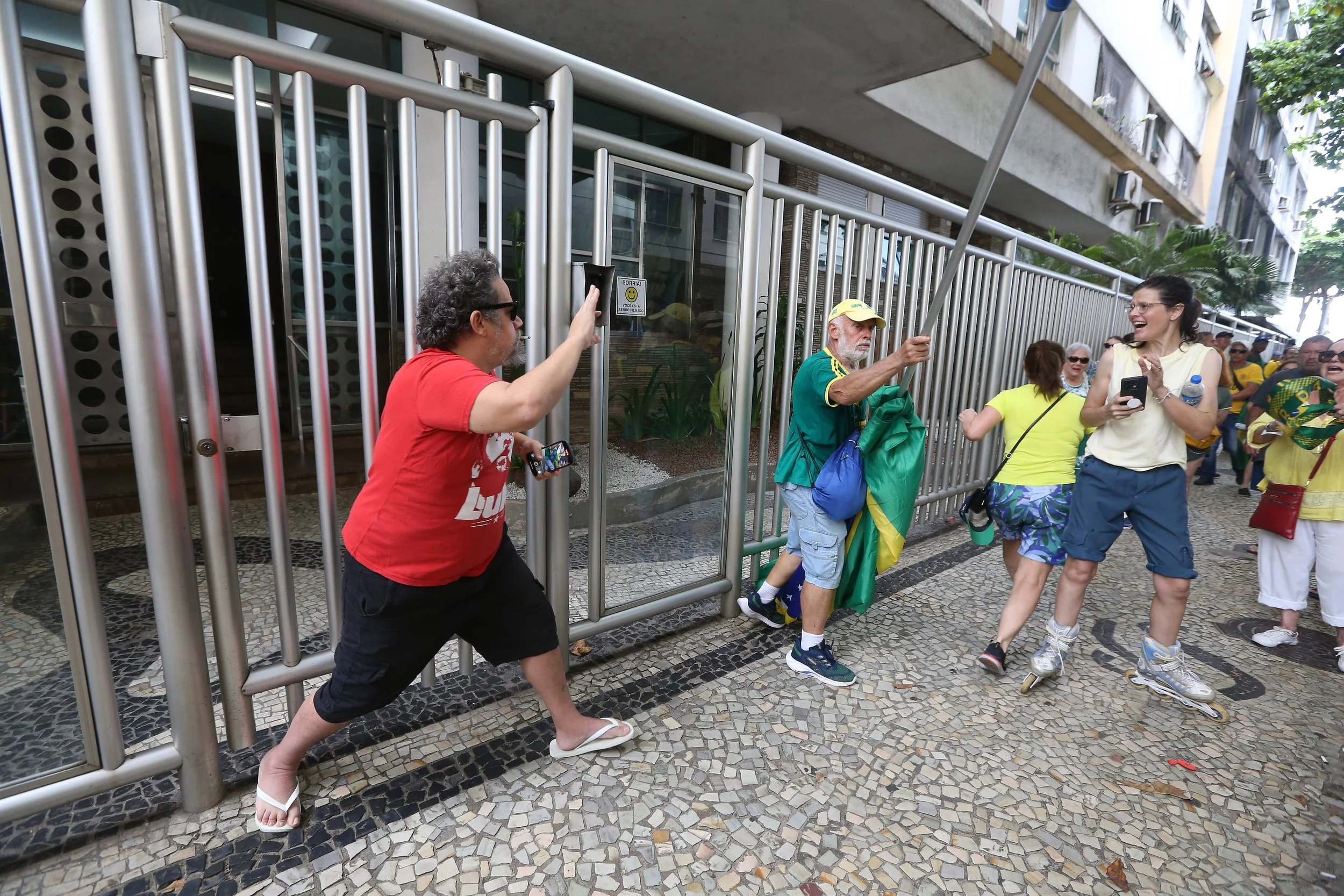
One of my favorite moments of the year came at this rally. As I approached the VIP area to photograph the former president arriving in his motorcade, I suddenly heard loud cursing behind me. I turned to see a man in a Lula shirt, iPhone raised high, taunting the crowd with curses and his middle finger. He was badly outnumbered but refused to back down as supporters of former Brazilian President Jair Bolsonaro circled him in a show of intimidation.
Out of the corner of my right eye, I saw quick movement: a man wielding a Brazilian flag tried to knock the phone out of the Lula supporter’s hand.
The moment instantly reminded me of Stanley Forman’s iconic 1976 photograph, The Soiling of Old Glory, which captured a white teenager using an American flag to assault Black attorney Ted Landsmark on Boston City Hall Plaza during an anti-busing demonstration.
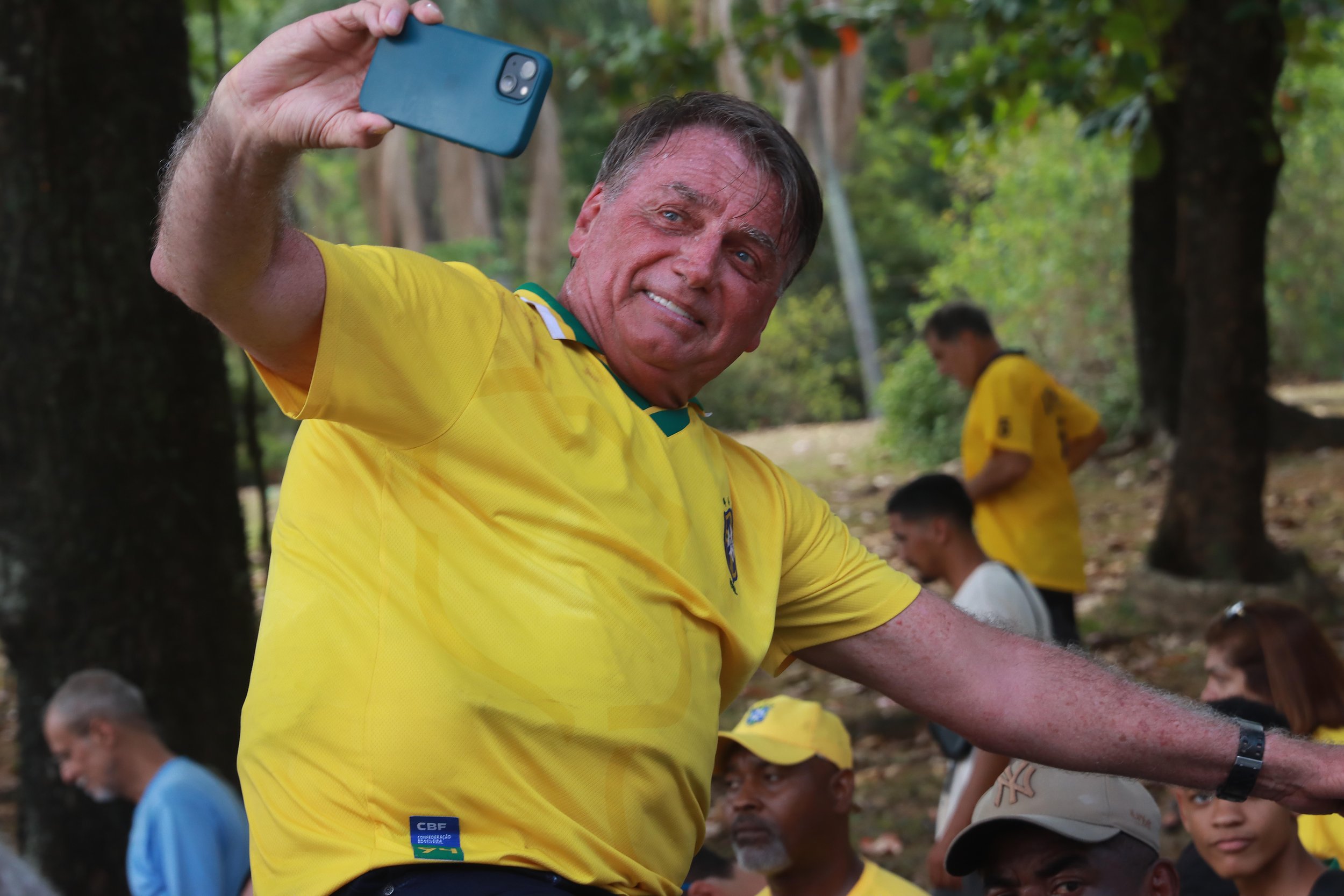
By the time he returned for his third Copacabana rally in late July, the pressure had intensified. The crowds were smaller but no less loyal. Bolsonaro, visibly leaner and more subdued, still invoked the familiar refrains — God, freedom, amnesty — but his words carried the weight of a man who knew the tide might be turning against him.
These Copacabana rallies were more than campaign-style gatherings. They were public declarations of resistance, political theater staged between the sea and the city’s looming high-rises. For Bolsonaro, they were lifelines — a way to show Brazil, and perhaps the court, that his movement still commands loyalty.
In September 2025, the Supreme Court convicted Bolsonaro and handed him a prison sentence of 27 years and 3 months for leading an armed criminal organization, attempting a coup, and seeking the violent abolition of democratic rule.
After his final appeal was rejected, the Court ordered in late November that he begin serving the sentence. On 22 November, he was taken into custody after allegedly tampering with his electronic ankle monitor.
Brazil's Supreme Court on on November 25 ordered former President Jair Bolsonaro to begin his 27-year prison sentence for a coup plot against his successor, a climax to years of political turmoil and legal battles over his contentious legacy in Brazilian democracy.