Robert Karp Photojournalist
Rio de Janeiro
×
9/11: 25 Years Later-From Recovery to Renewal
The images that follow are from the years before 9/11, the day itself and the 25 years since, photographs
that, together, tell a story of loss, remembrance, recovery, and ultimately, renewal.
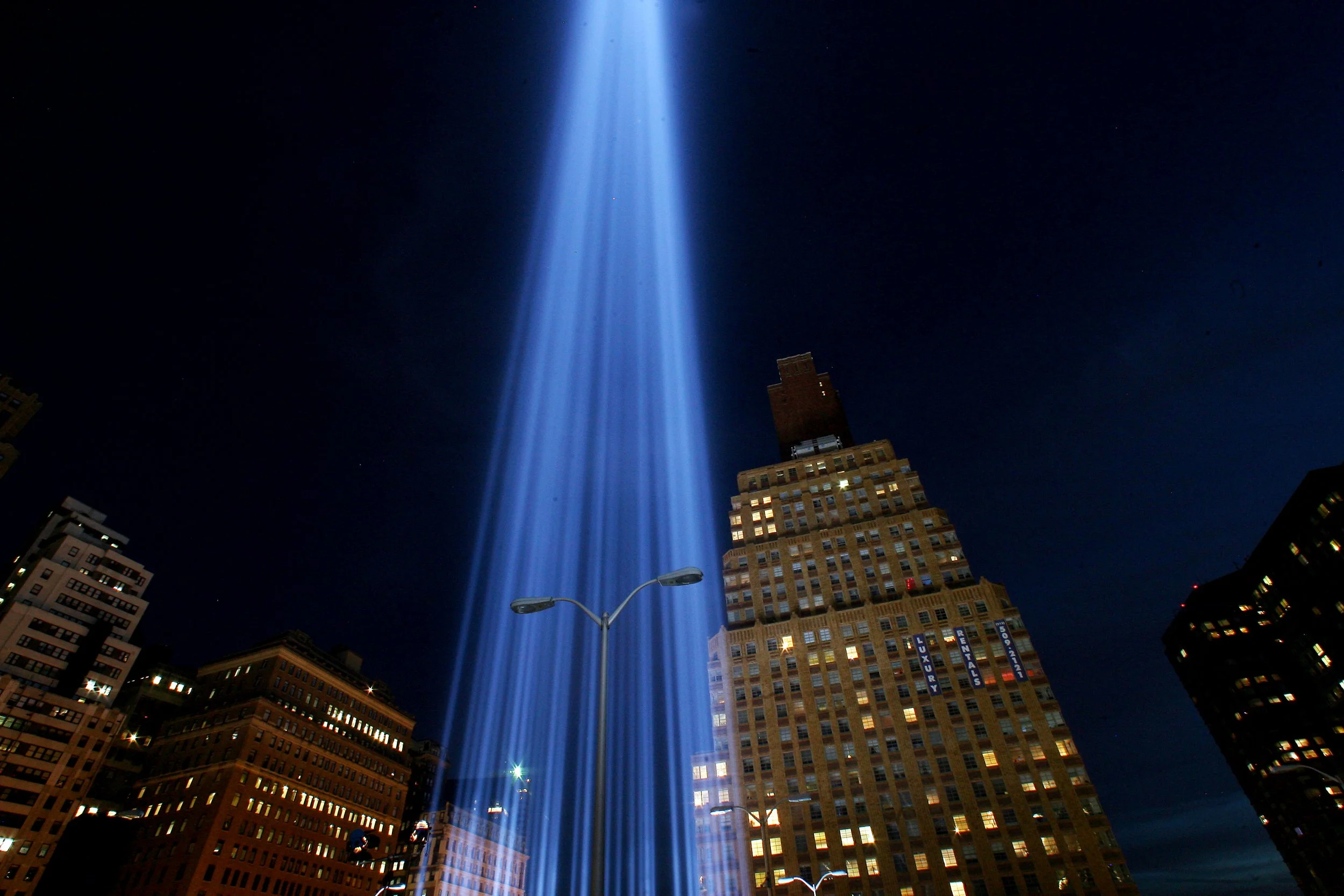
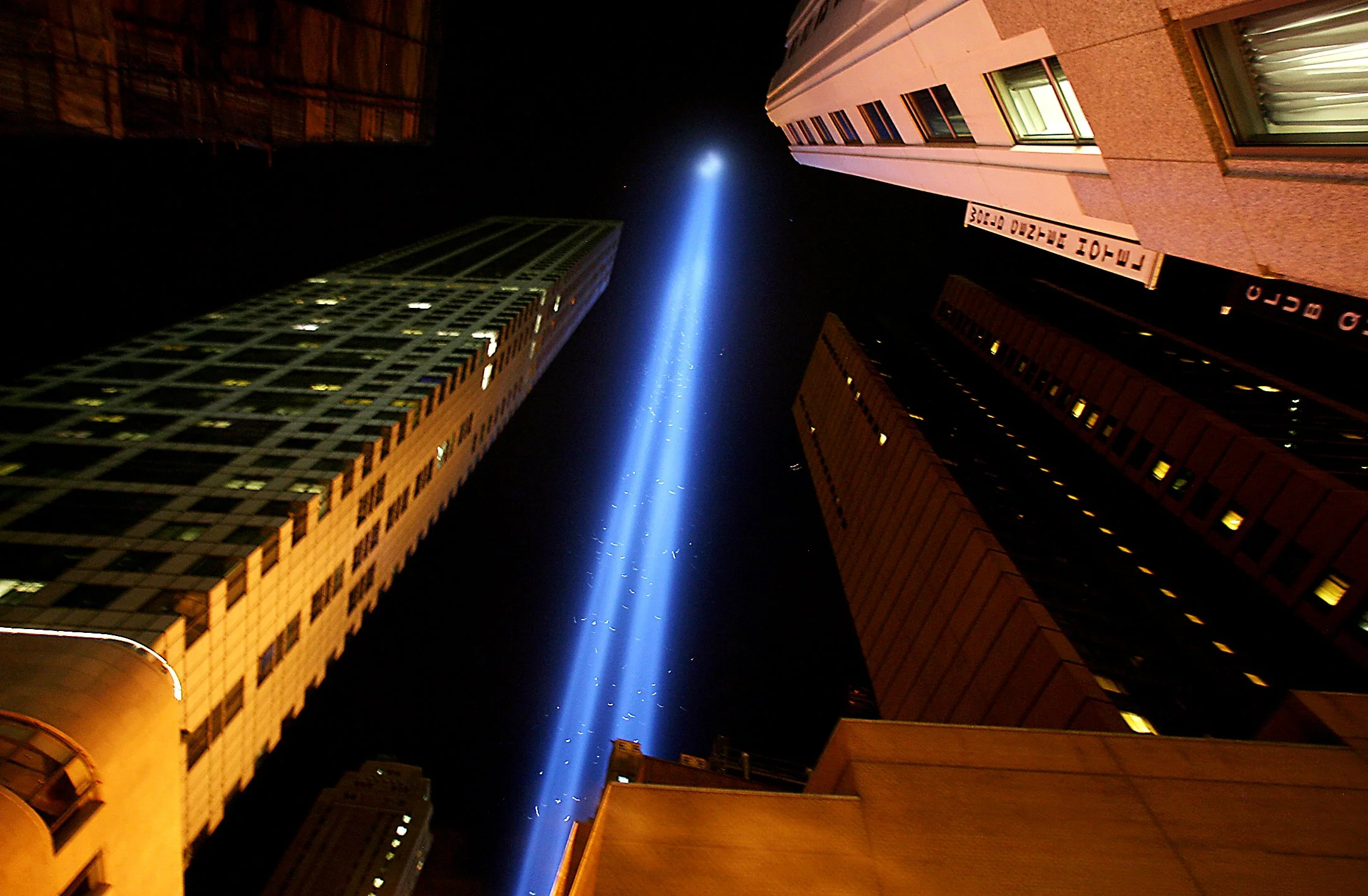
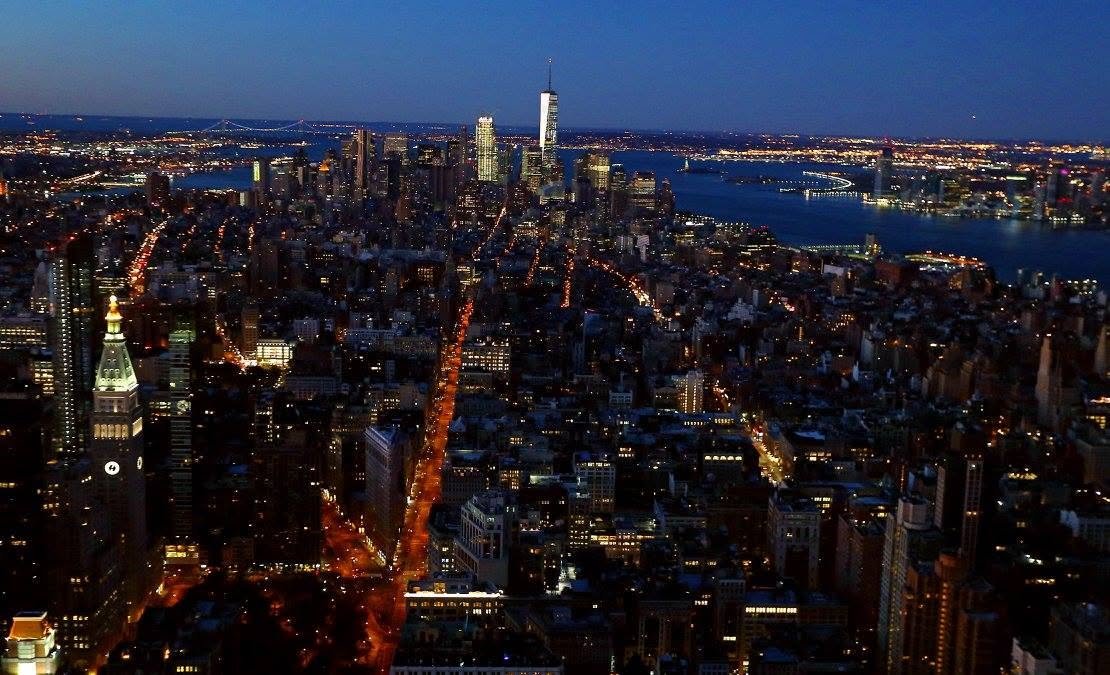
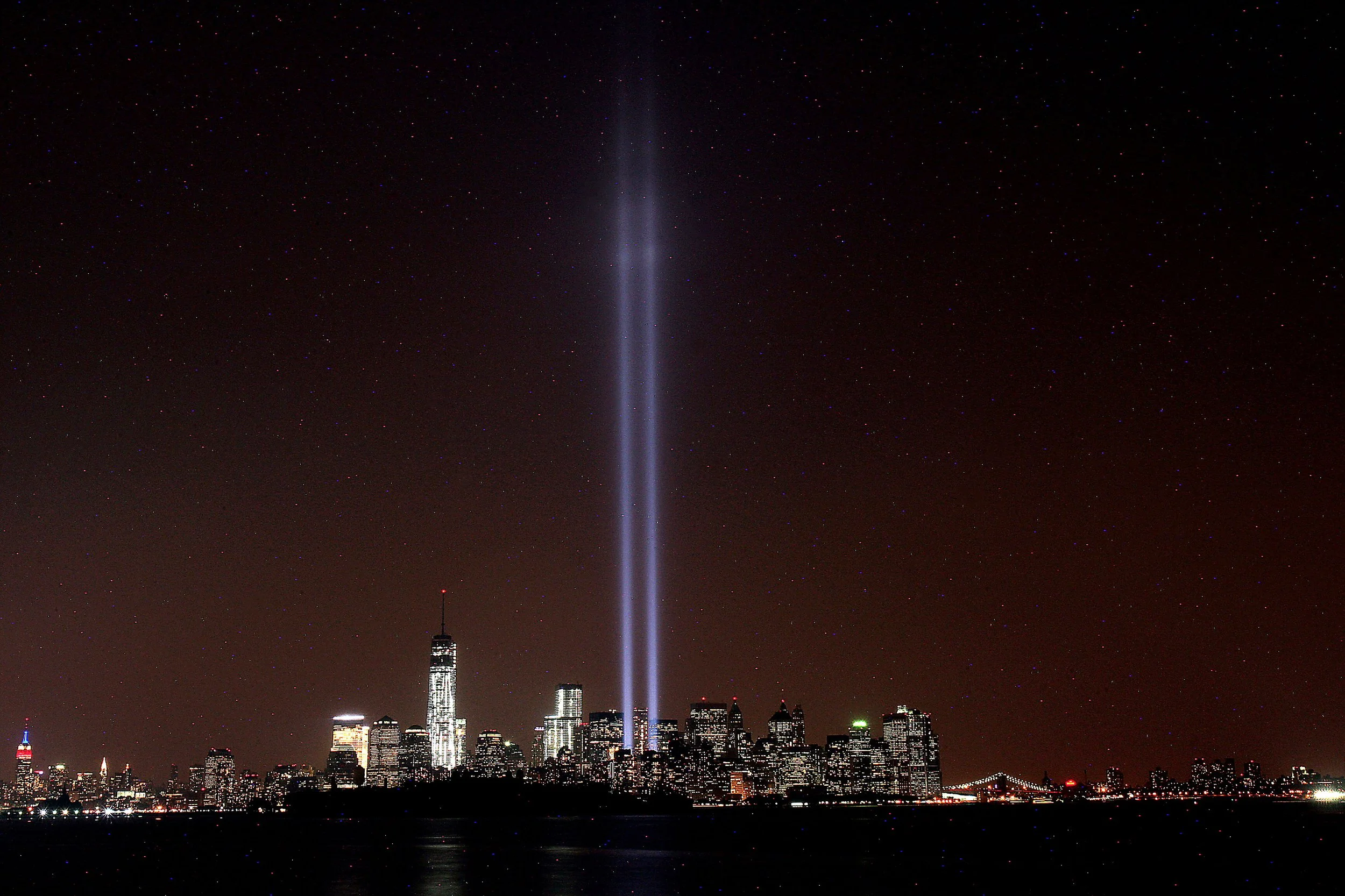
Jersey City, NJ, September 11, 2013-- On the 12th anniversary of the 9/11 terrorist attacks, the annual ‘Tribute in Light’ shines from the Manhattan skyline as seen from Liberty State Park in Jersey City, New Jersey. Placed next to the World Trade Center site, 88 search lights beam into the sky to show a seemingly never ending beam into the heavens.
“The most enduring memorial to those we lost is ensuring the America
that we continue to be that we stay true to ourselves, that we stay true to what’s
best in us, that we do not let others divide us.” —Barack Obama
September 10, 2001, was an extremely normal day, filled with its typical and unusual errands. Coffee at Dunkin’ Donuts, packing a lunch, reading the paper. Before my shift at the Daily Record, I made a trip to the Salvation Army thrift store in downtown Dover, New Jersey.
I was a competitive runner at the time and was looking forward to taking some time off with a few friends to travel to Las Vegas to participate in a men’s-only “Red Dress Race,” a 5K fundraiser. I found three modest short red skirts that my friends and I would wear, brought them home, and packed them for the trip.
The following morning was a perfect fall day. I had just dropped off a book at the Morristown library shortly after 9 a.m. when a man stopped me on the way out and said, “A plane just flew into the World Trade Center.”
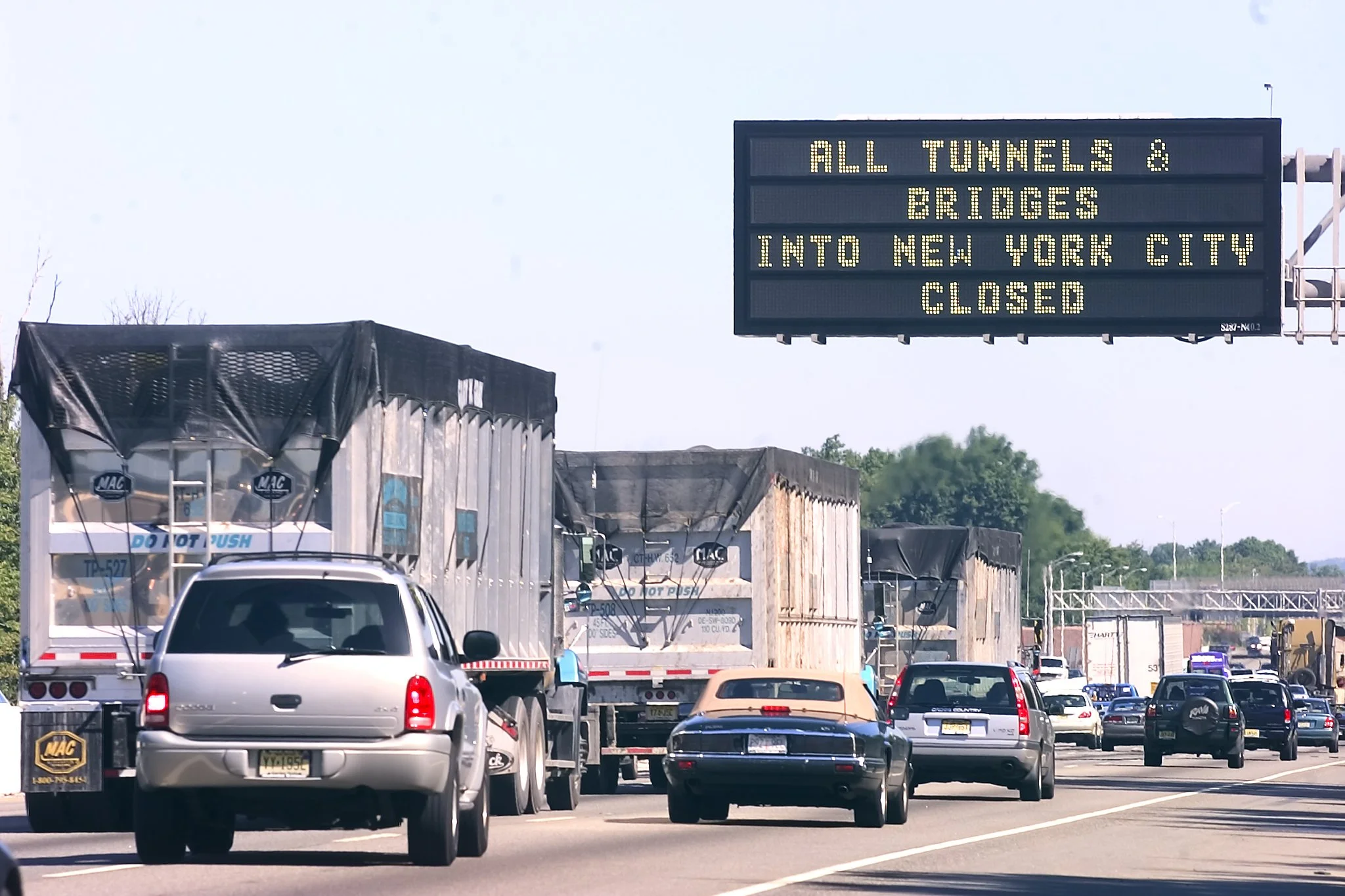
I jumped into my car and headed to work. We had planned a full day of shoots in Madison for the entire photo staff for our “Day in the Life” sections, but I thought this might take one or two of us off the schedule. I passed an alarming sign blaring, “ALL TUNNELS & BRIDGES INTO NEW YORK CITY CLOSED.”
Driving north on Route 287 toward the Daily Record, 1010 WINS was already reporting that a second plane had hit the South Tower at 9:03 a.m. Minutes later came a live, false report that the “U.S. Capitol itself had been hit.”
I pulled onto Parsippany Road and said aloud to myself, “This is it. This is really the end of the world.”
There was no way I could have known it then, but by the end of that perfect fall day, 65 Morris County natives would be among the nearly 3,000 people killed that perfect fall day. .
I decided to drive to Powder Mill Heights, one of the highest points in Parsippany, with its gorgeous sweeping views of Manhattan. It was the first place I thought people might be gathering to watch this disaster unfold.
Driving west on Route 10, I experienced the first moment when I truly felt the enormity of what had just happened. From nearly 30 miles away, I could see smoke rising from downtown Manhattan…from my rearview mirror.
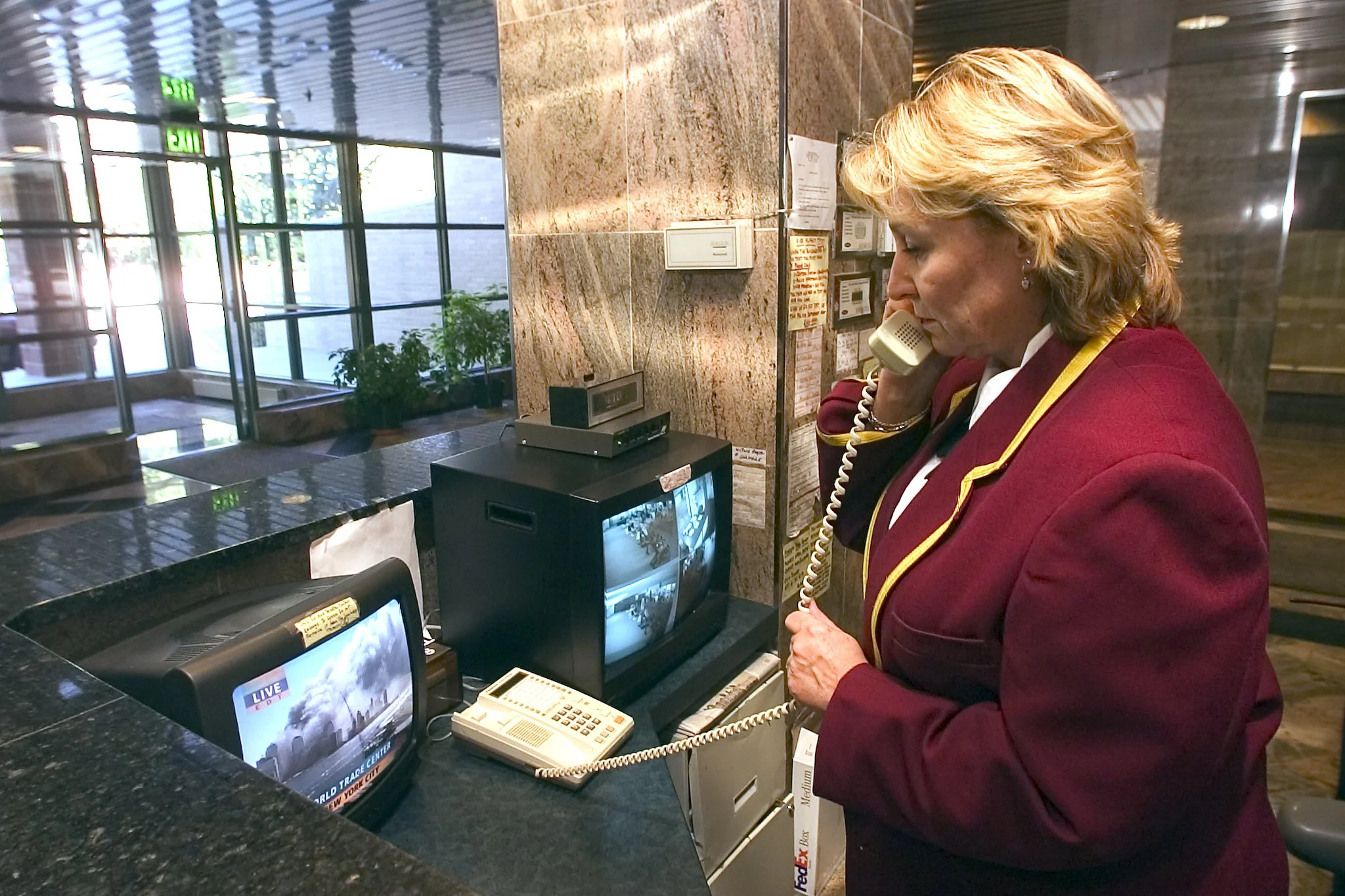
When I arrived at the condos, I photographed a security guard watching the live coverage on television while calling to check on her daughter, who was in New York City that morning.
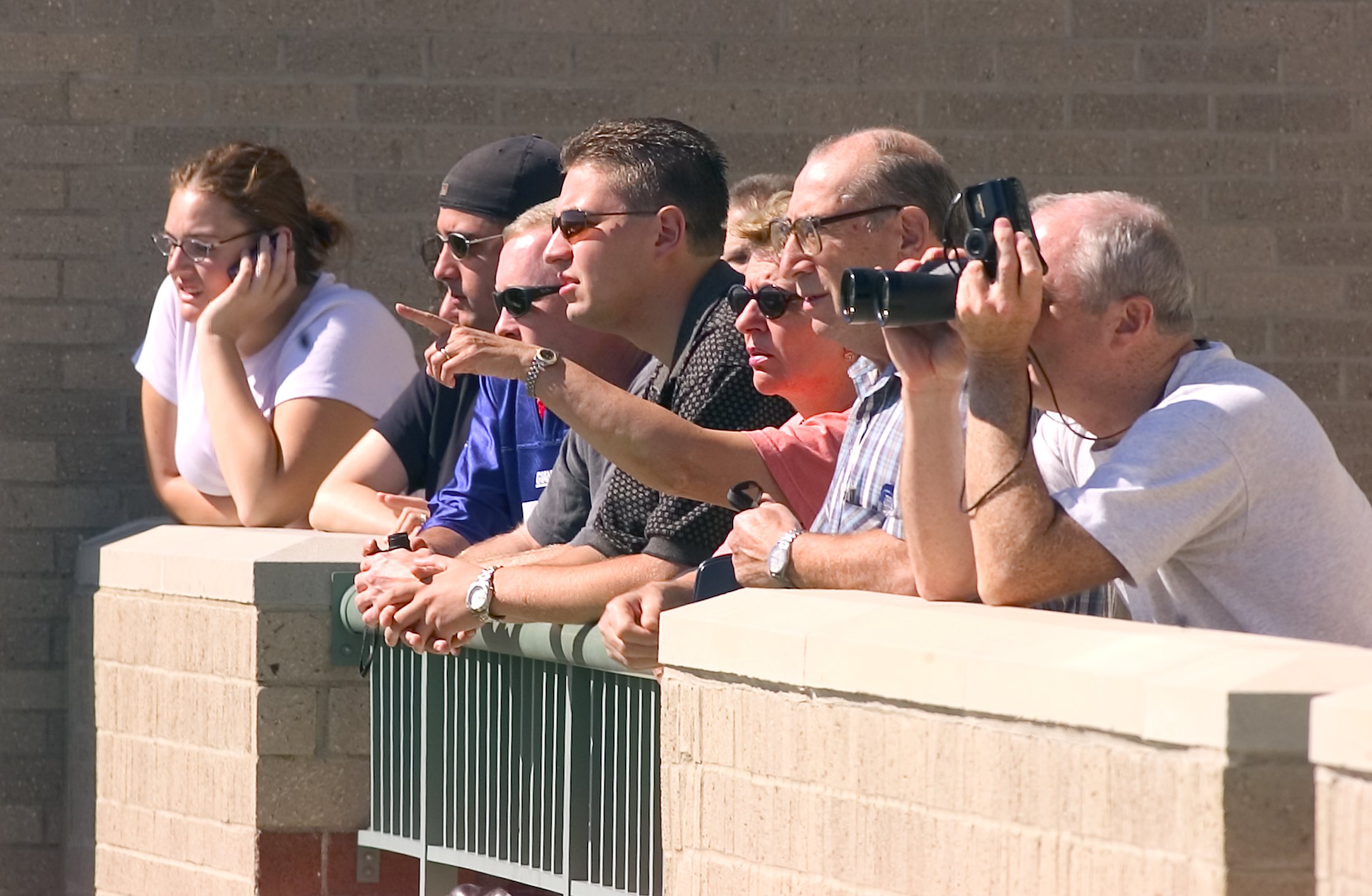
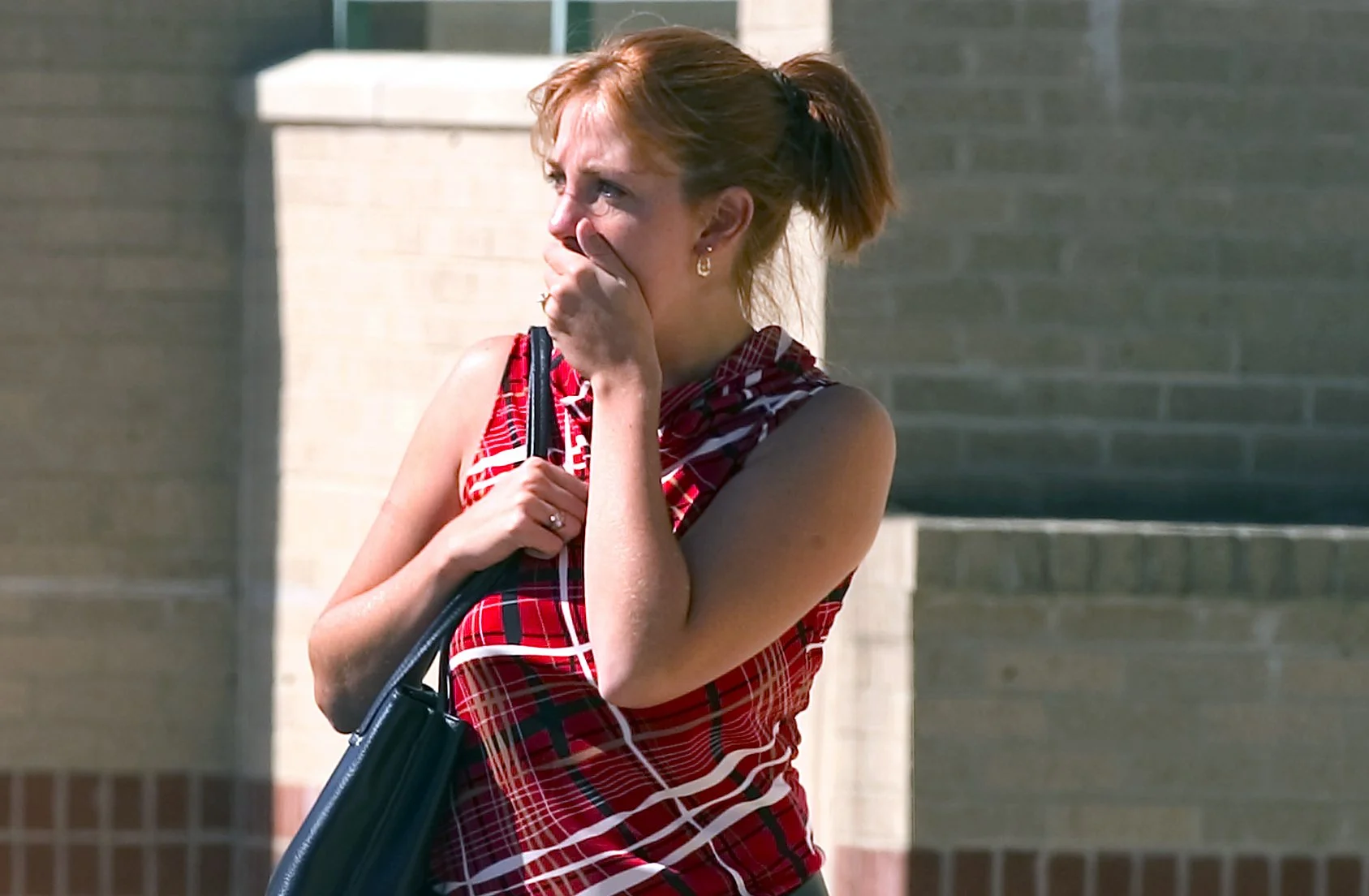
Walking back outside, people were beginning to line the balcony, looking east as smoke rose from downtown Manhattan. They held binoculars and cameras and attempted in vain to make calls on their cell phones. A woman who had come to see what everyone was looking at immediately put her hand over her mouth and gasped, shocked by her first sight of the scene.
The frivolous shopping spree of the day before seemed like ancient history.
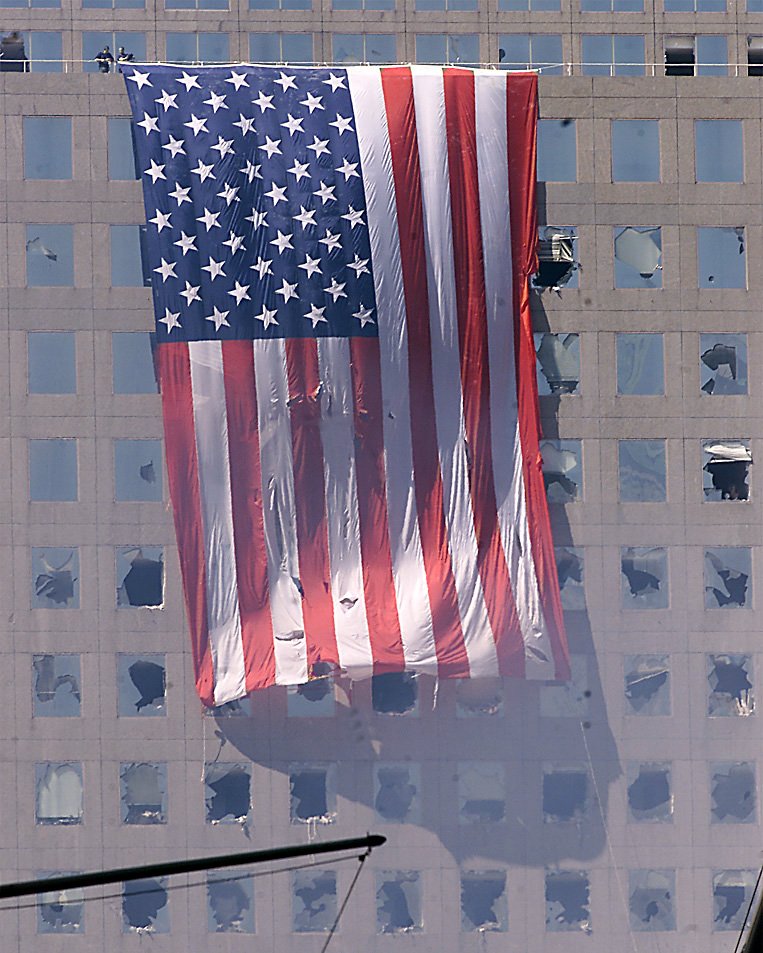
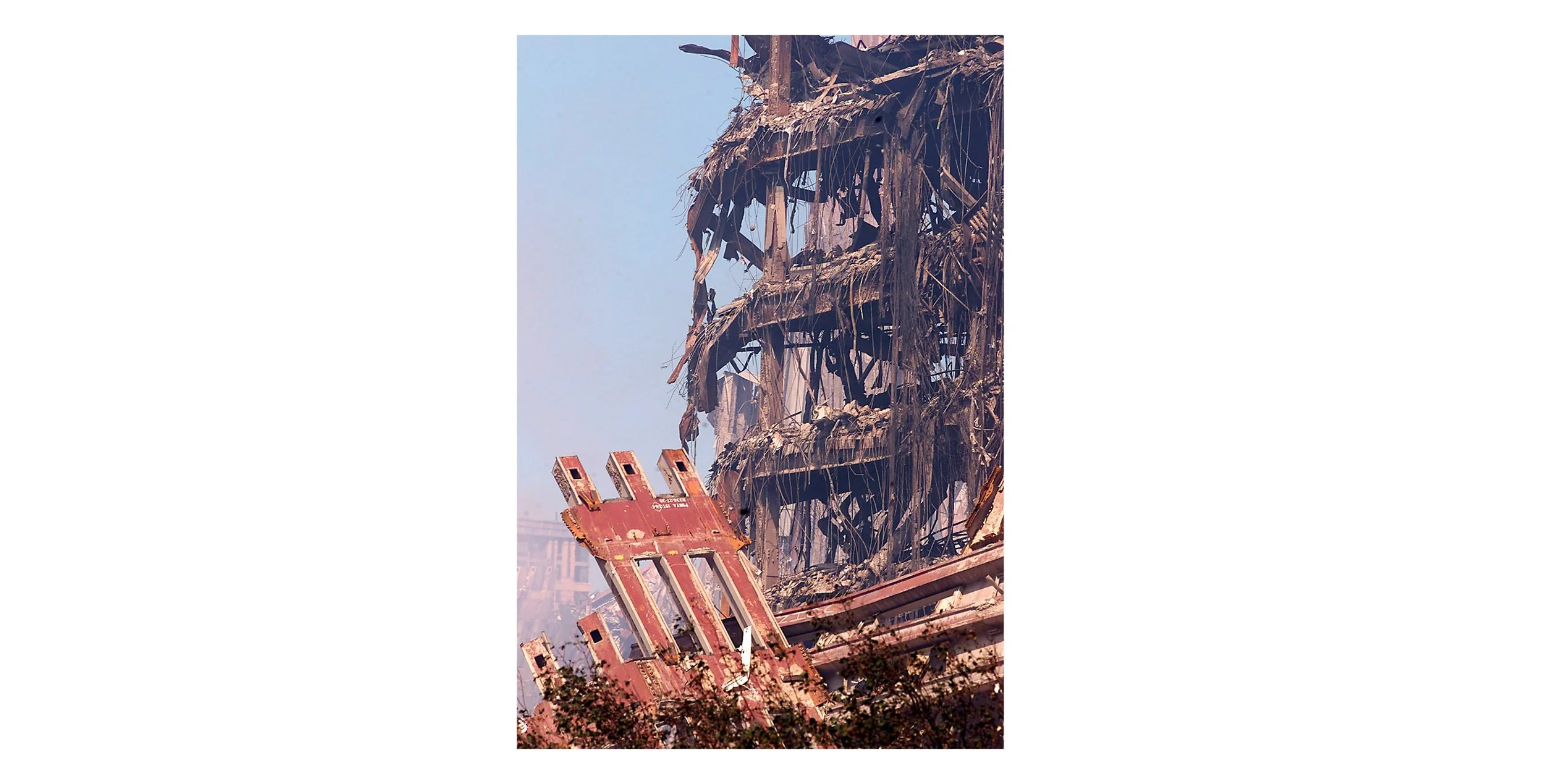
My vacation would now be spent in and around Ground Zero, photographing the aftermath of the attacks.
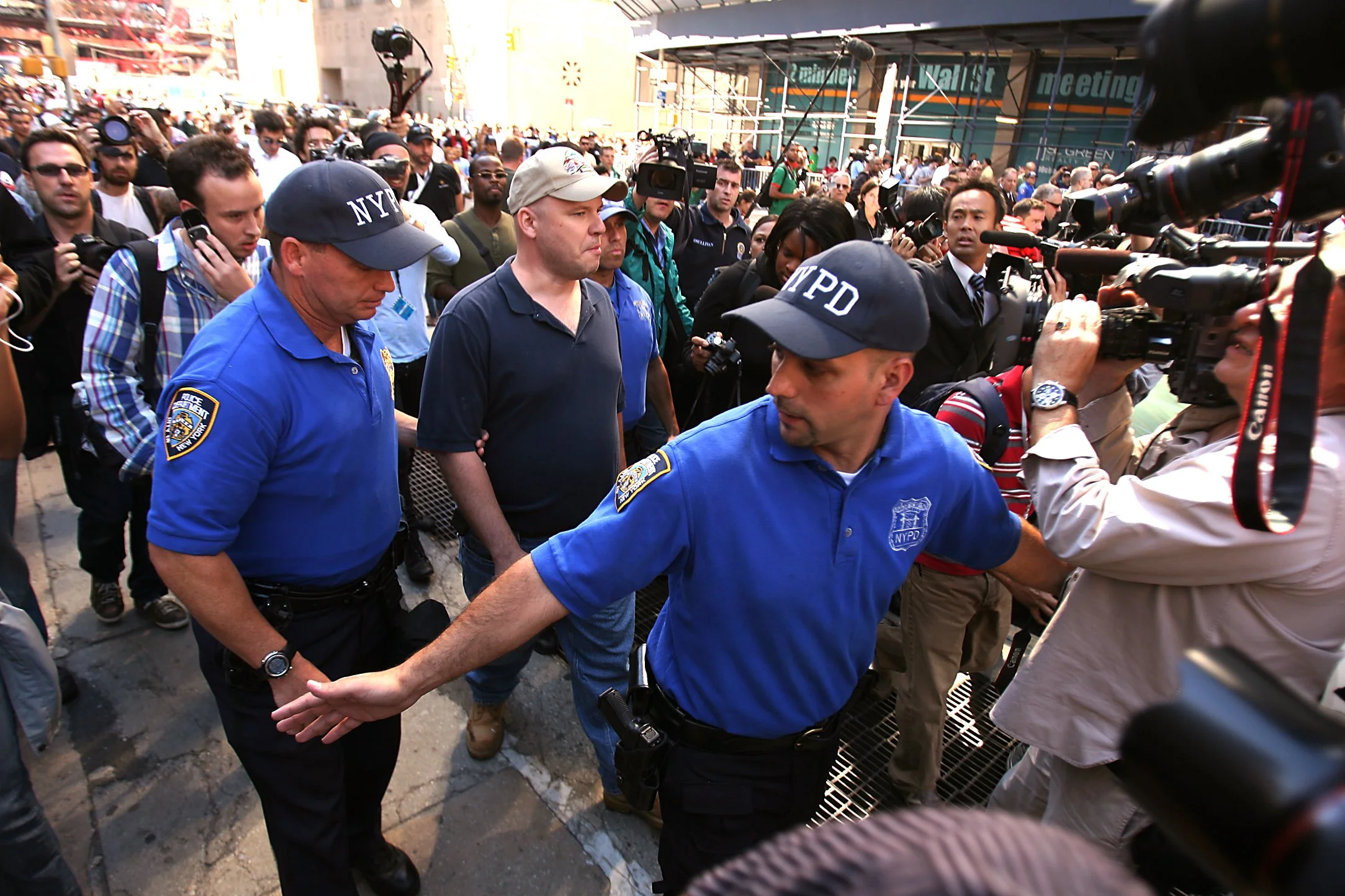
Each morning, I would take the train into Penn Station and walk the 2½ miles down to Ground Zero. Some days we had access; other days we were collected into press pens, where we waited for hours for the opportunity to shoot.
I remember passing countless people along my walks to and from the trains. The grief was palpable and unbearable. One day, I remember wishing that we could jump ahead five years, just to get past the agony we were all sharing.
My most memorable and heartbreaking moment came on a train into Penn Station. I met a woman who had just arrived from Florida. Her son was a firefighter, and she had not heard from him since before 9/11.
She noticed my cameras and asked me what I had seen and what I thought the chances were that her son was still alive. I tried to be as encouraging as possible, knowing that with each passing day, the chances of survival grew smaller and smaller.
When we pulled into the station, I wrote her son’s name on a business card and tucked it into my wallet. I told her I would pray for them every day.
When I returned home, I pinned the card to my bulletin board and checked the papers every day, hoping for just one miracle.
Weeks later, I saw her son’s name listed in the New York Times among the “remains that had been recovered.”
Years go by too quickly, and you never really believe you will understand or reconcile all the pain that accumulates.
As journalists, closure is not one of the luxuries we are afforded. Over the course of four decades of photojournalism, I’ve covered countless positive and inspiring stories, yet it is the tragedies that you can never quite erase from the back of your mind.
In the years since I found myself documenting the aftermath of 9/11, I’ve covered too many tragedies to count: murders, hurricanes, accidents and more recently even a pandemic.
So many of my brother and sister photojournalists who were down at Ground Zero on 9/11/01 still carry the scars of that terrible day. The words “bravery” and “courage” are too often forgotten when we describe the essential frontline communication work performed by journalists at Ground Zero.
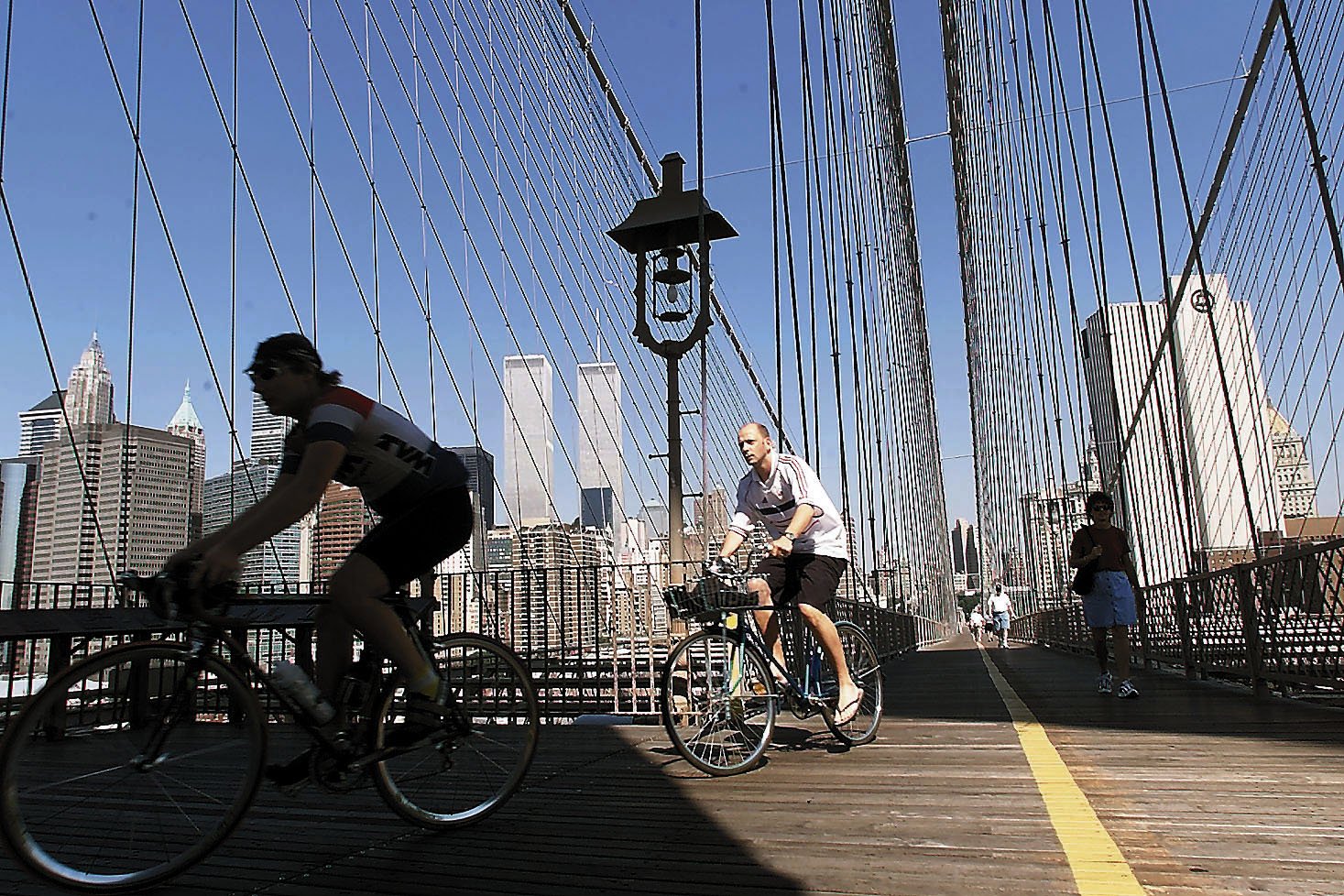
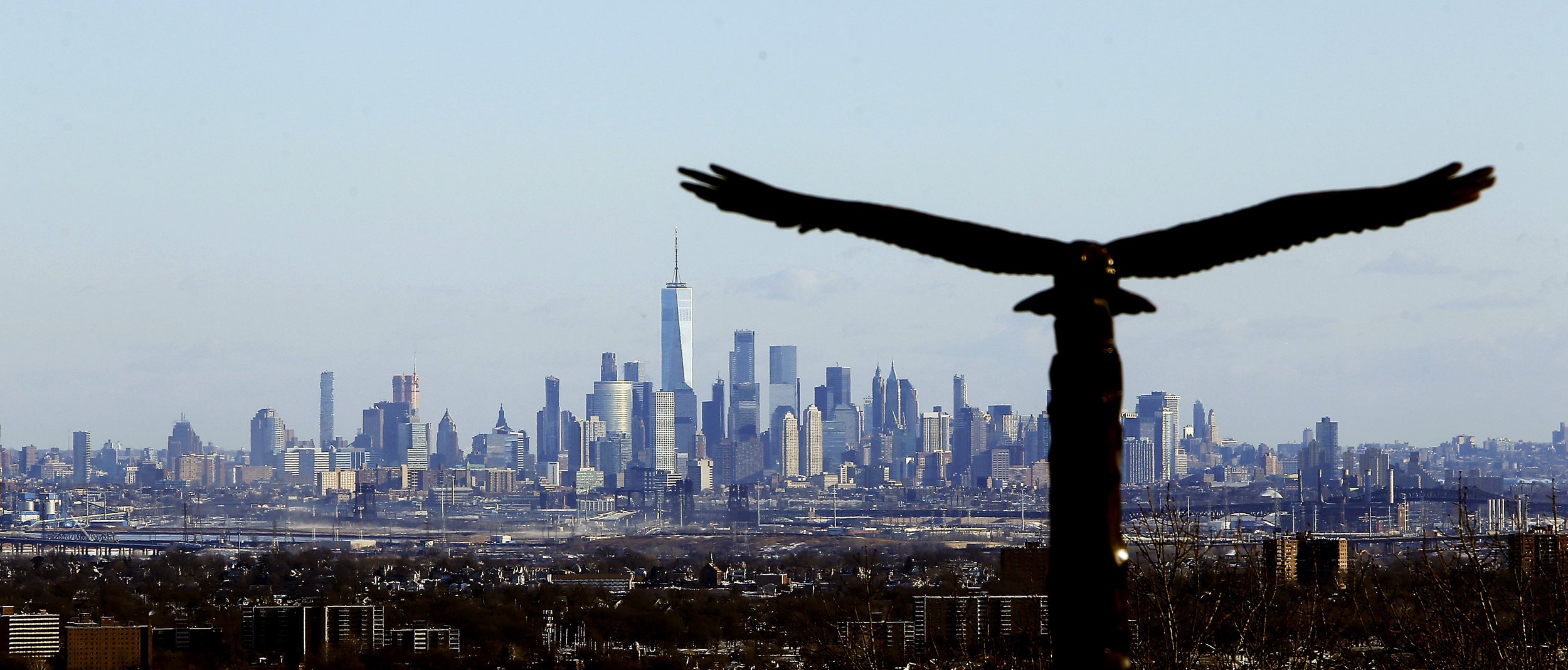
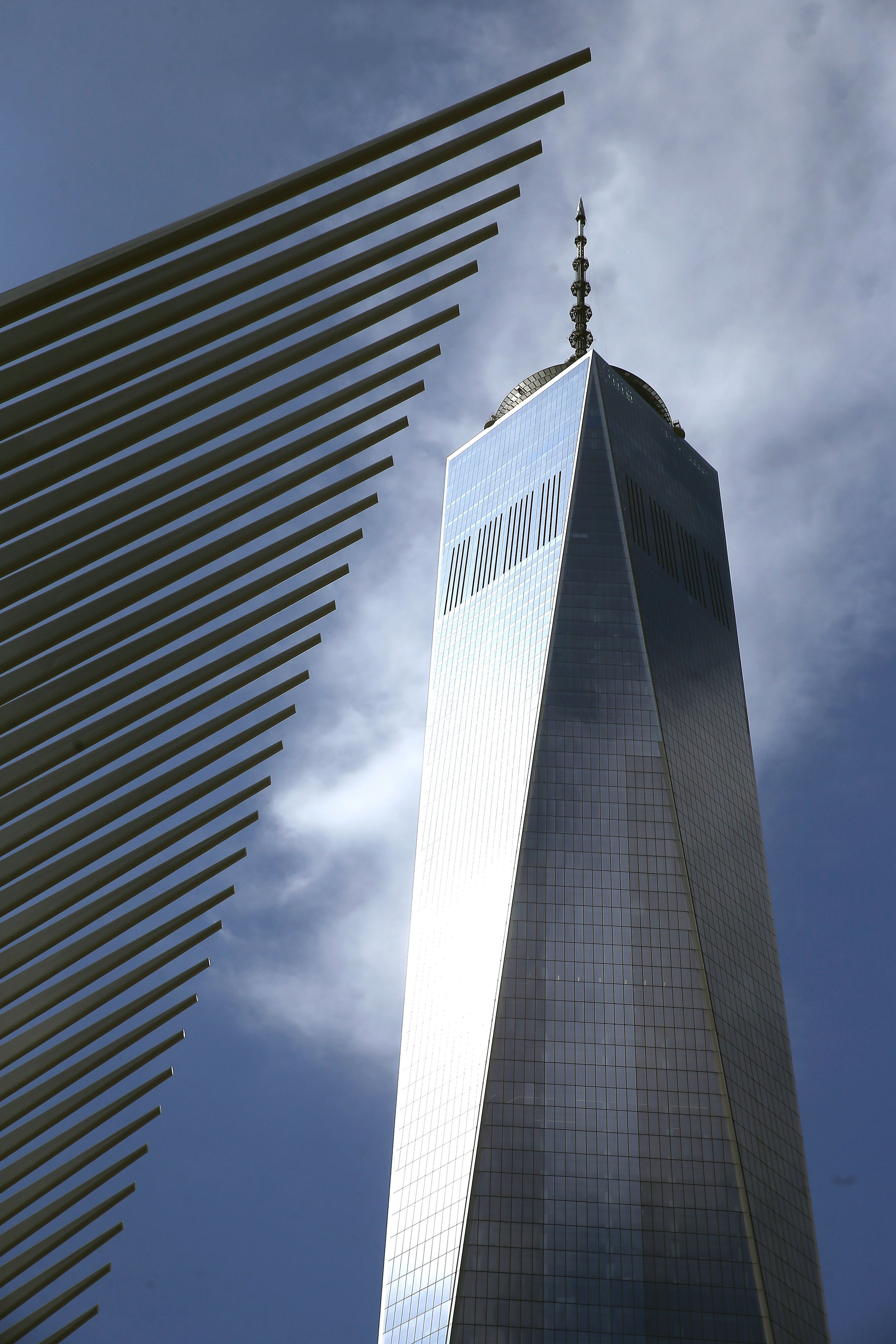
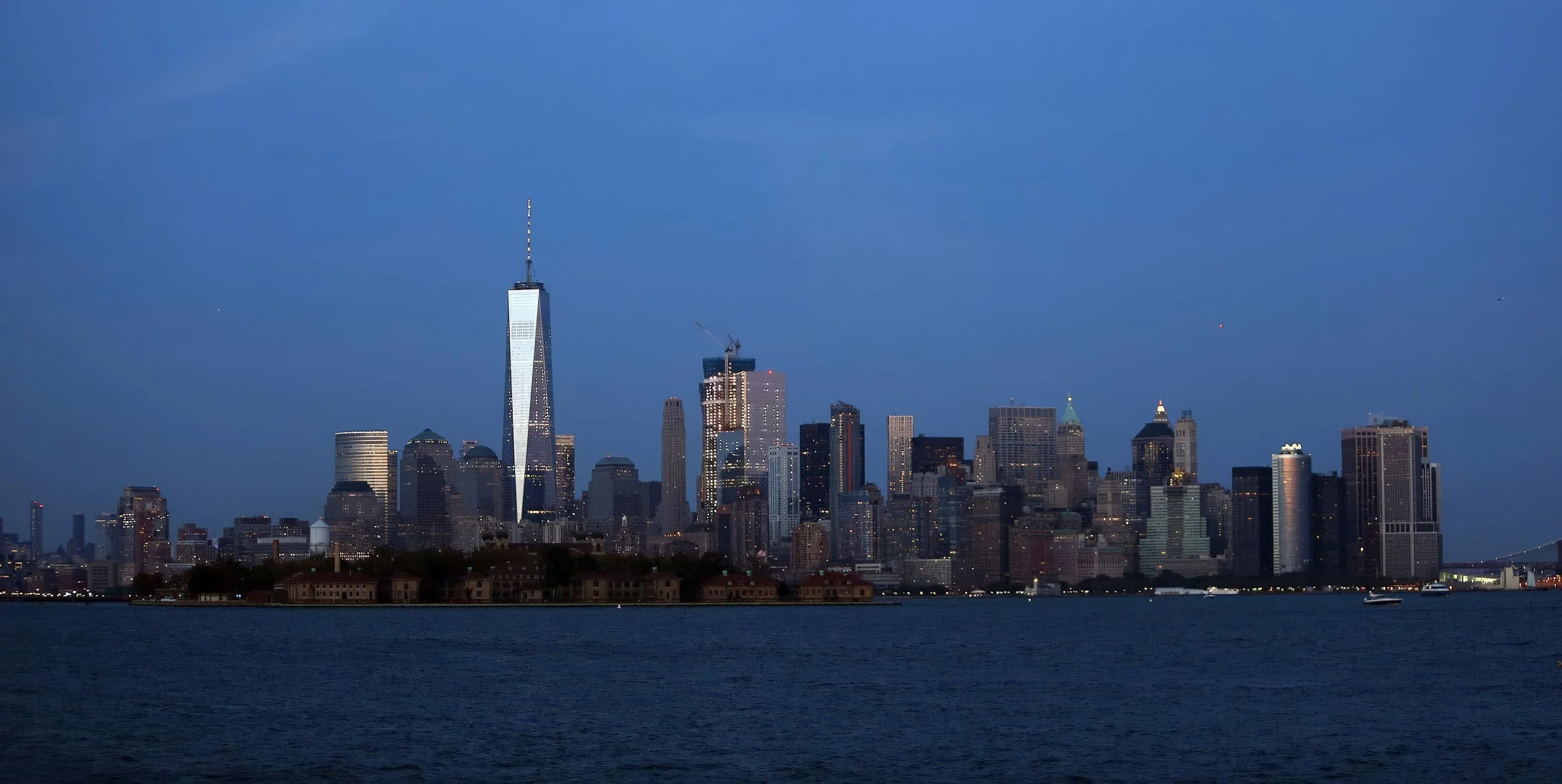
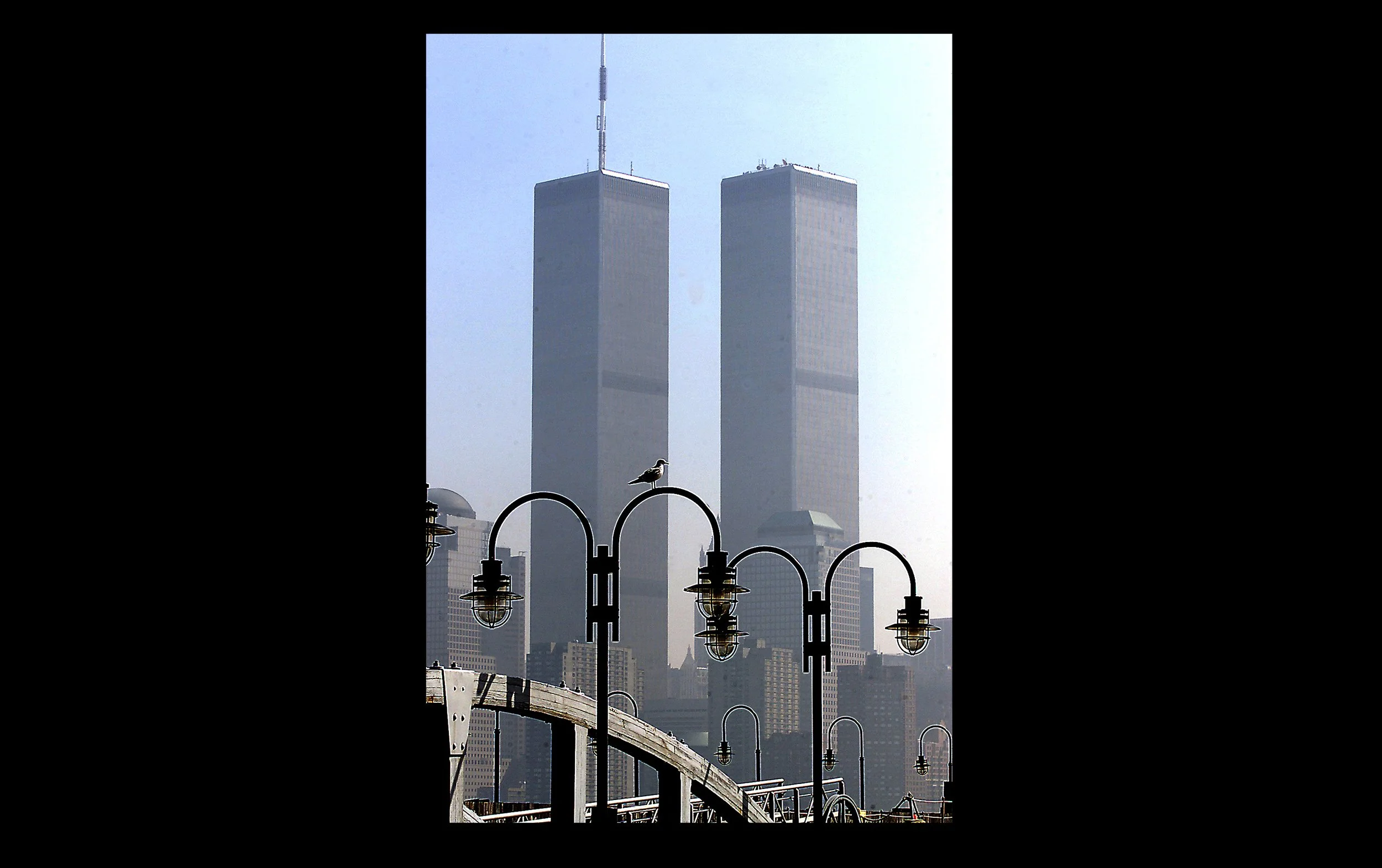
For years, every time I drove up the Turnpike and saw that stunning New York City skyline, now missing its Twin Towers, I would keep checking over my right shoulder, knowing that the next time I looked, they would surely be back where they belonged.
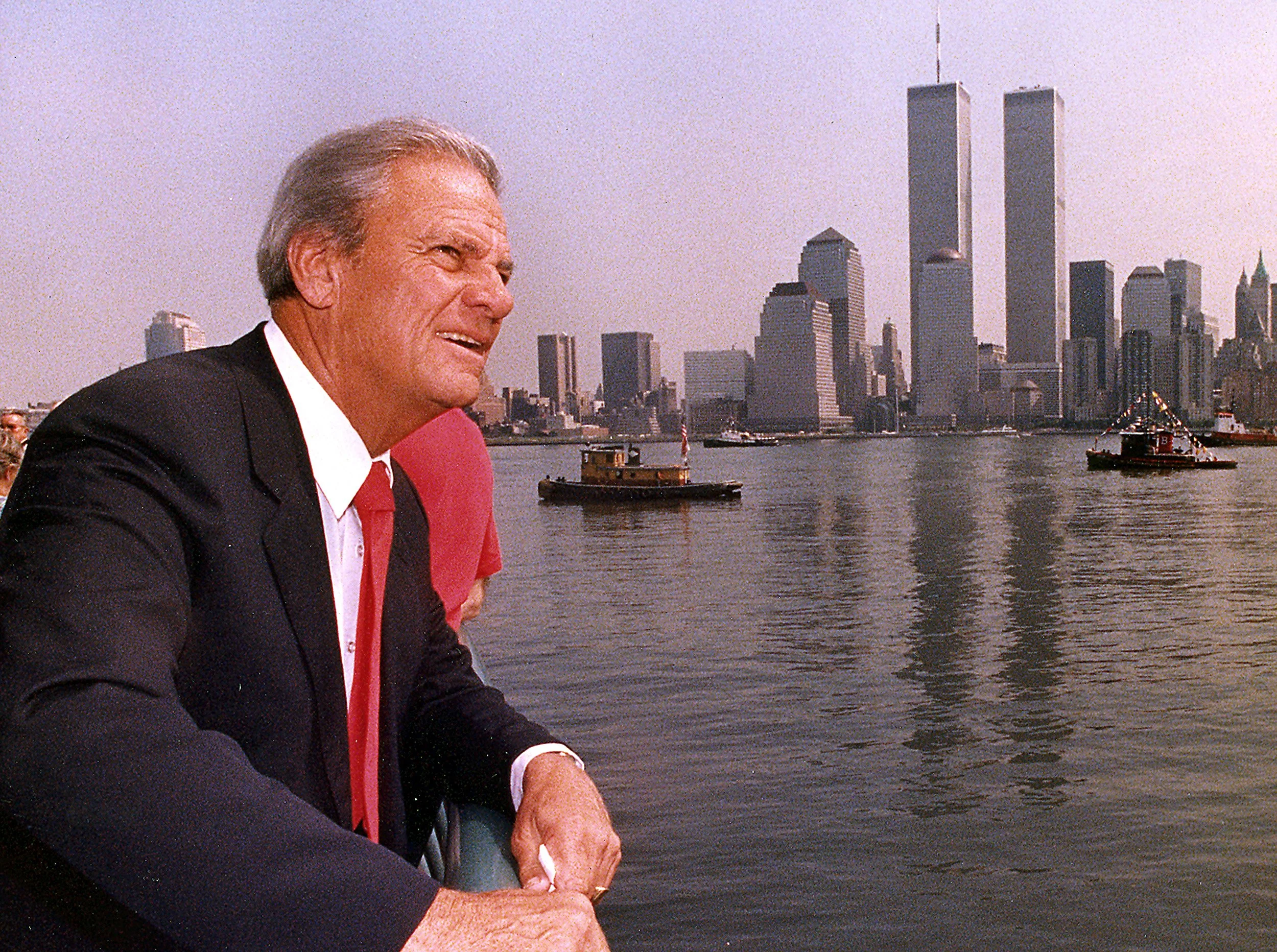
They were the perfect background for photographers and tourists. And if you got a little lost, they were always there to point you in the right direction.
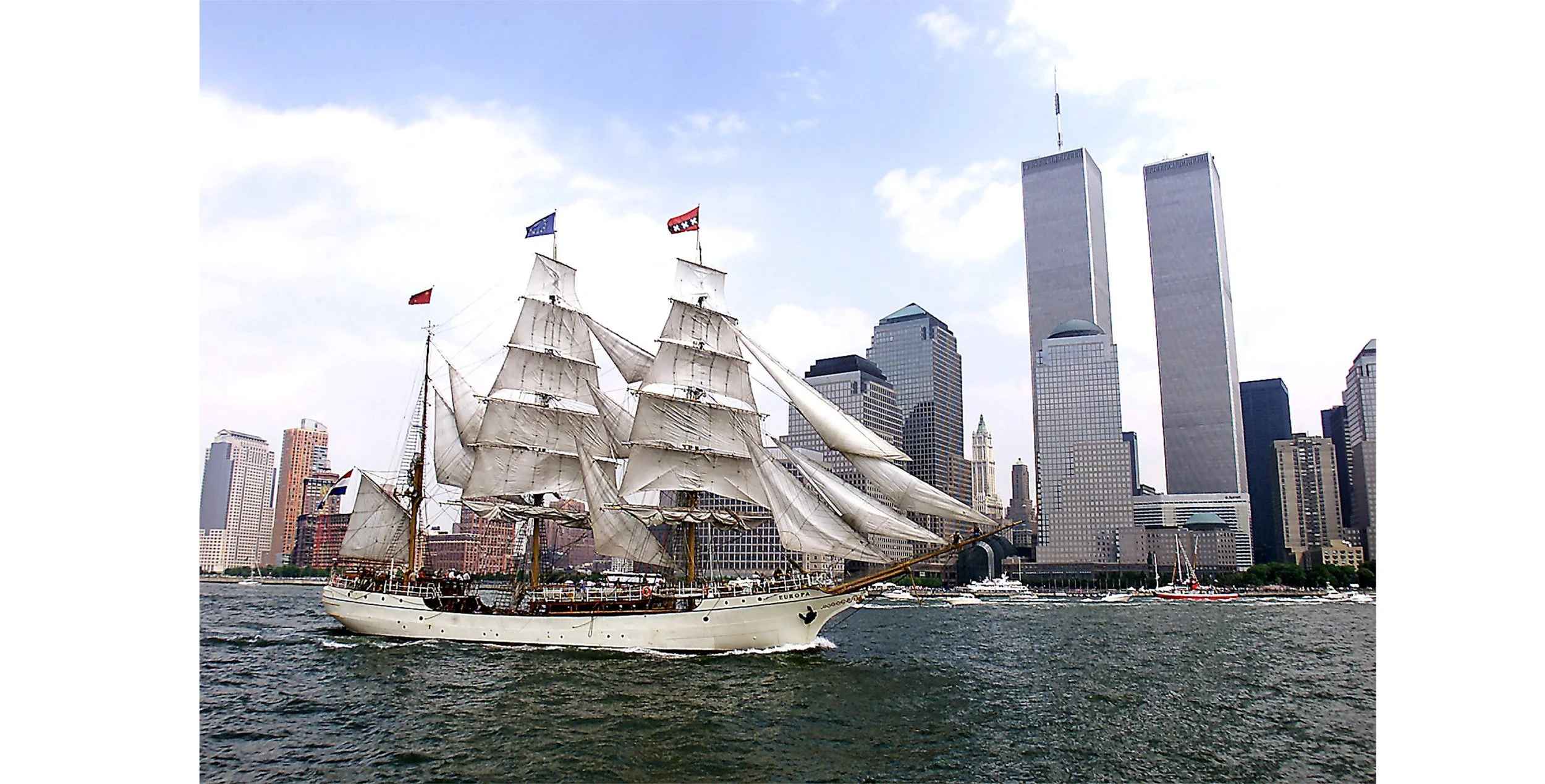
Operation Sail 2000 in New York City was a massive international maritime celebration held on July 4, 2000, to welcome the new millennium.The event featured over 120 tall ships and more than 40 warships from the United States and 25 other nations, alongside an estimated 70,000 smaller pleasure crafts.
The empty space they left behind was captured so poignantly in Bruce Springsteen’s song, “Empty Sky.”
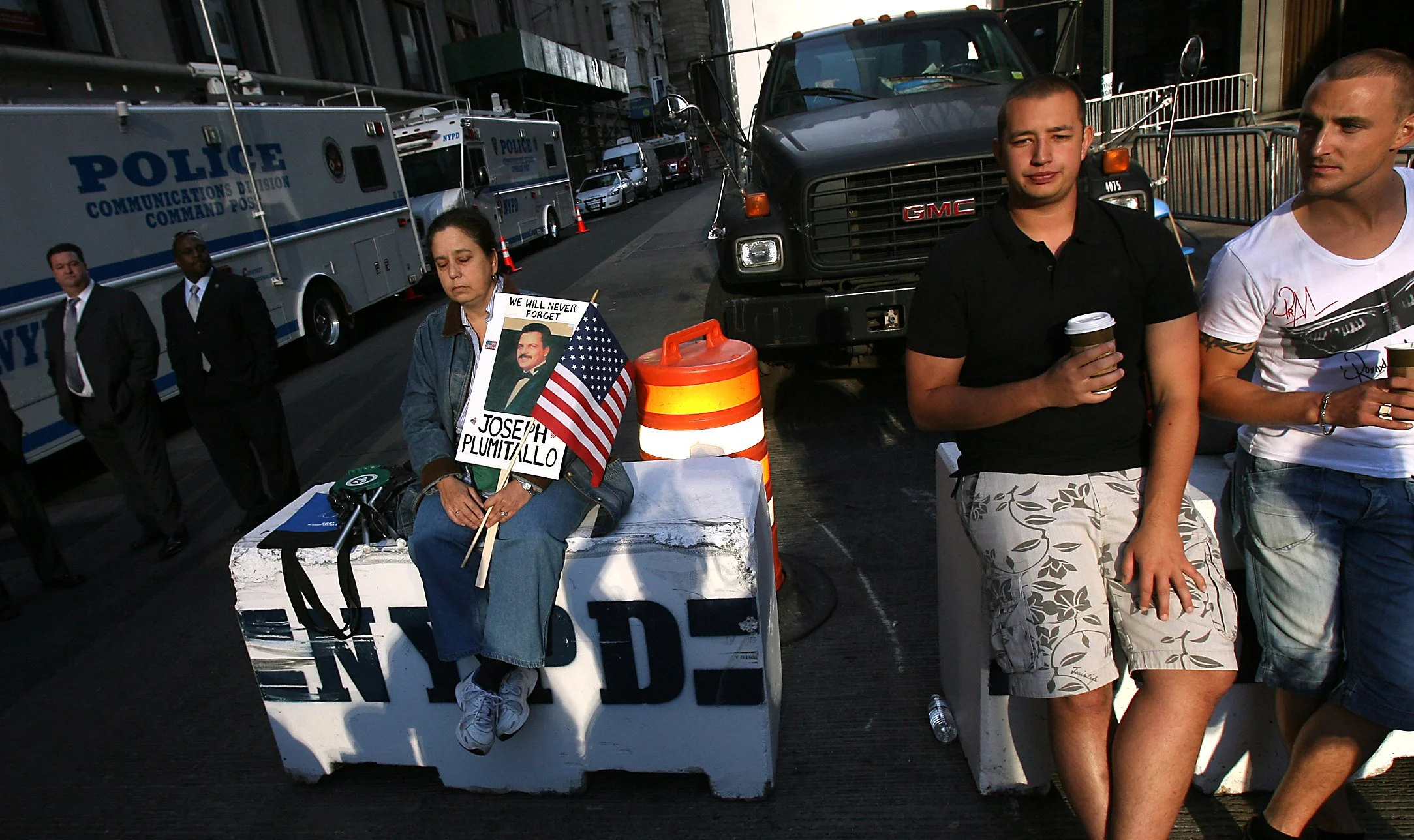
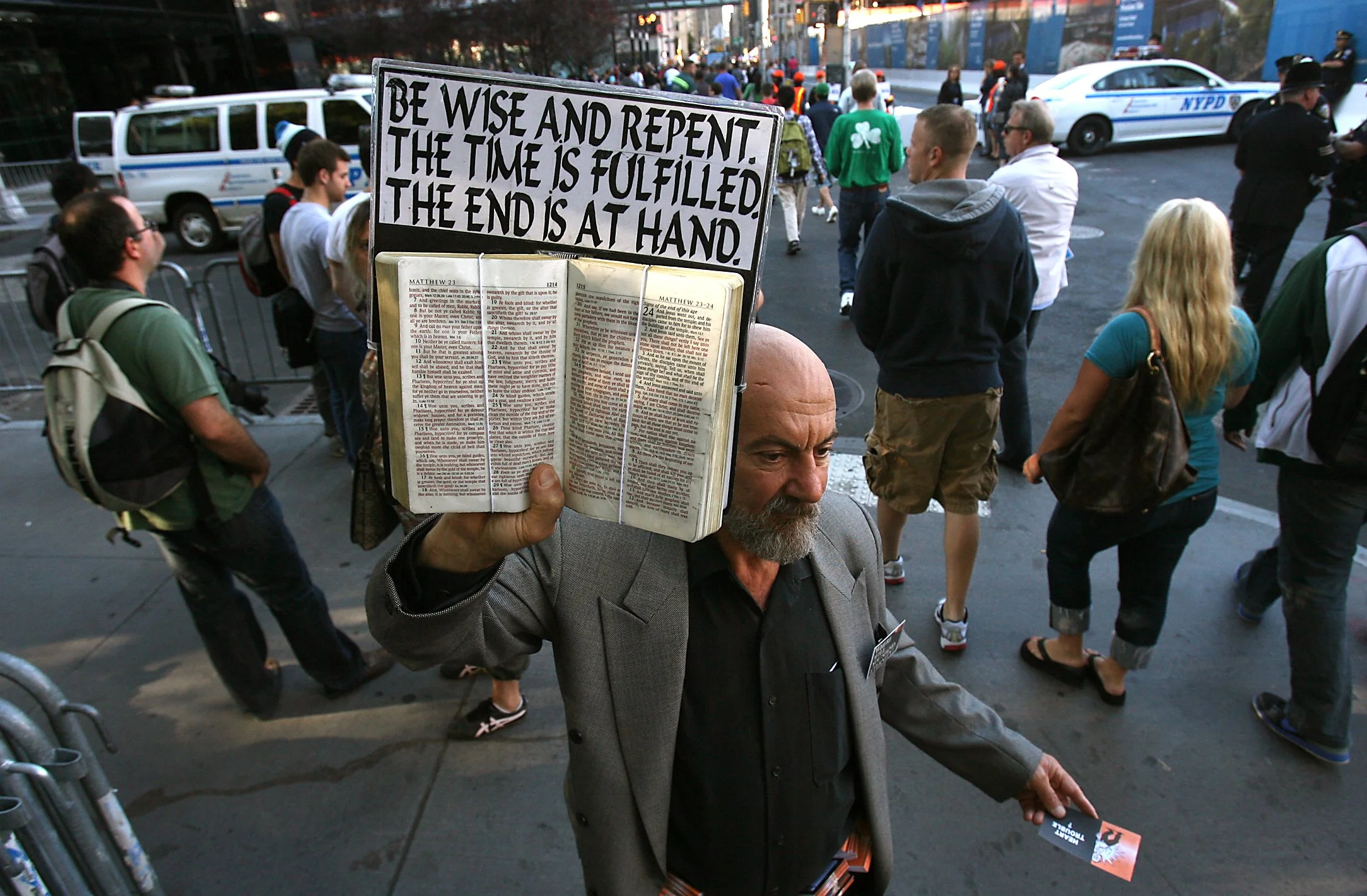
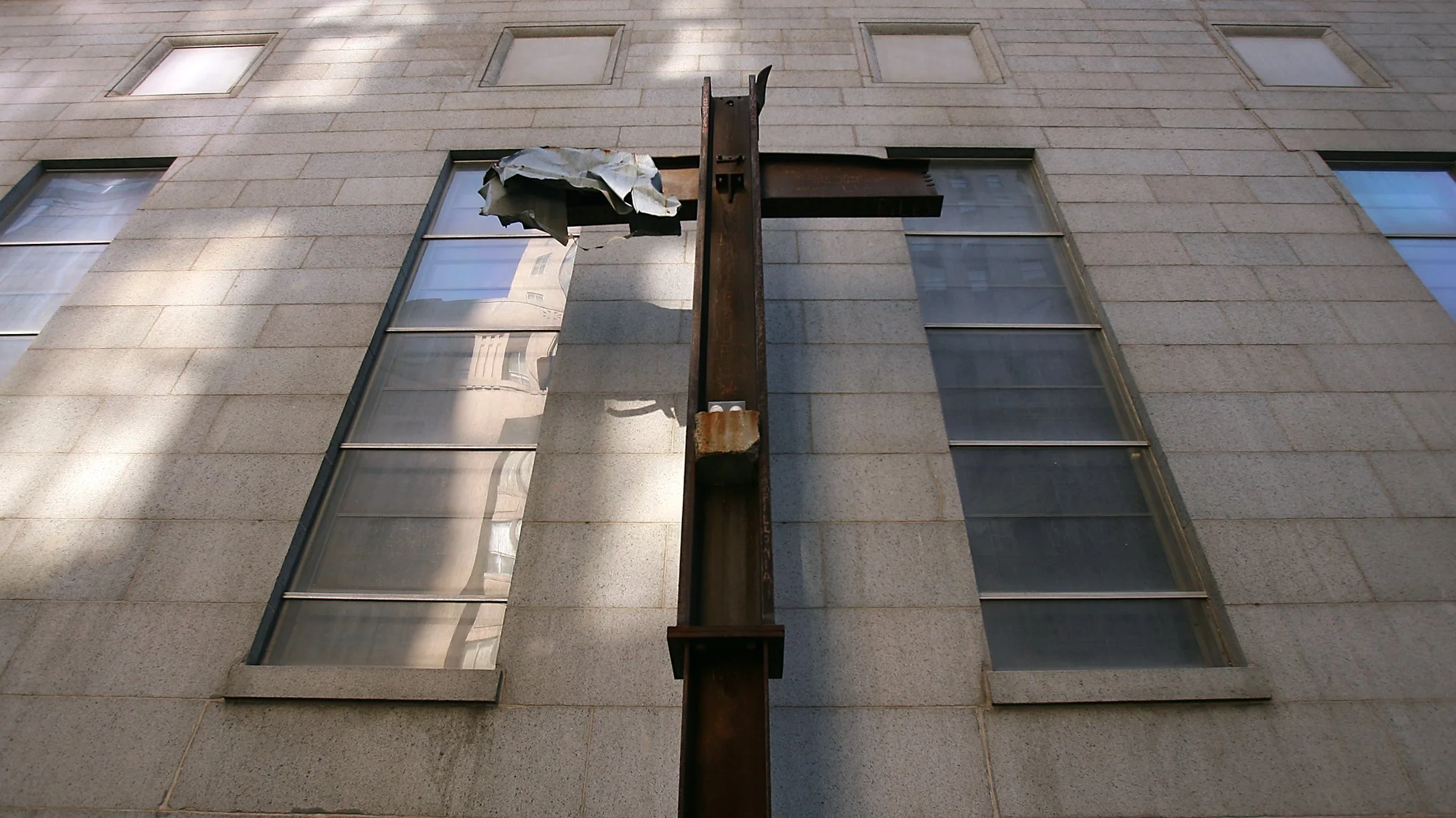
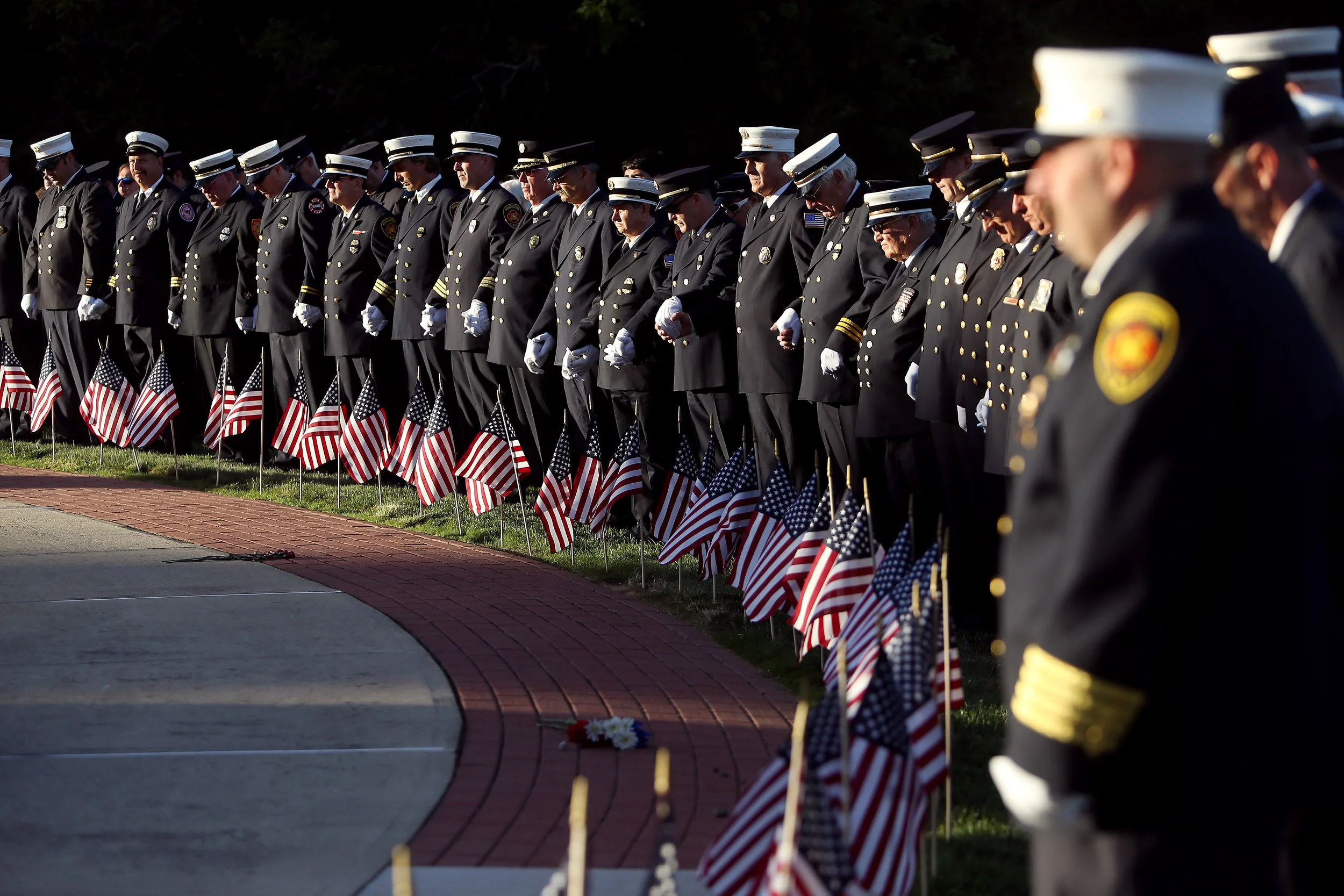
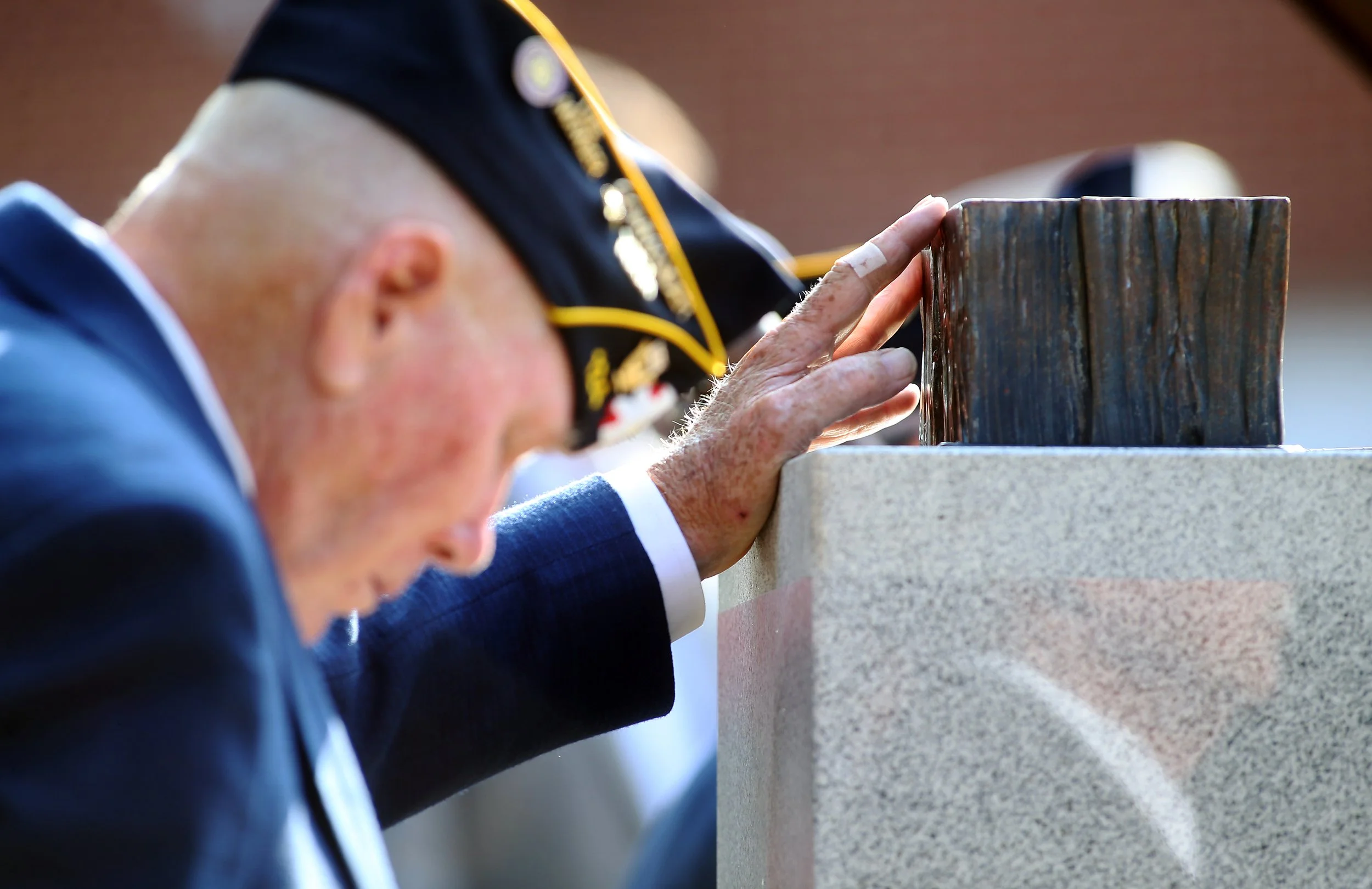
Since that day, I’ve continued documenting memorial ceremonies in and around New York City, New Jersey and North Carolina. As journalists, we look to tell the story, to comfort, to remember and to move people through our images.
We were witnesses to history long before that day. But on 9/11/01, there was never a story in our lifetimes that needed to be told and remembered more.
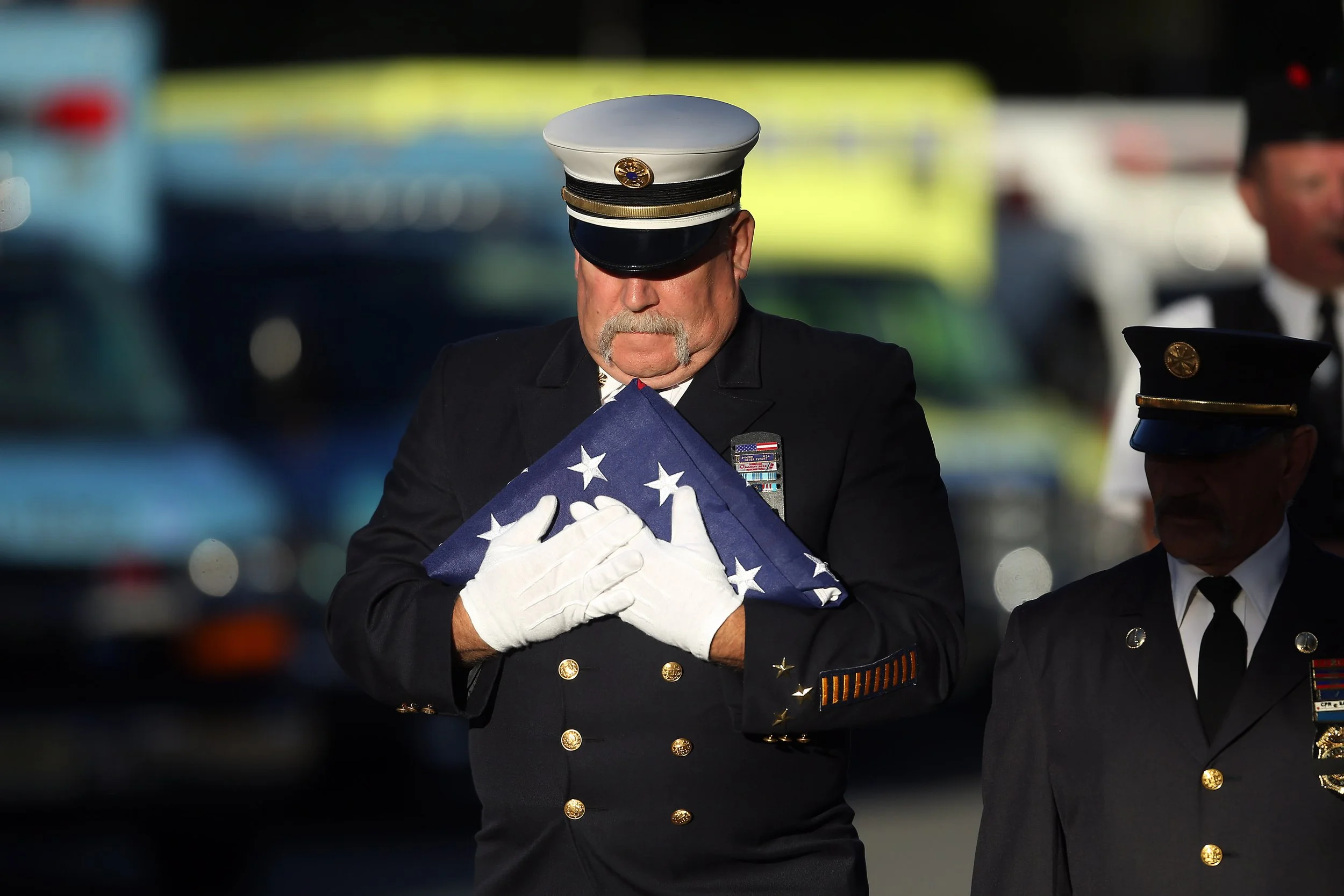
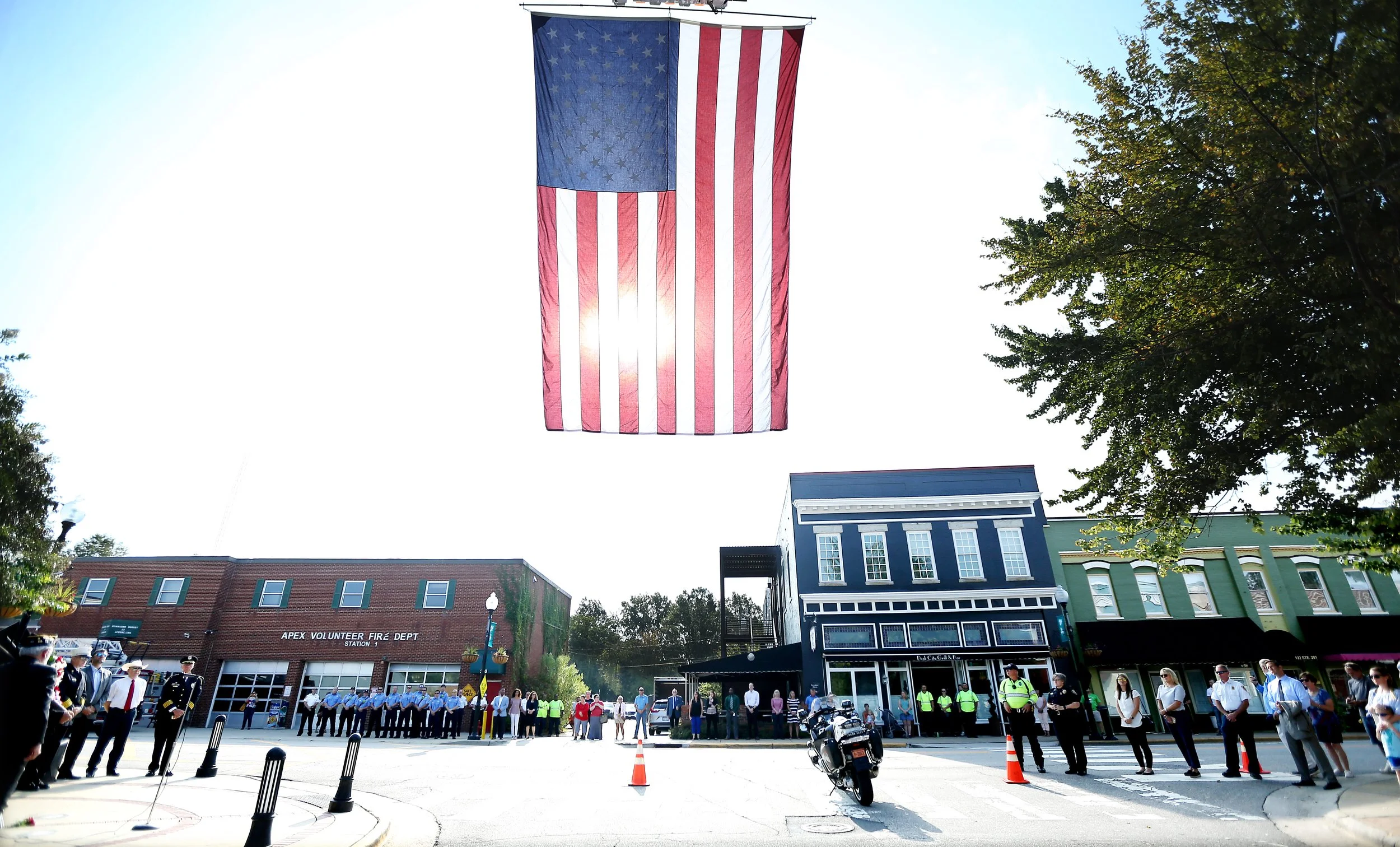
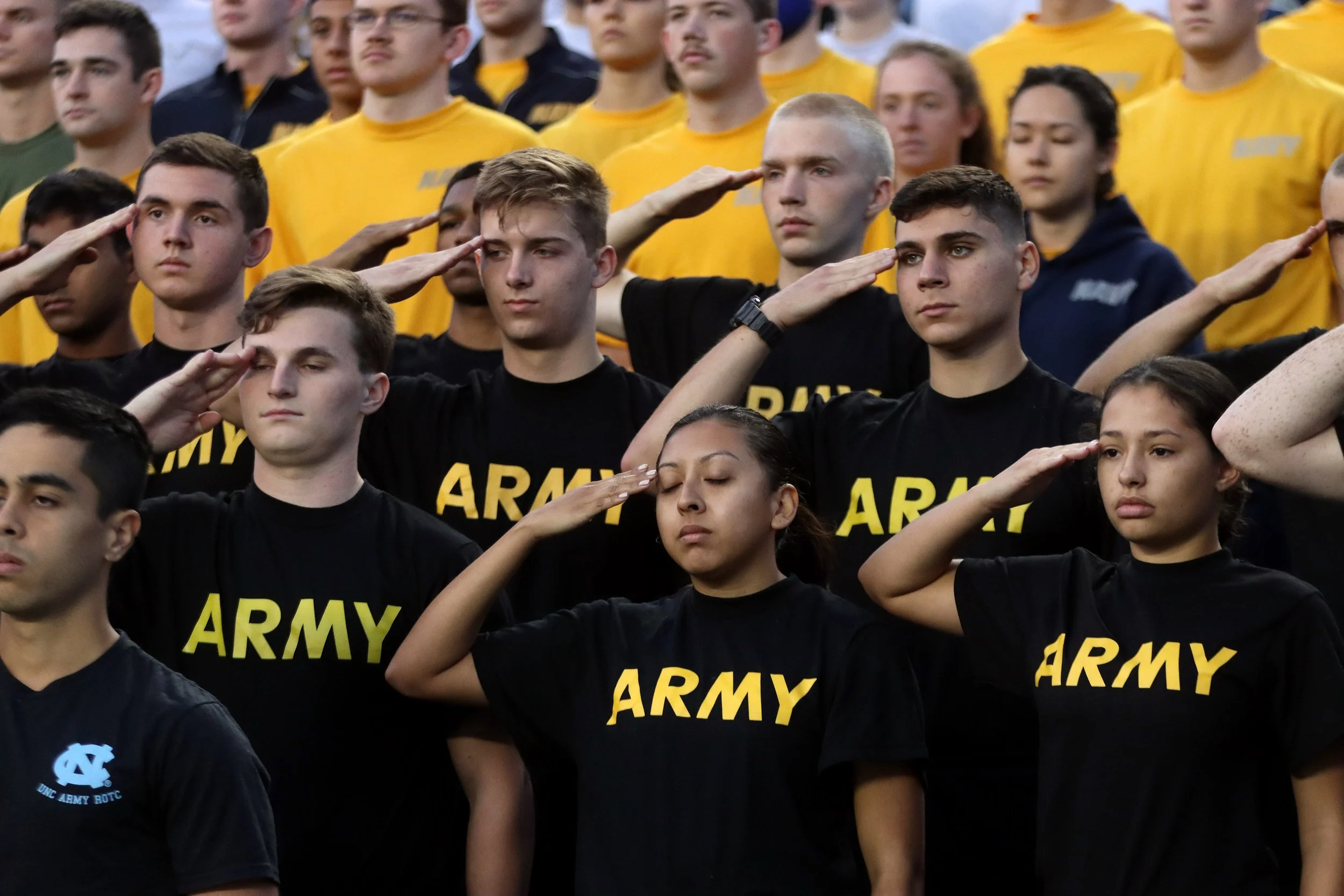
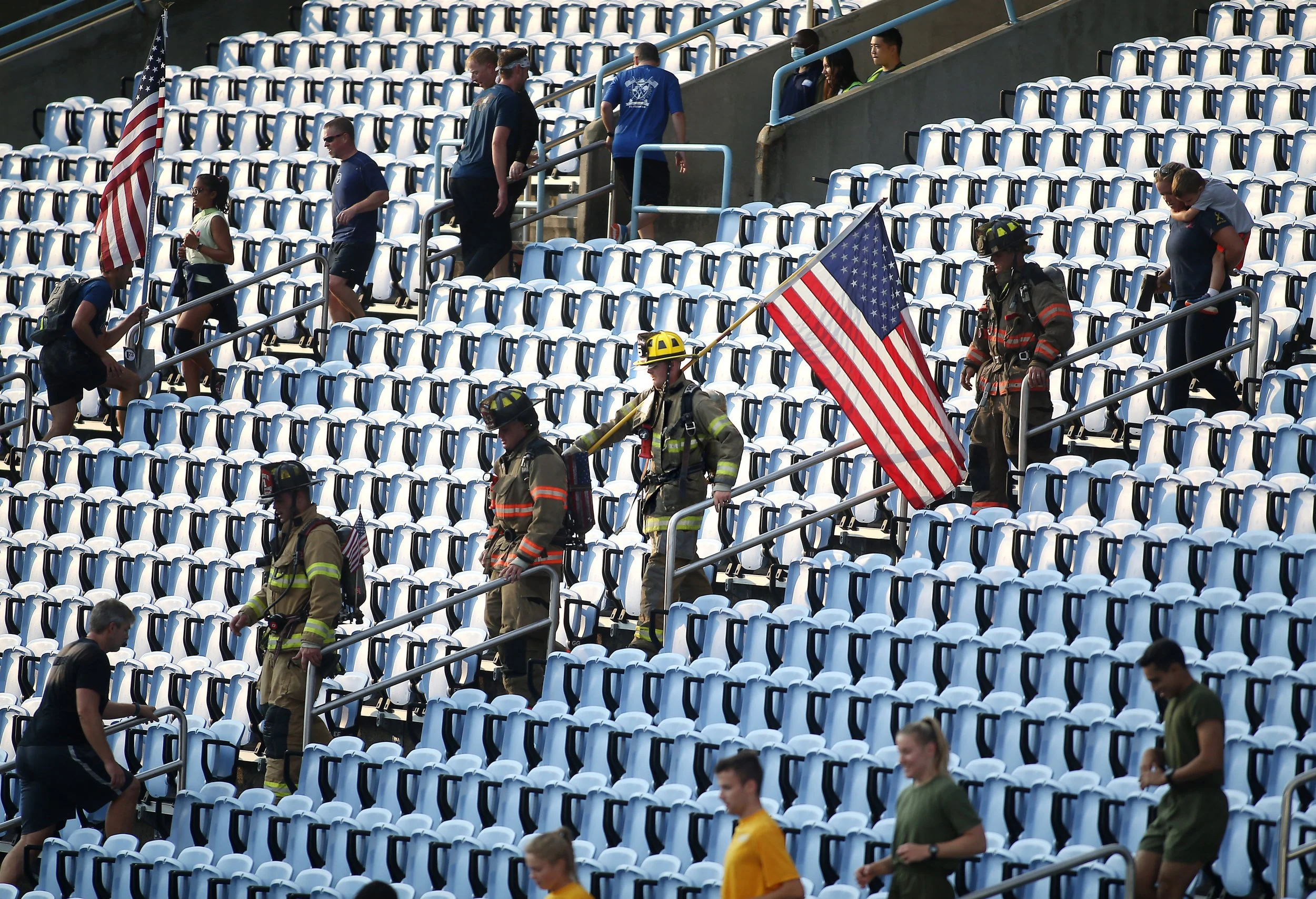
My first year in North Carolina, I found a 9/11 ceremony in the small town of Apex and, once again, did what I had been doing for the years since 2001: telling the story of how we recover, how we heal, and how we move forward. The next couple years was spent at Kenan Stadium on the campus of the University of North Carolina for the annual Memorial Climb to remember and honor first responders and commemorate those who lost their lives on September 11, 2001. Participants ran 2071 steps throughout the stadium, the same number that first responders climbed as they scaled the Twin Towers.
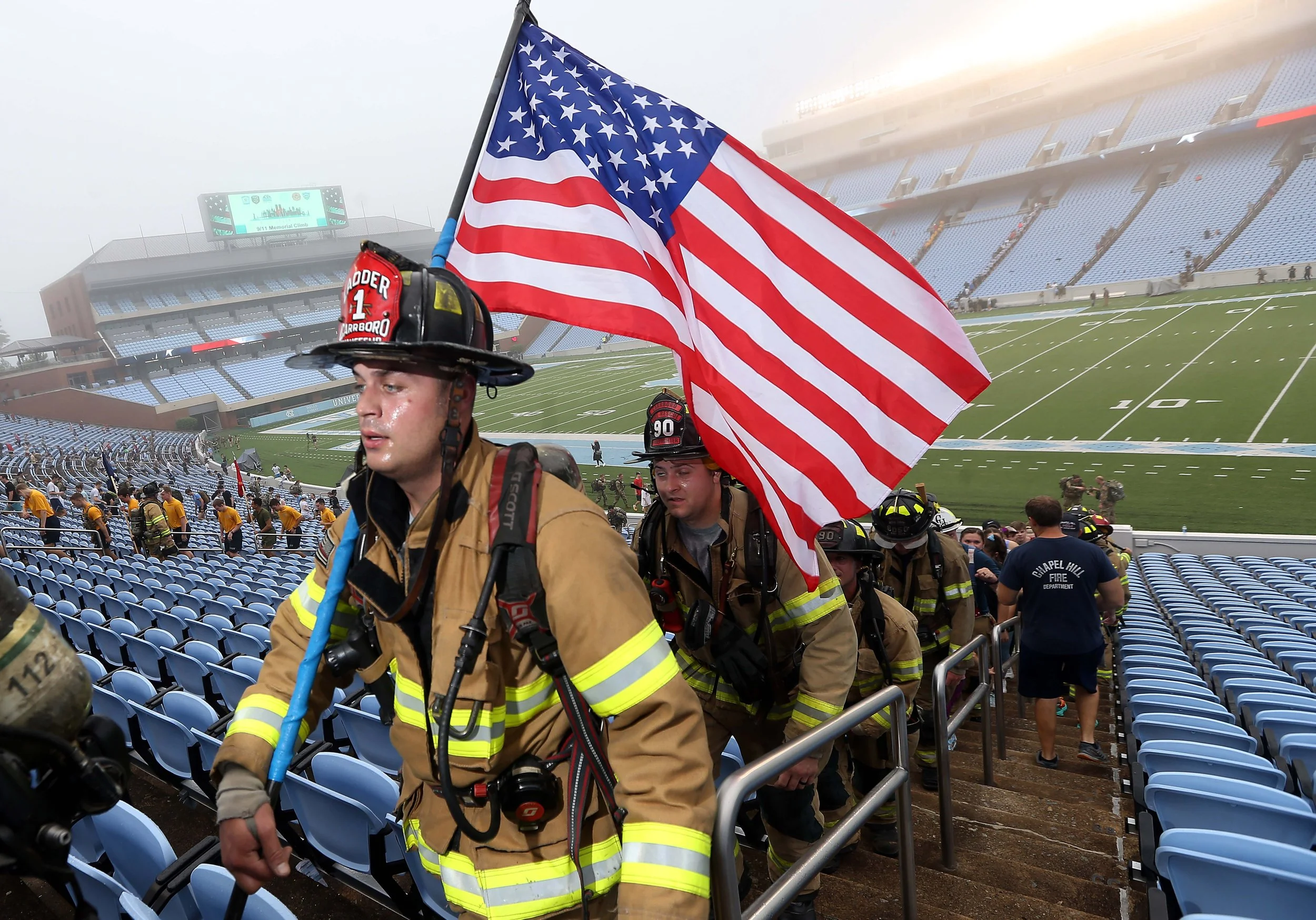
Carrboro, NC firefighter ROBERT LAYTON joined hundreds who gathered at sunrise in Kenan Stadium on the campus of the University of North Carolina for the UNC Army ROTC’s annual 9/11 Memorial Climb to remember and honor first responders and commemorate those who lost their lives on September 11, 2001. Participants ran 2071 steps throughout the stadium, the same number that first responders climbed as they scaled the Twin Towers.
Twenty-five years have now passed in the blink of an eye.
Wishing all of us a peaceful day.
Be kind to each other.
Never forget.